
Wildlife Photography Tour in Casamance, Senegal — 10 Days
Casamance · Southern Senegal
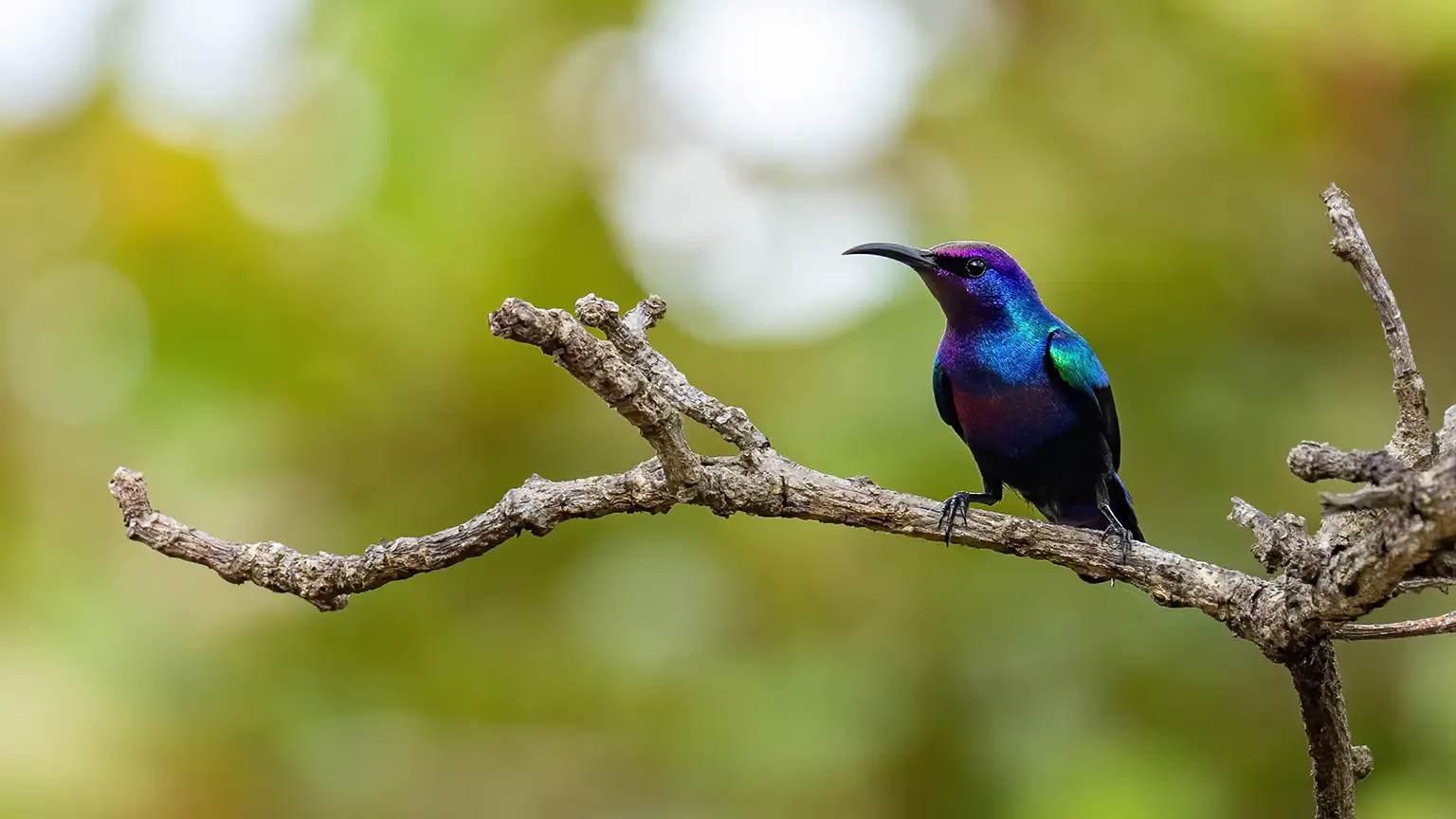
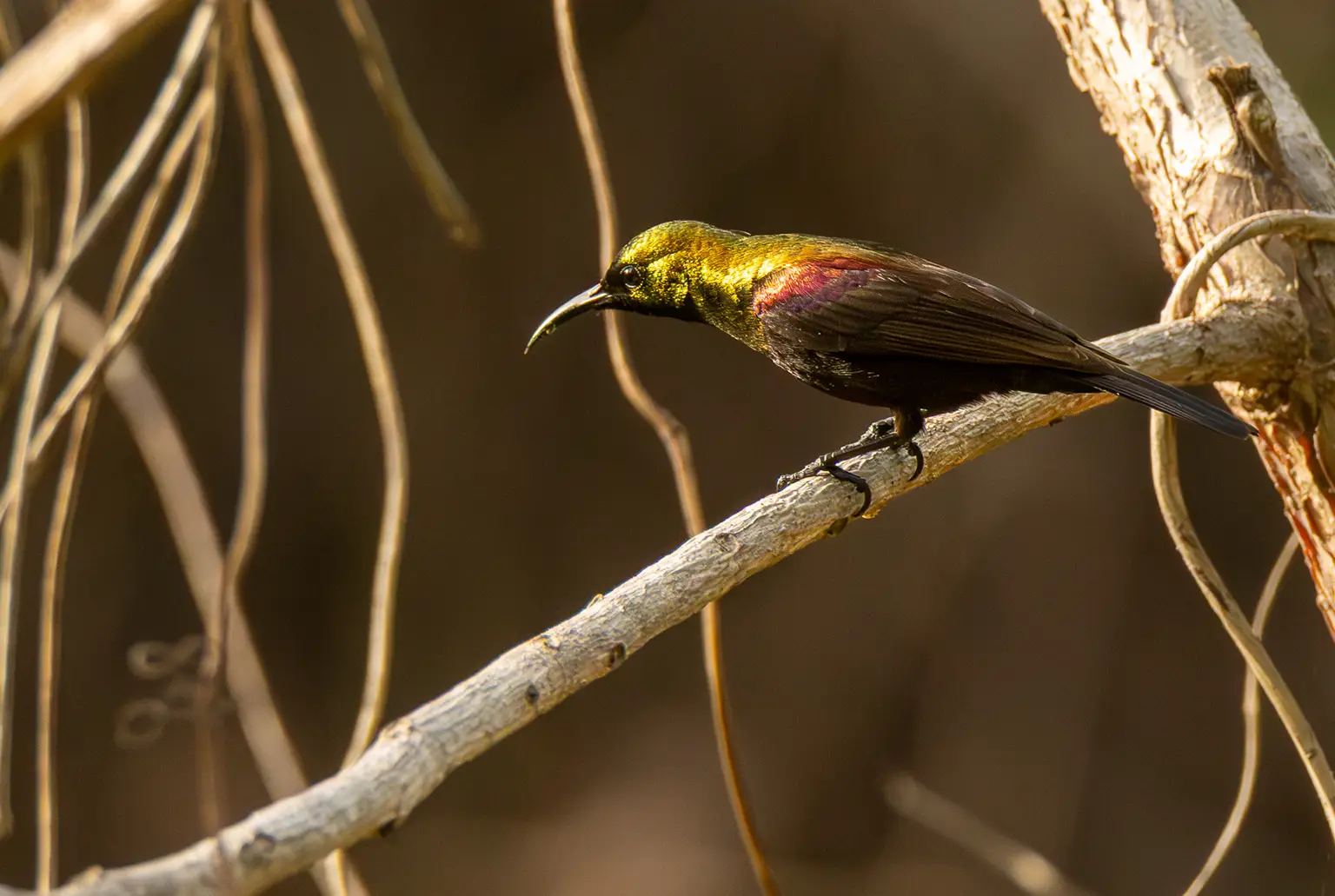
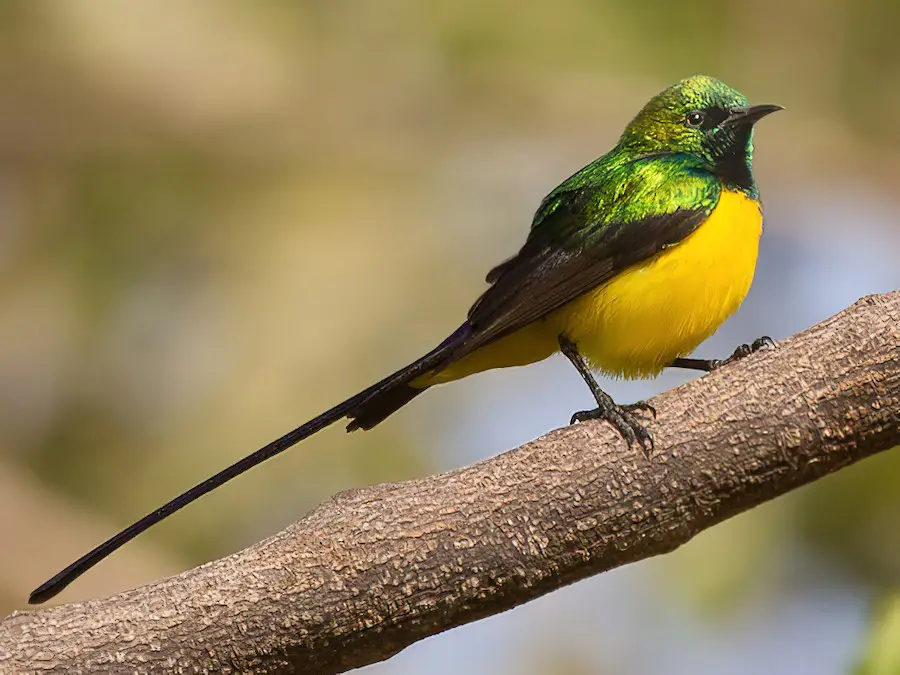
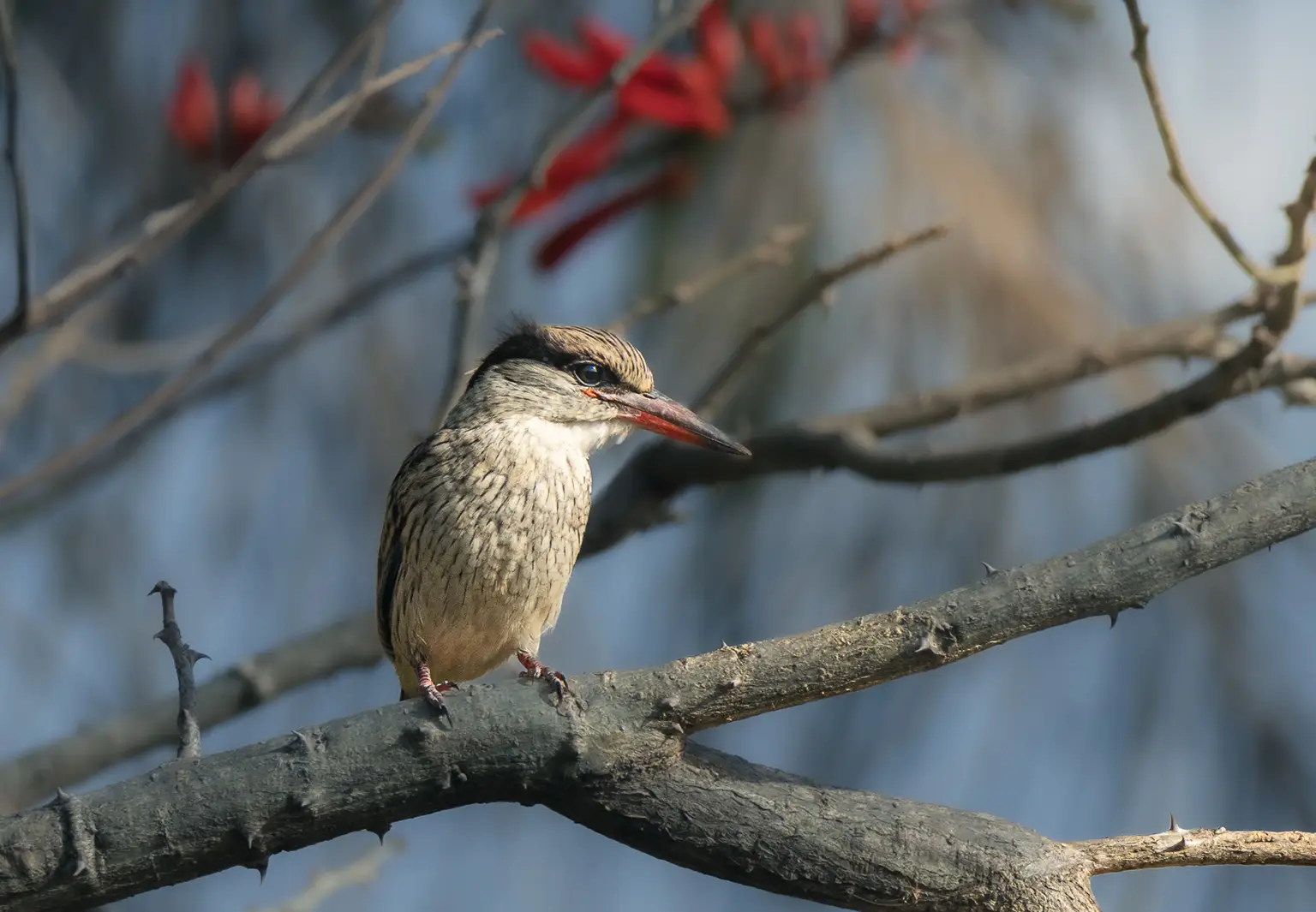
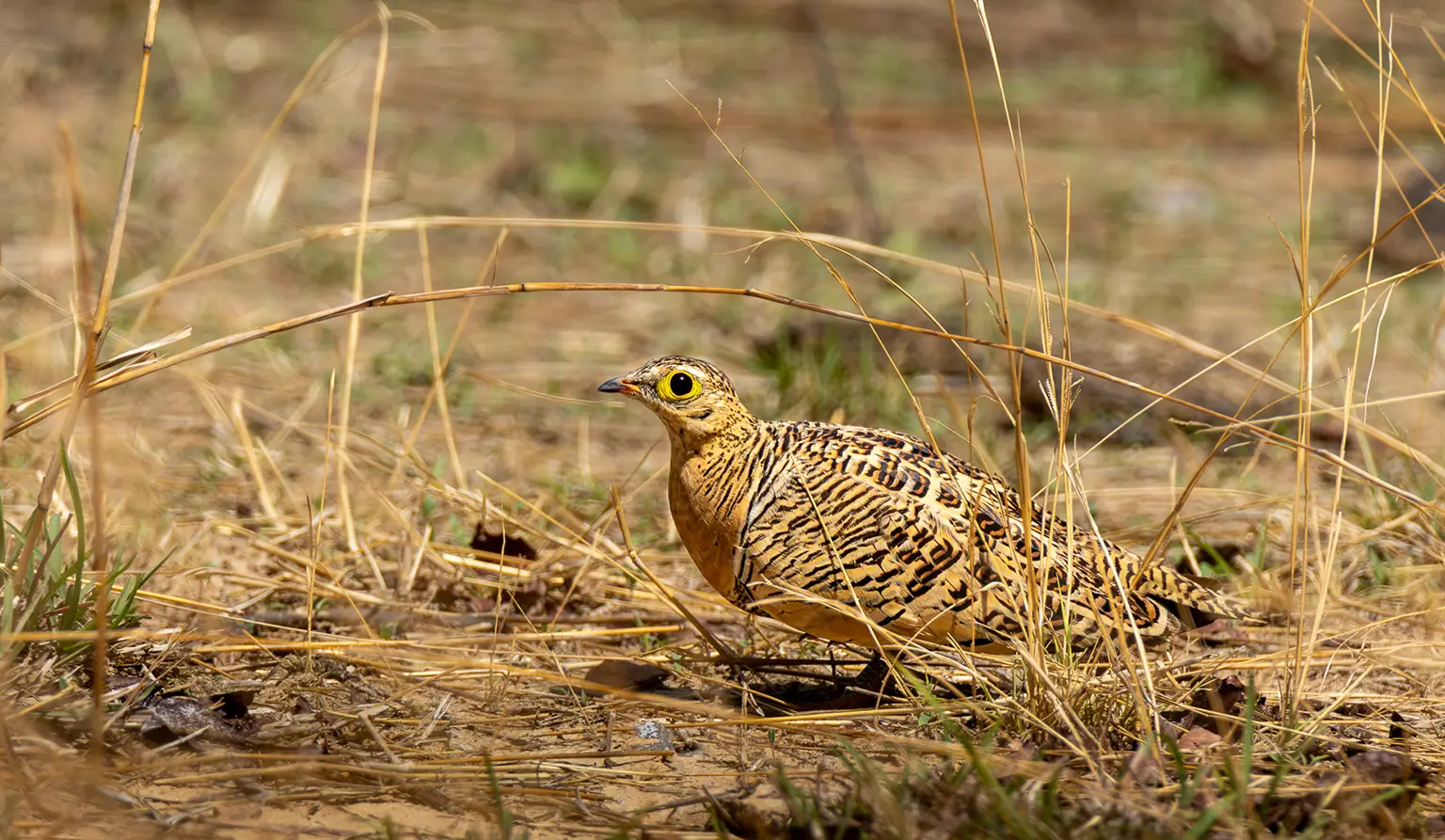
Here the wildlife is not limited to birds. There are of course superb, brilliantly coloured subjects — sunbirds and kingfishers. But you can also come away with Western Red Colobus, crocodiles, monitor lizards, humpback dolphins and manatee. Hides at the lodge and out in the bush, every habitat within an hour, and I am on site all year round to guide you.
Eight images, one single area
Why Casamance for wildlife photography
Most West African photography tours are run as touring itineraries: every day brings its share of driving. Here, the mangrove, the dense coastal forest, the wooded savanna, the rice fields and the shoreline follow on from one another. Less road, in short, and more time spent photographing.
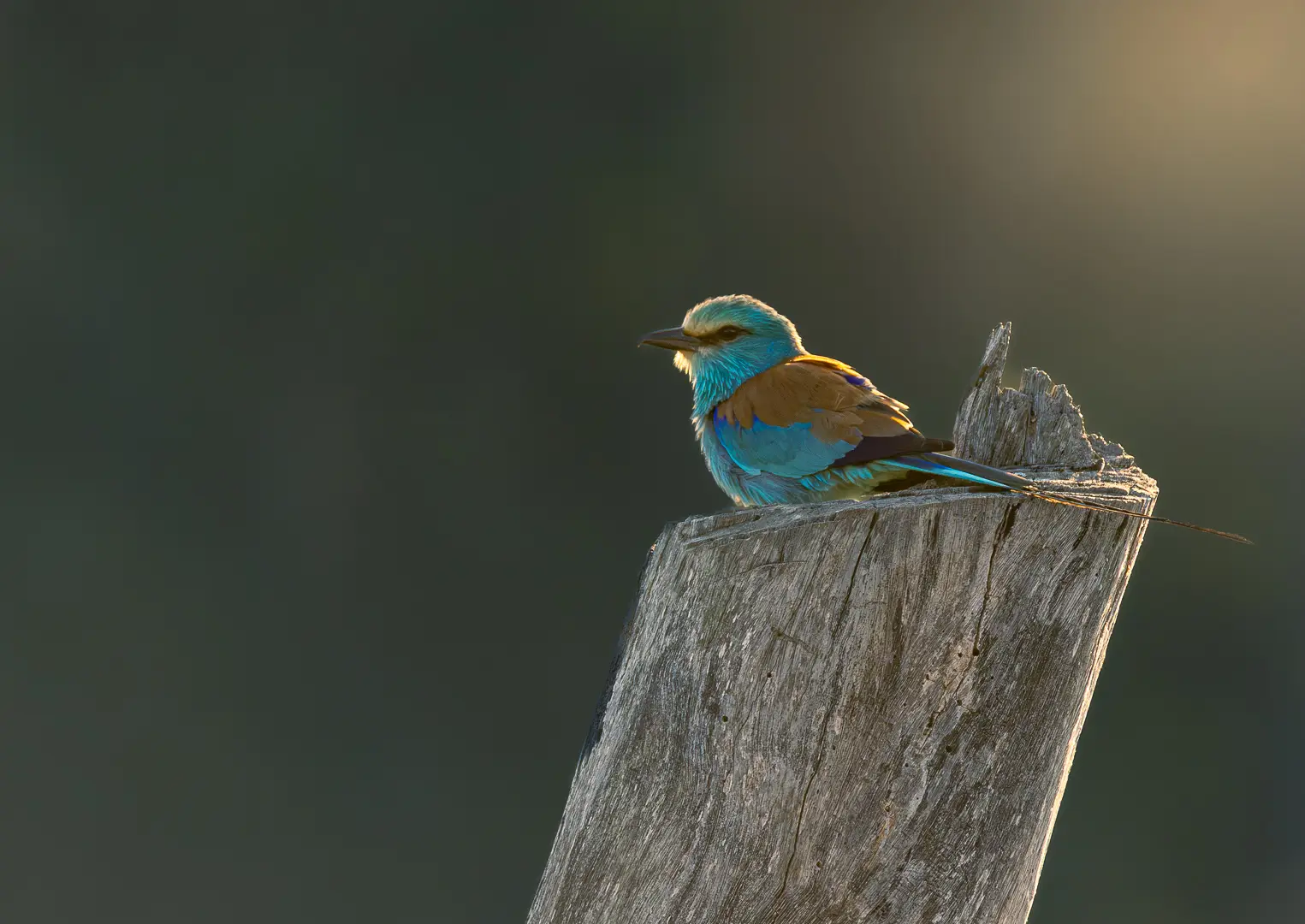
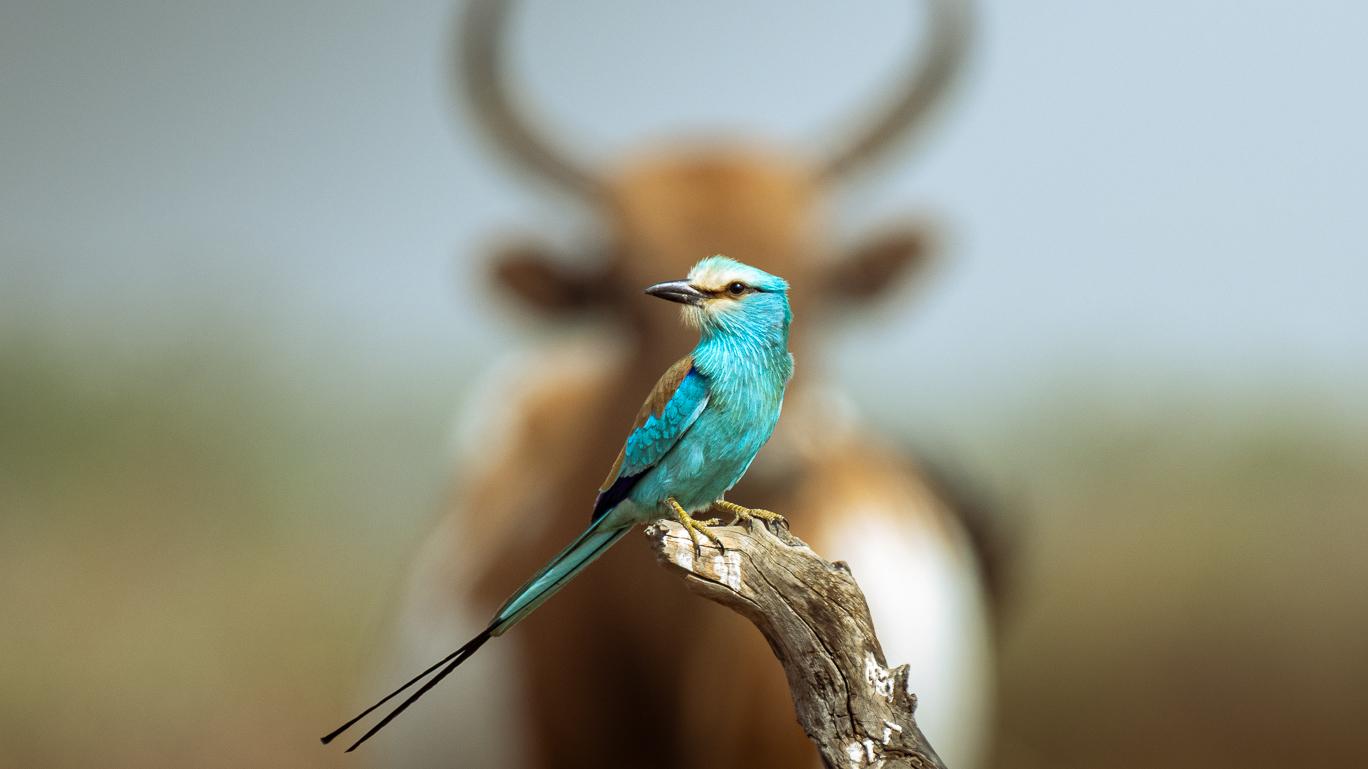
Two moments really count in a day here. The blue hour, just before sunrise, when the river is still glassy and the first kingfishers come down. And the last hour of the day, golden and raking, when a roller on its post becomes a silhouette of fire. The rest of the time you scout, you prepare, you wait.
That matters more for photography than for a species list: a short drive means being in position before sunrise, not an hour after it. This tour is not built to tick species, but to be in the right place in the right light.
I have lived here for twenty-six years, and that knowledge of the ground is what I bring you. I know where the colobus is passing at the moment, which tree the Yellow-winged Bats are using this season, and when Bombax costatum flowers — that is where the sunbirds gather, several species on the same tree. None of that is in any guidebook, and sharing it is my job.
Every departure is at first light. Breakfast at dawn, then out — sometimes before dawn, to be on site at the right moment. That is the routine all year round, not a seasonal option.
Afternoons are yours. The lodge is on the beach: you edit your images, enjoy the ocean, or shoot in the garden while you wait for the light to come back.
How we get you close
Three set-ups, used according to the species and the site — plus an opportunity we take when it arises.
A permanent hide in the garden
Built into the lodge grounds and available whenever you want it. Sunbirds, weavers, kingfishers, batises, robin-chats and paradise flycatchers come to the water, particularly during the hot hours. No transport needed — you simply walk out into the garden.
Portable hides on site
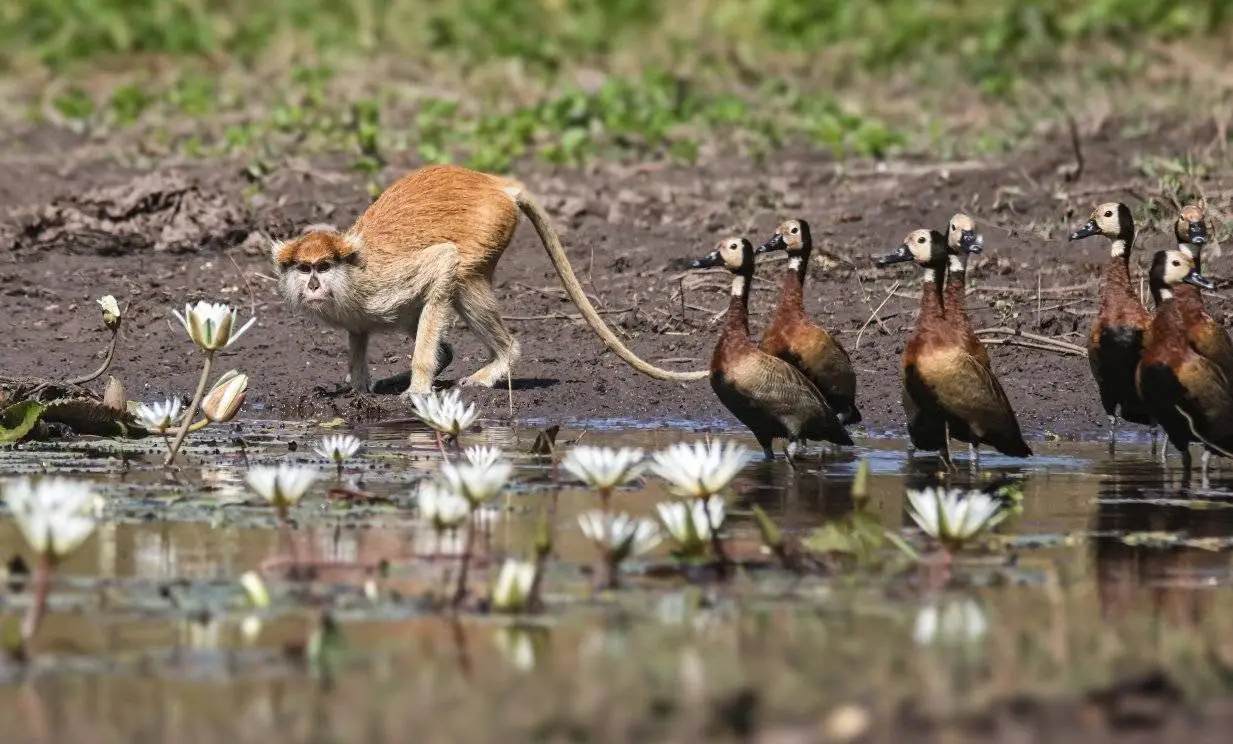
We set them up where waiting pays off, in particular at the Abéné airstrip, where bee-eaters and raptors come down to drink. Osprey, African Harrier-Hawk, but also Patas Monkeys and mongooses: the surprises are many, and a good session in a hide rarely disappoints.
The boat, at water level
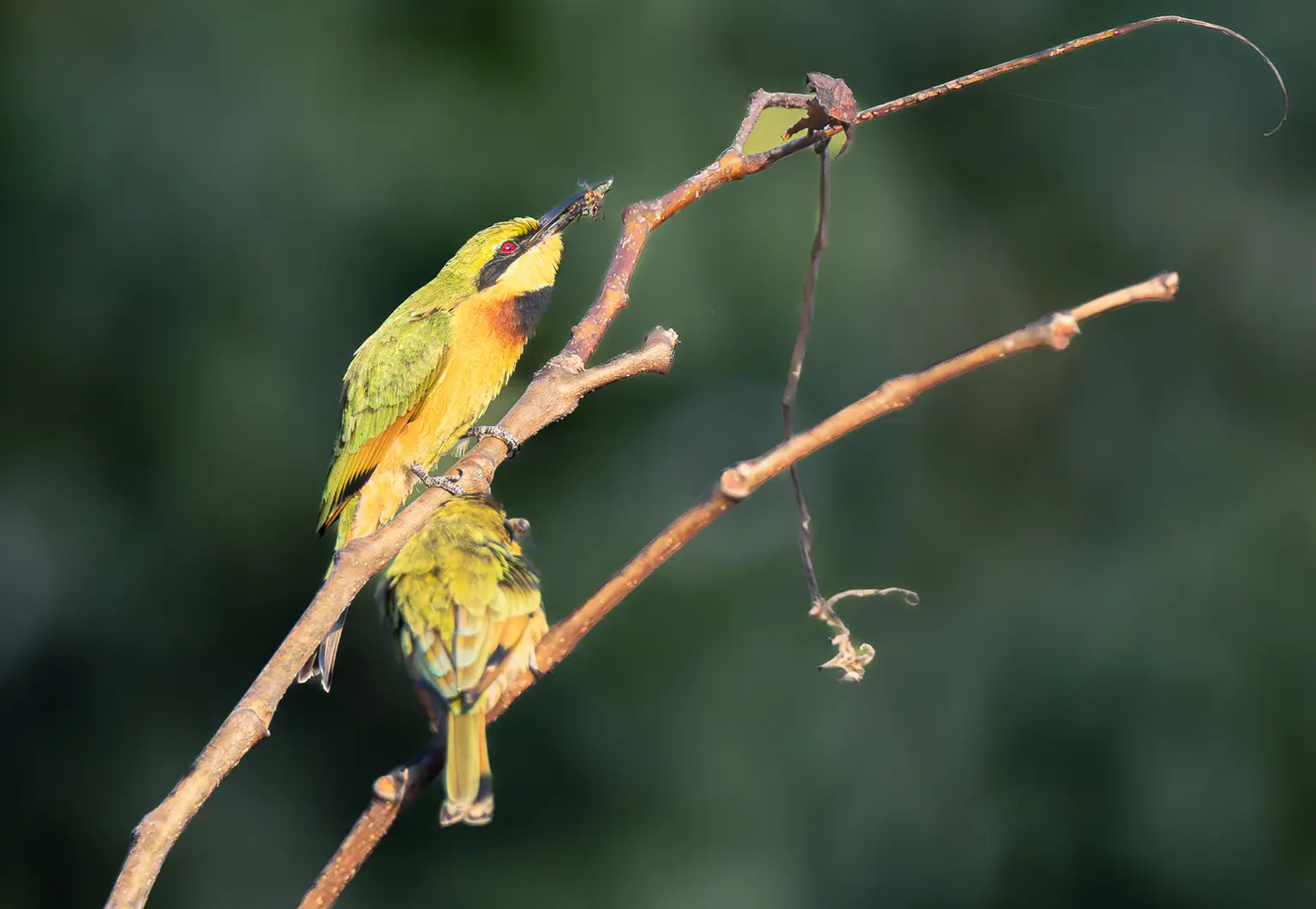
In the bolongs, the boat puts your lens at the height of the bird. Stay seated and the approach becomes genuinely close — two to three metres for the less wary bee-eaters. Standing up ends it. Sometimes very shy species tolerate us right beside them: that is the moment to shoot, a portrait of a Goliath Heron or an African Darter diving.
The 4x4, when the chance comes
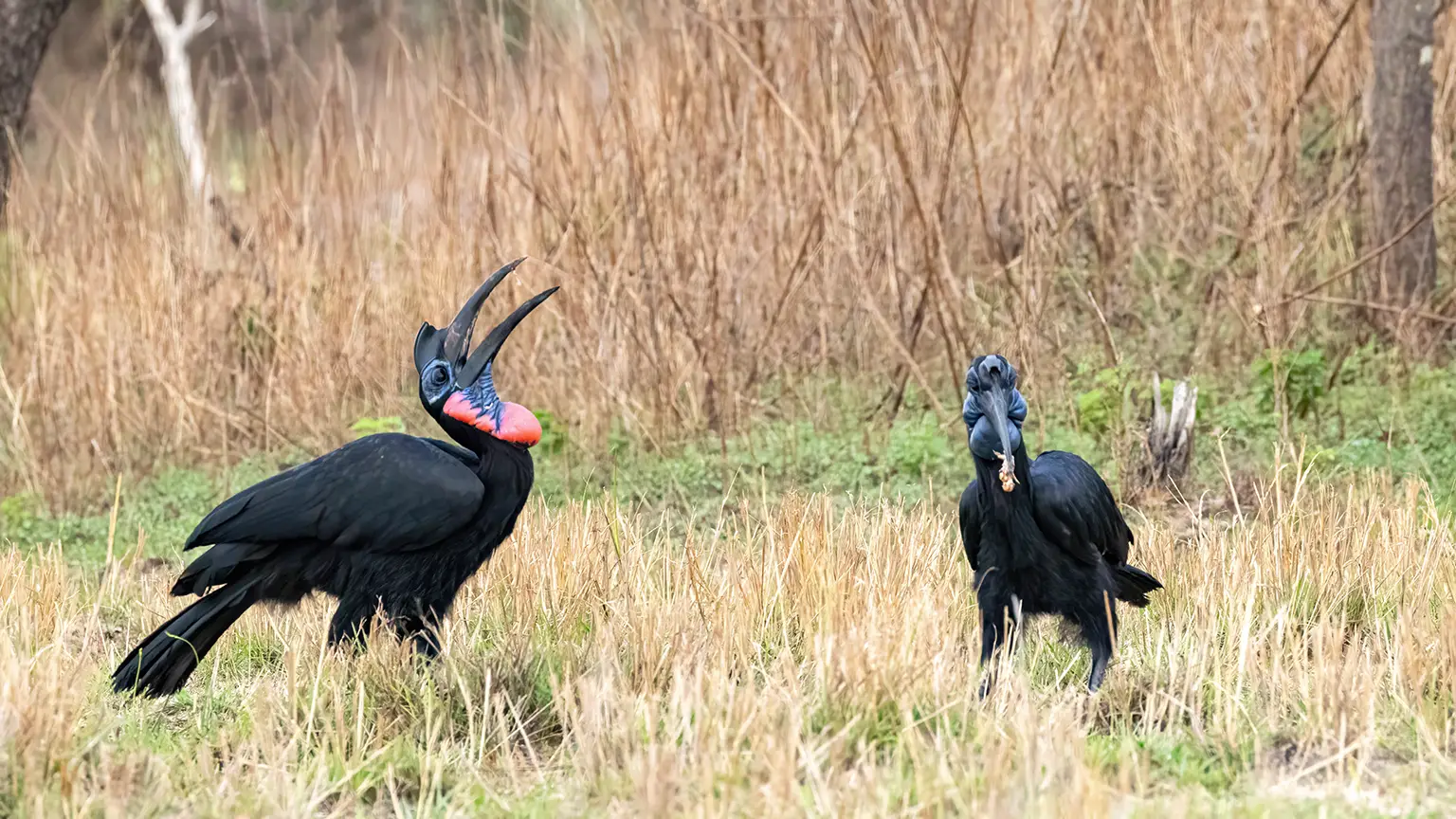
Many species tolerate a vehicle far better than a person on foot. This is not an outing in itself but an opportunity taken along the way — Abyssinian Ground Hornbills are often at the edge of the track towards Kabiline, and that is how we approach them.
The lodge garden and its surroundings
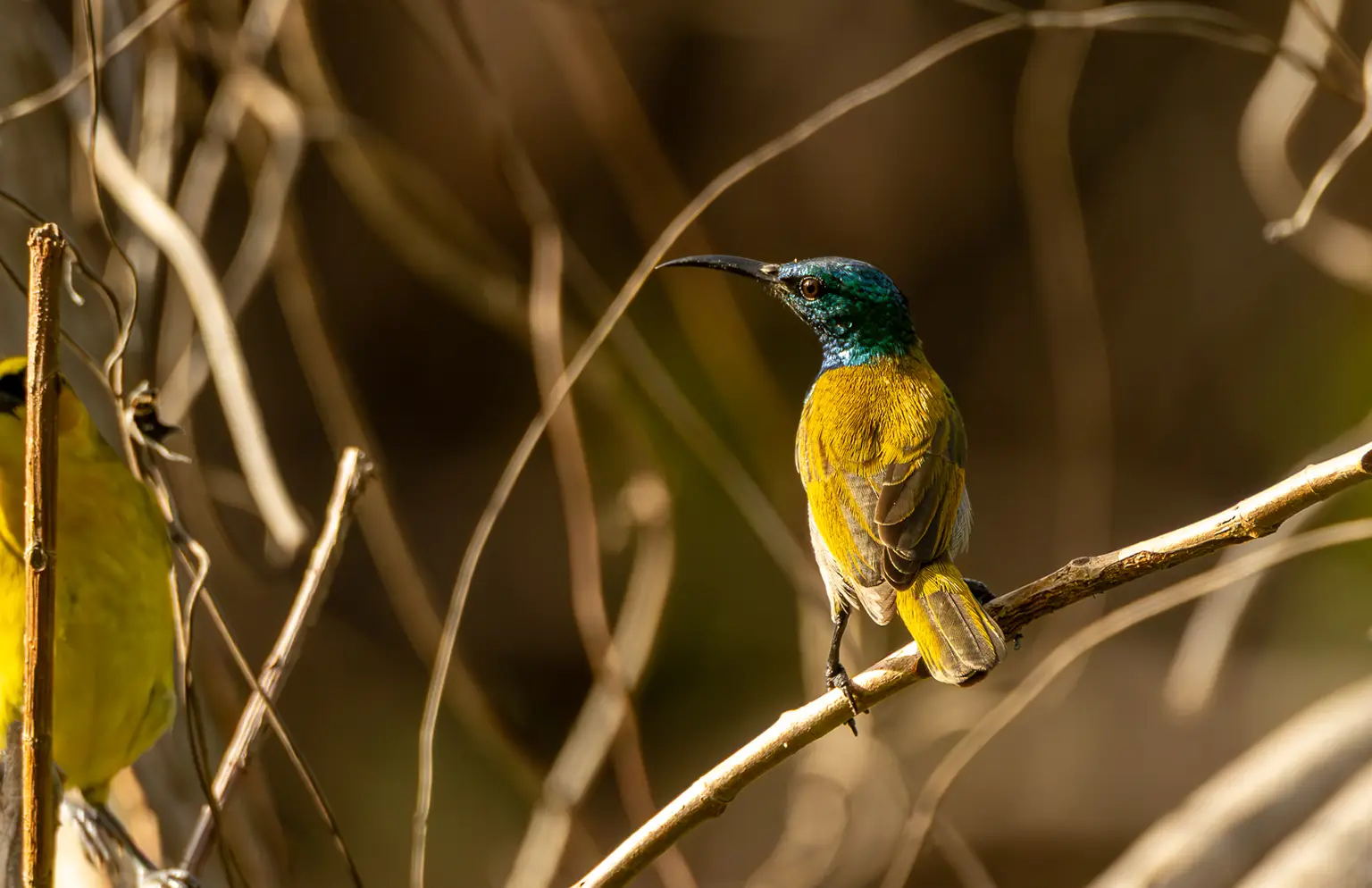
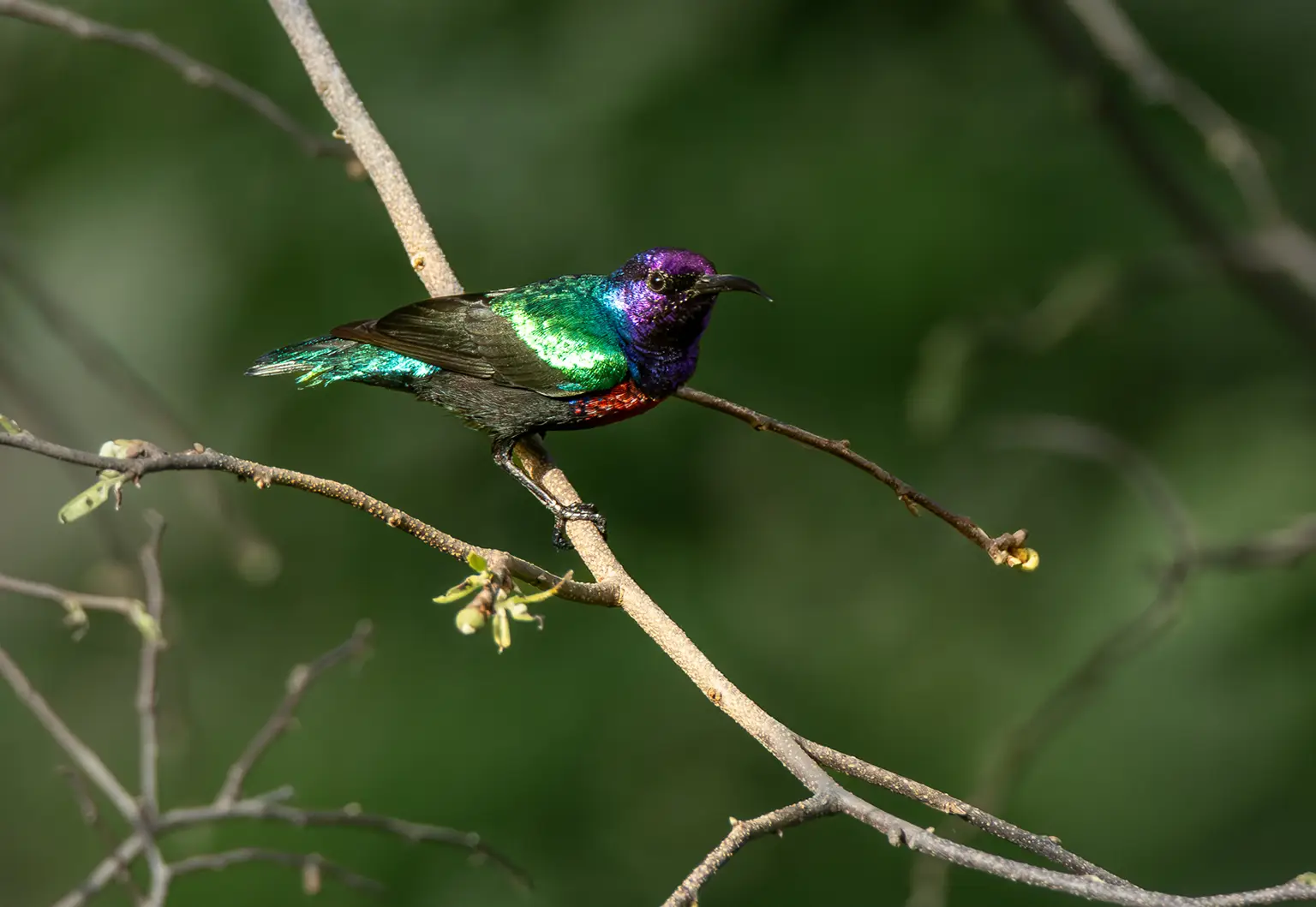
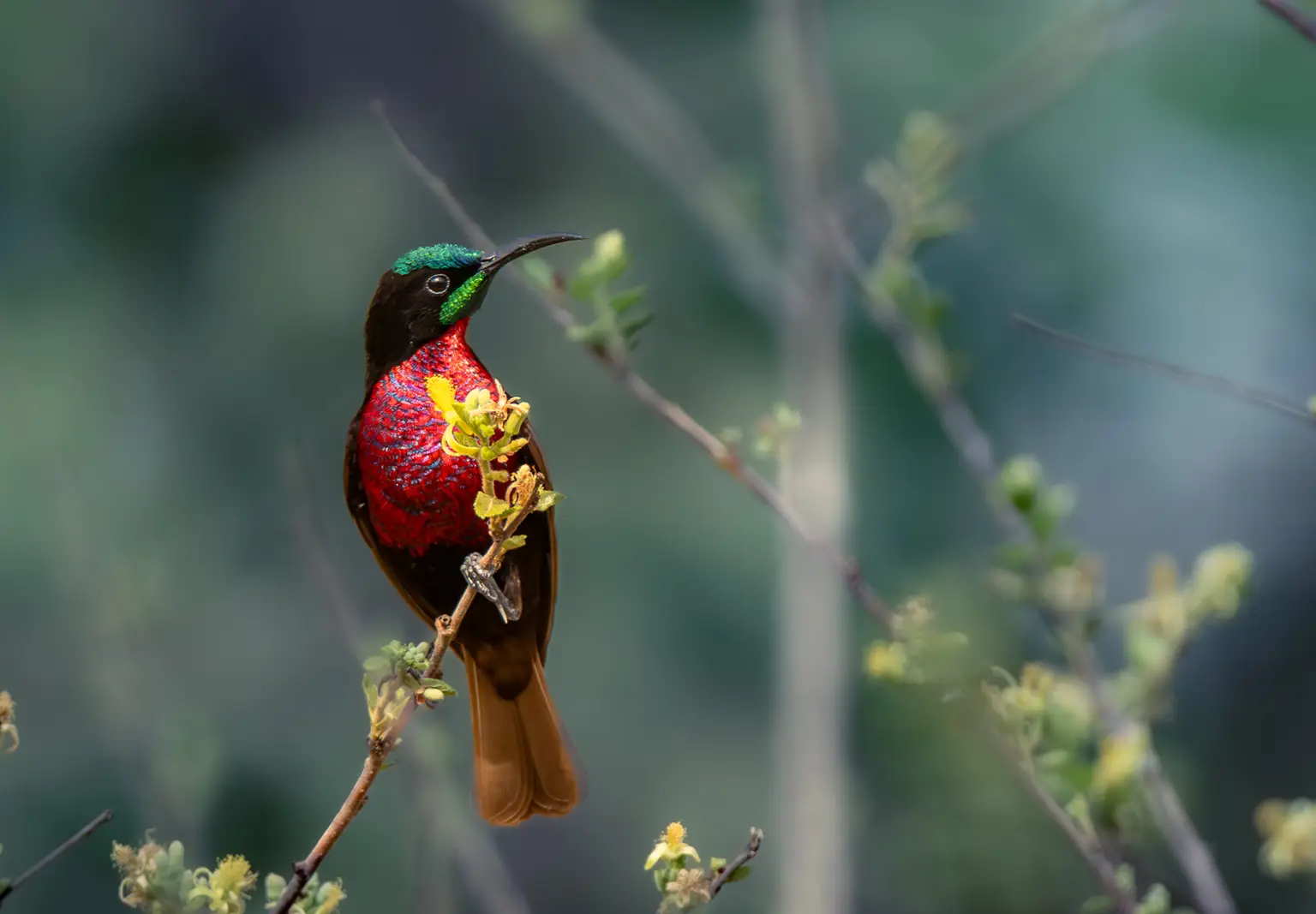
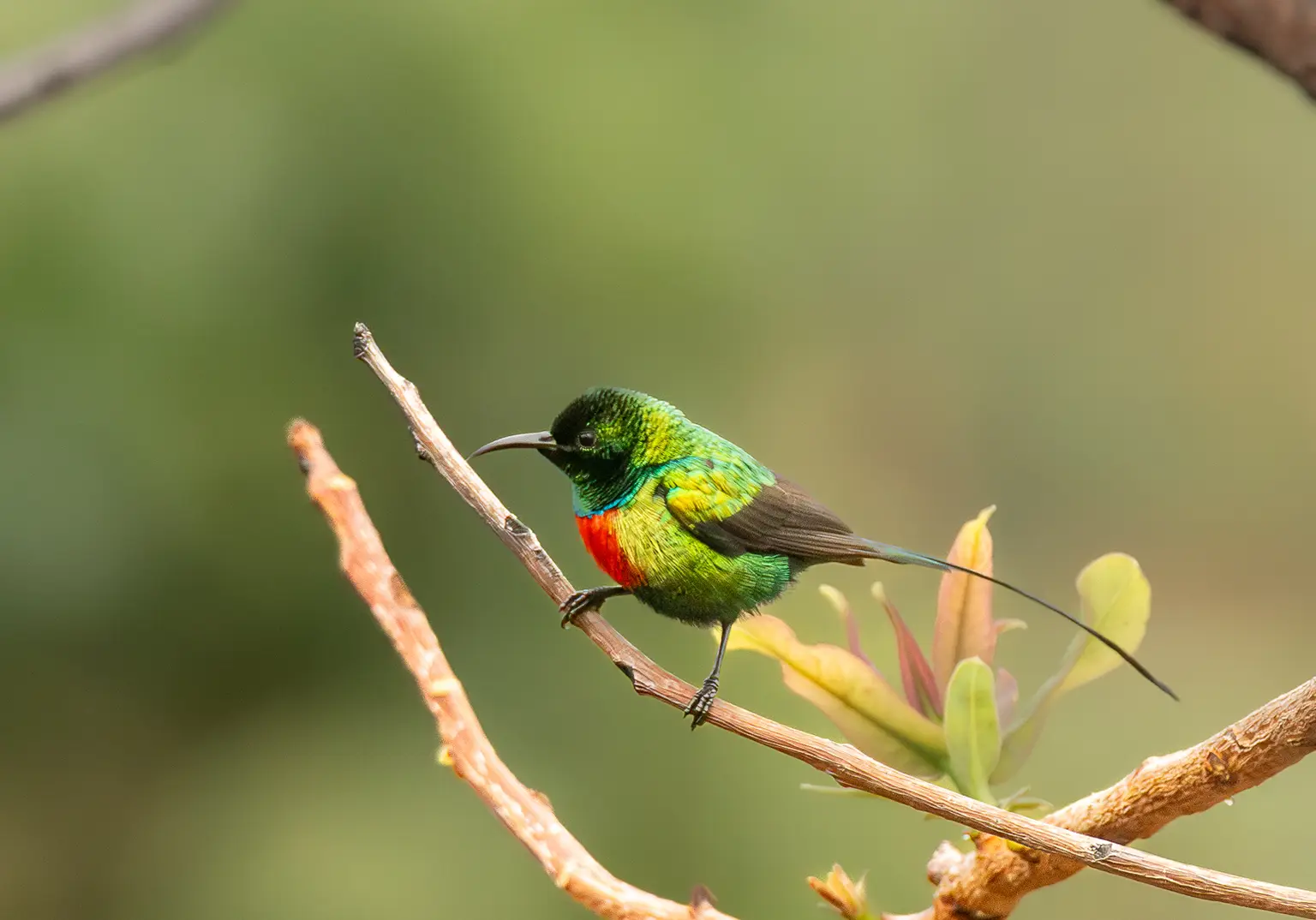
Two hectares of planted ground, a water point, a permanent hide. This is the most accessible ground of the whole tour, and the most productive for sunbirds. Not far from the lodge, the red-flowered silk cotton trees bloom in January and February and gather a remarkable number of birds in a single tree. They are far less wary then: stay discreet and you photograph them at only a few metres, and at that distance every feather stands out.
The mangrove and the bolongs
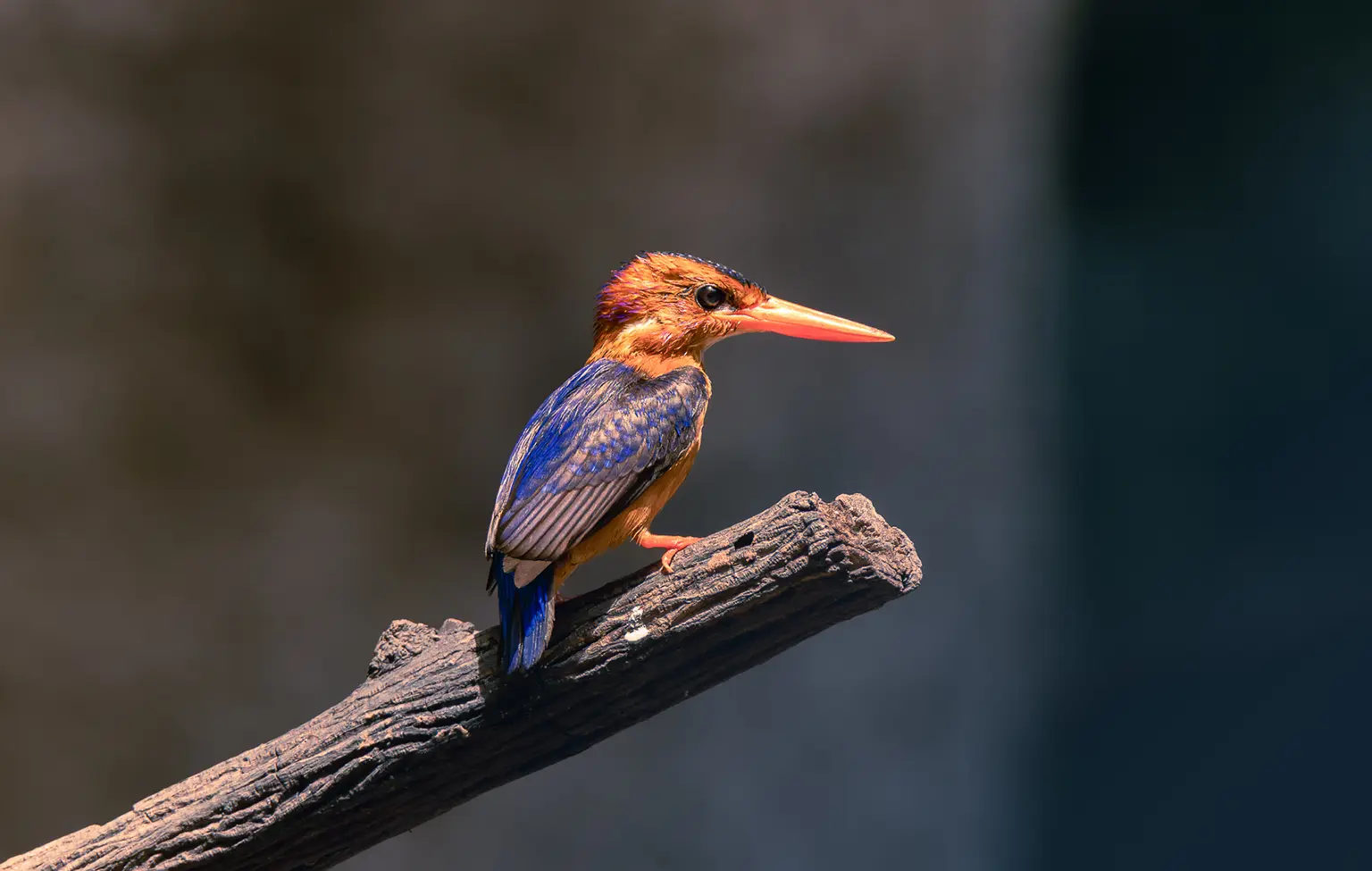
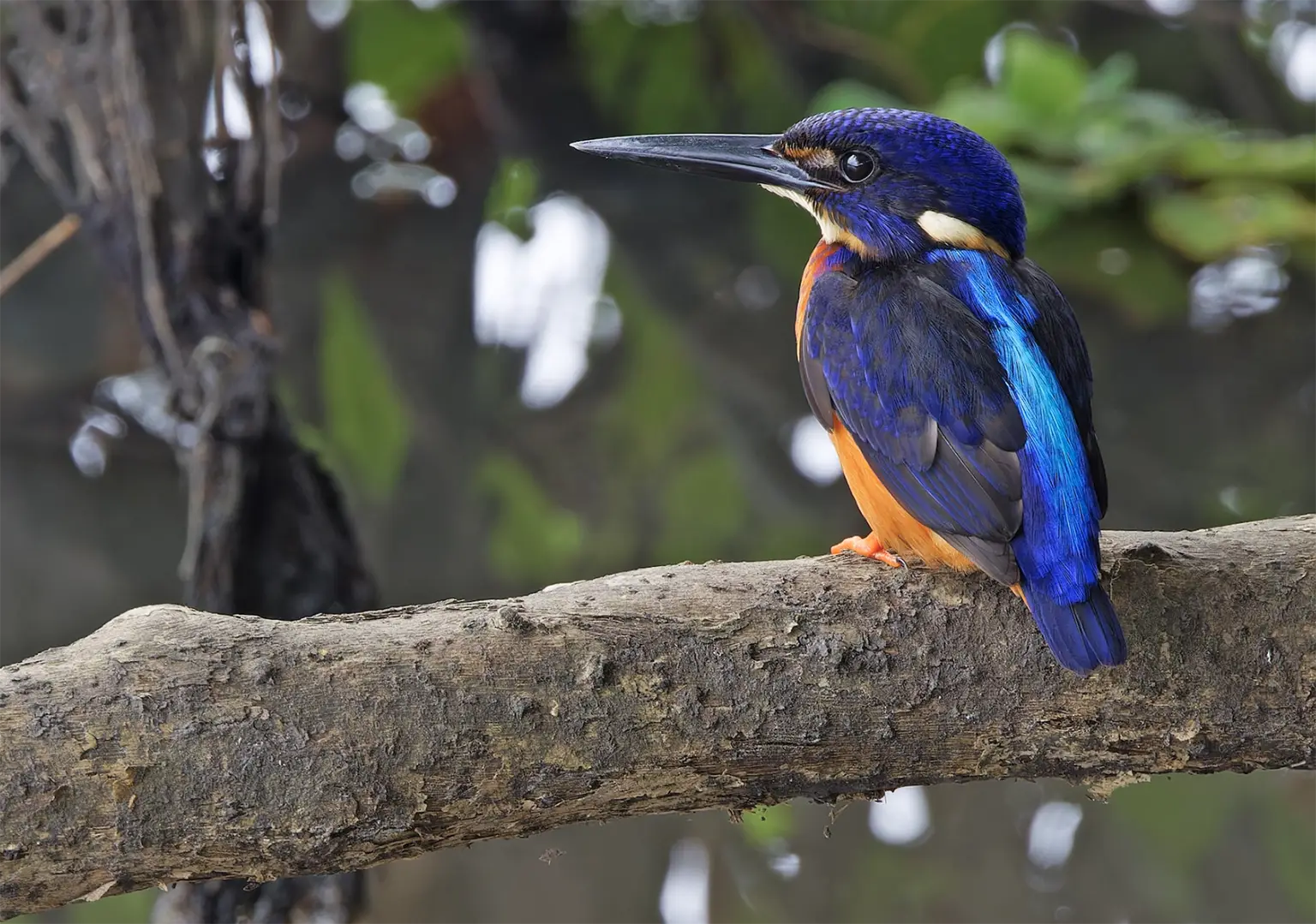
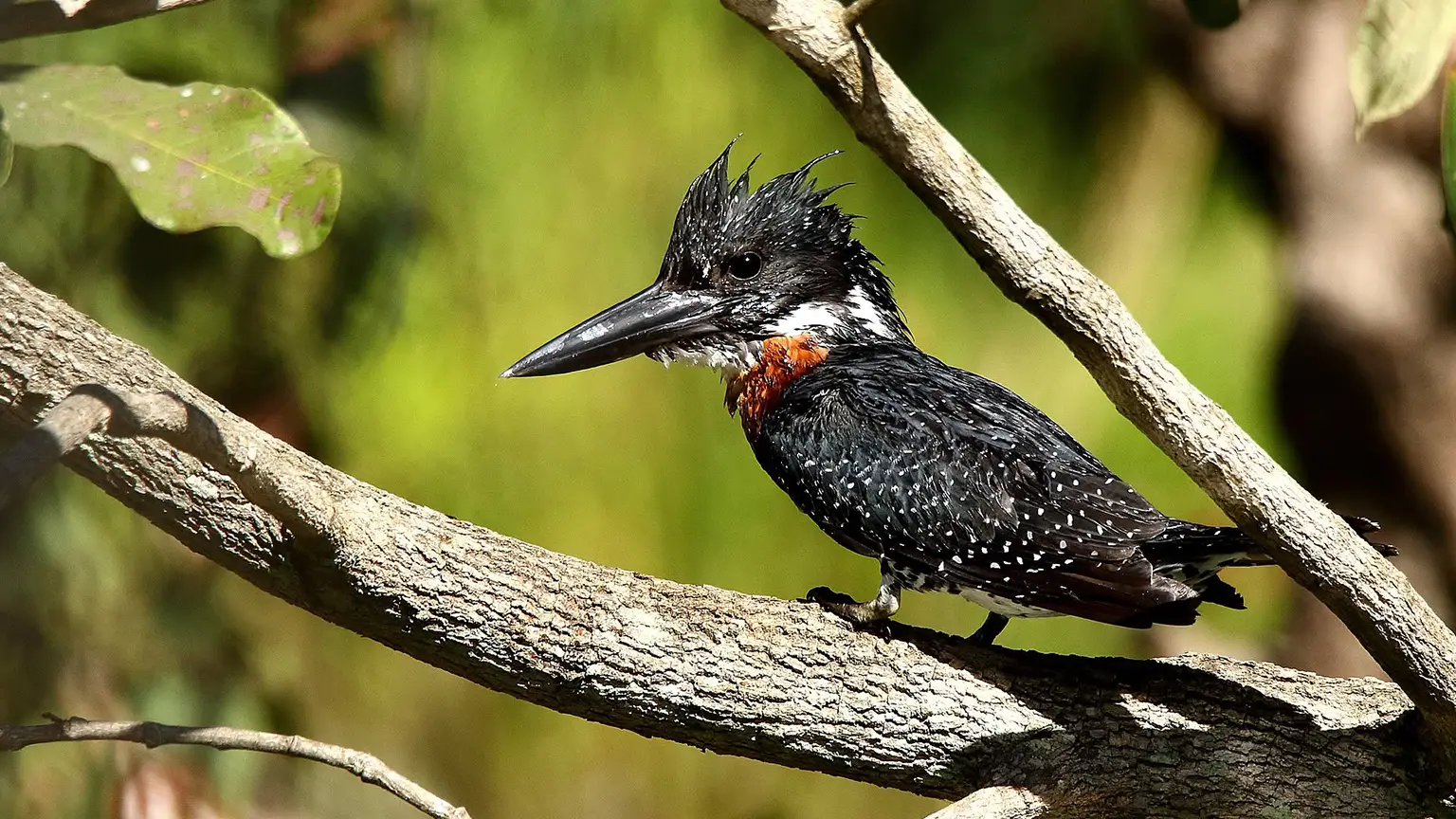
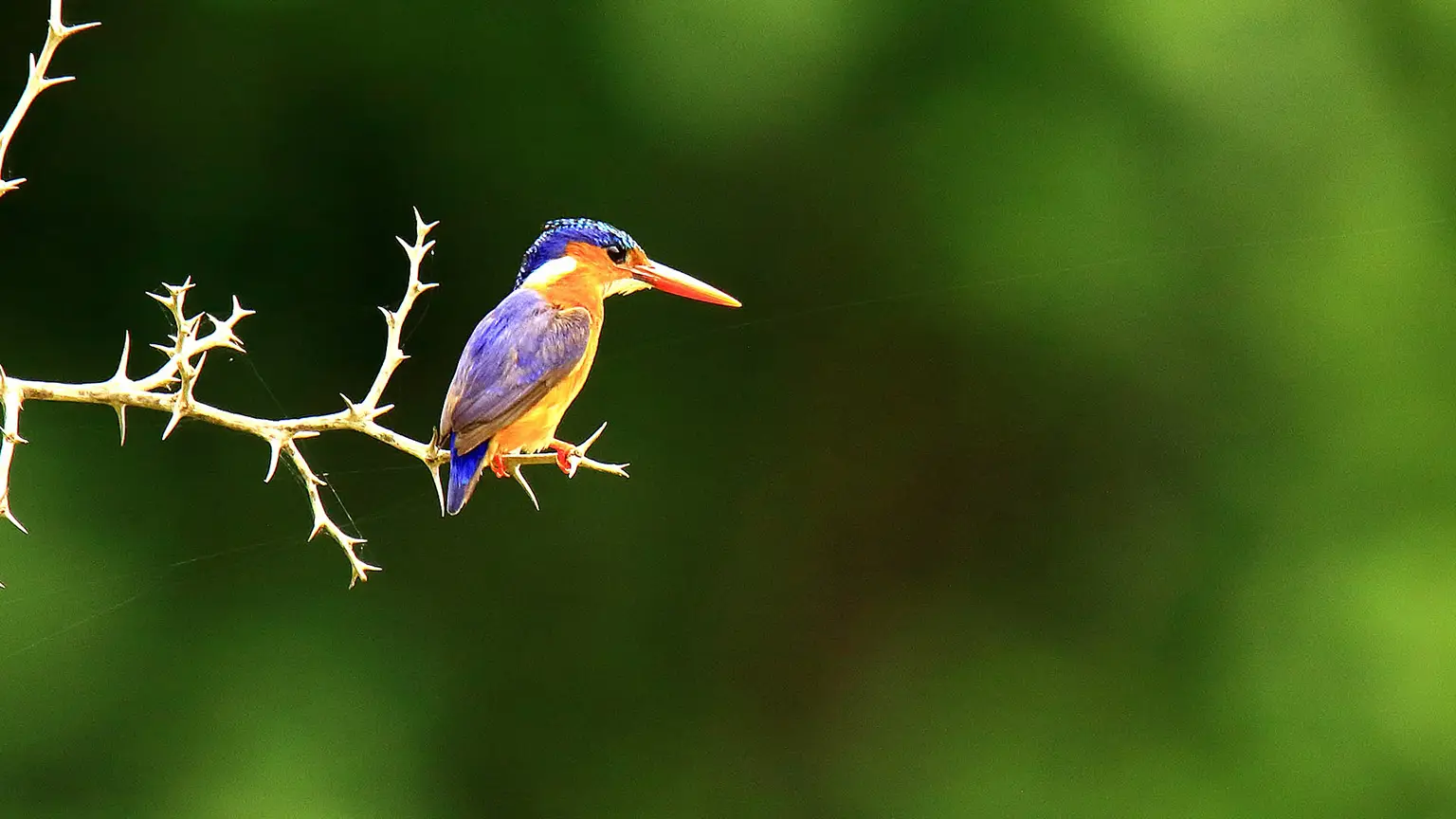
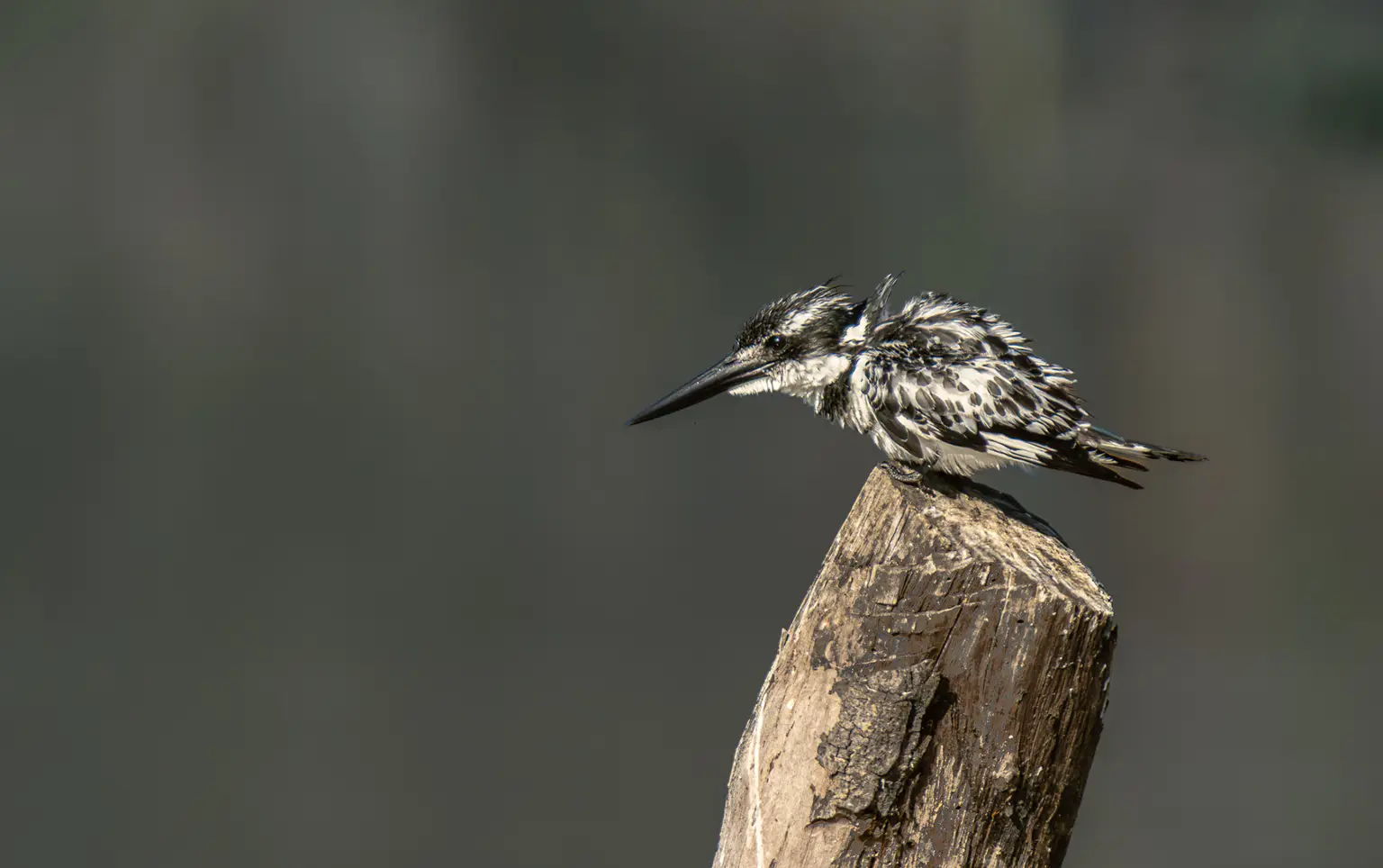
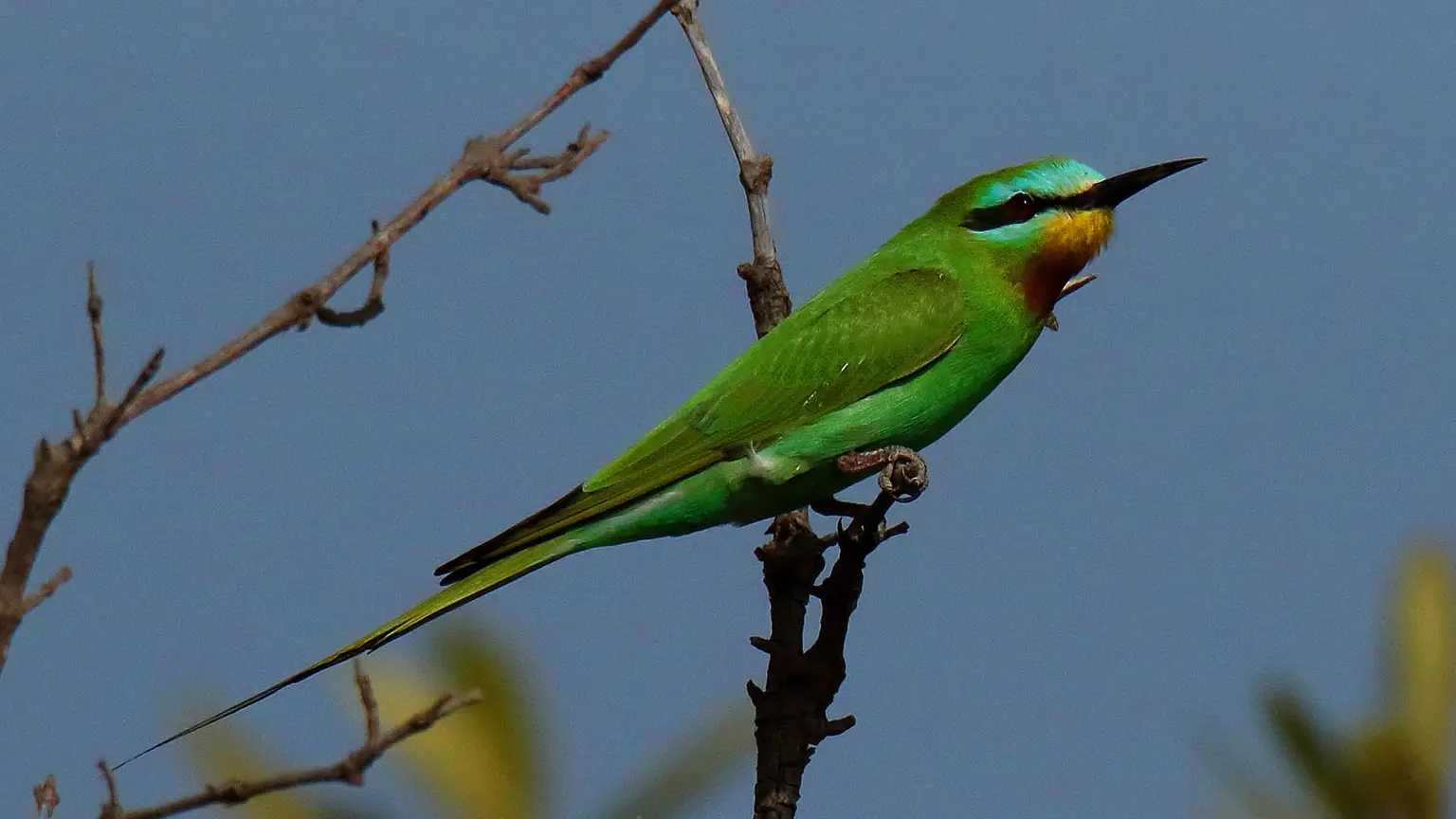
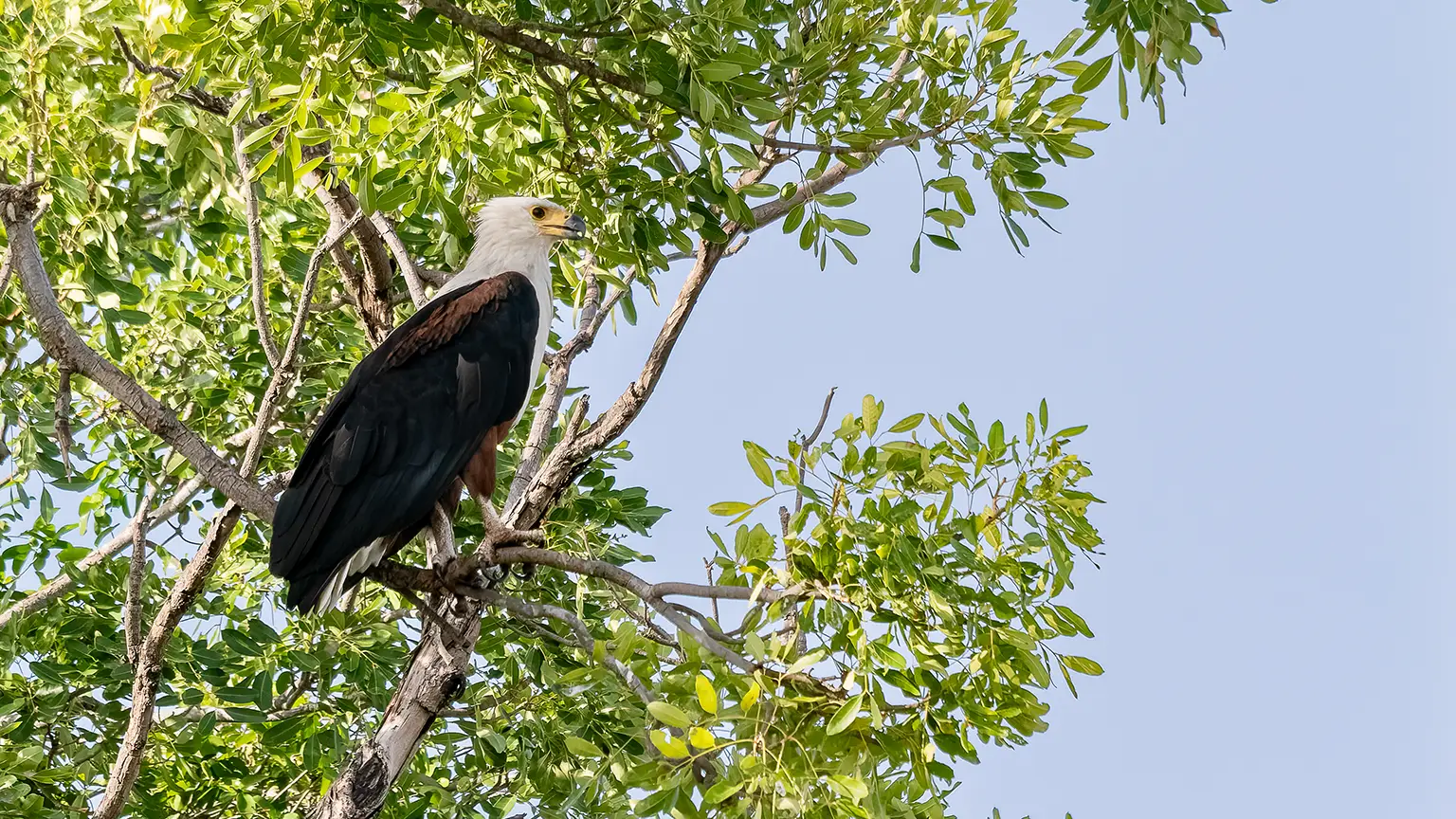
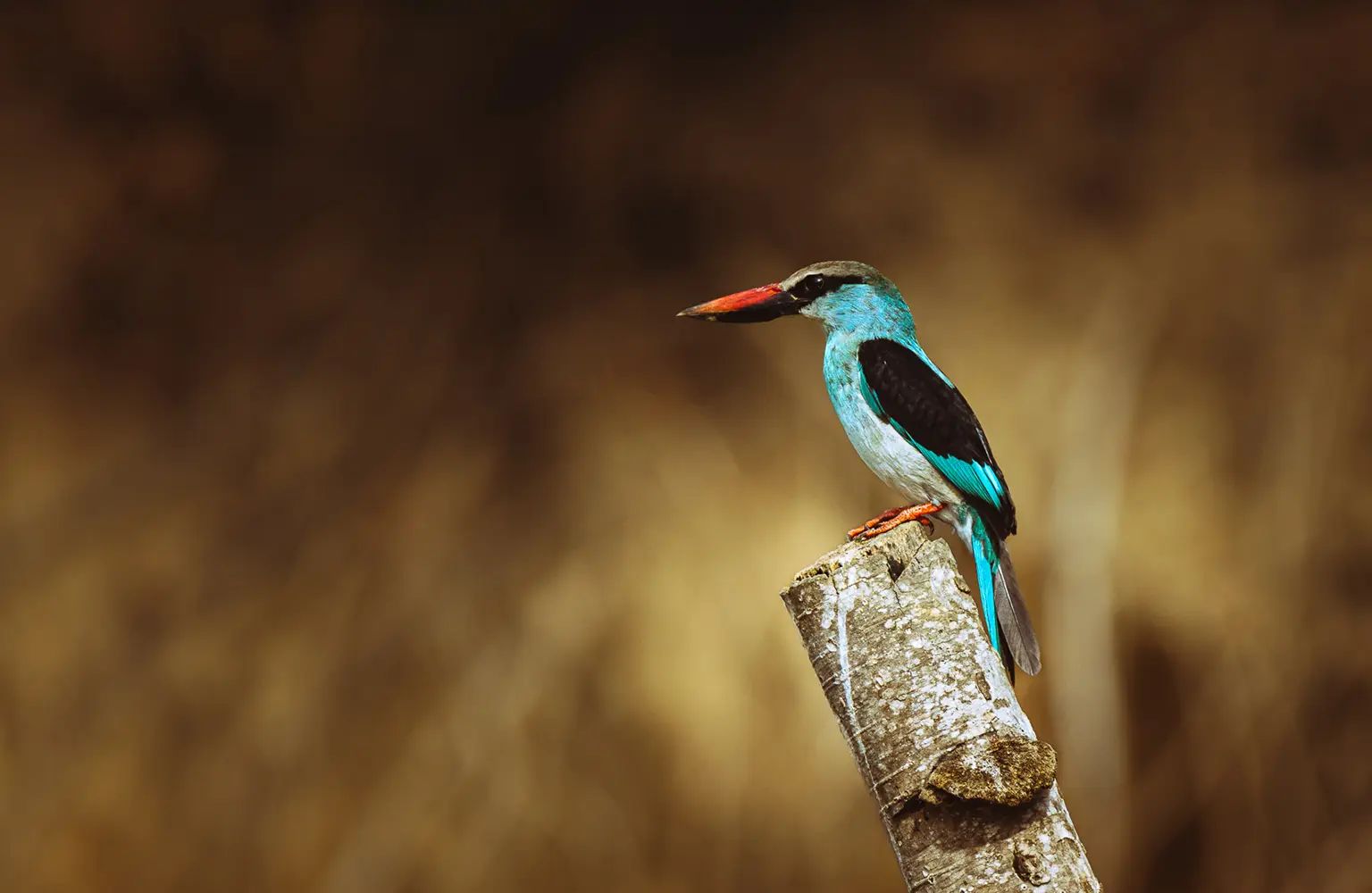
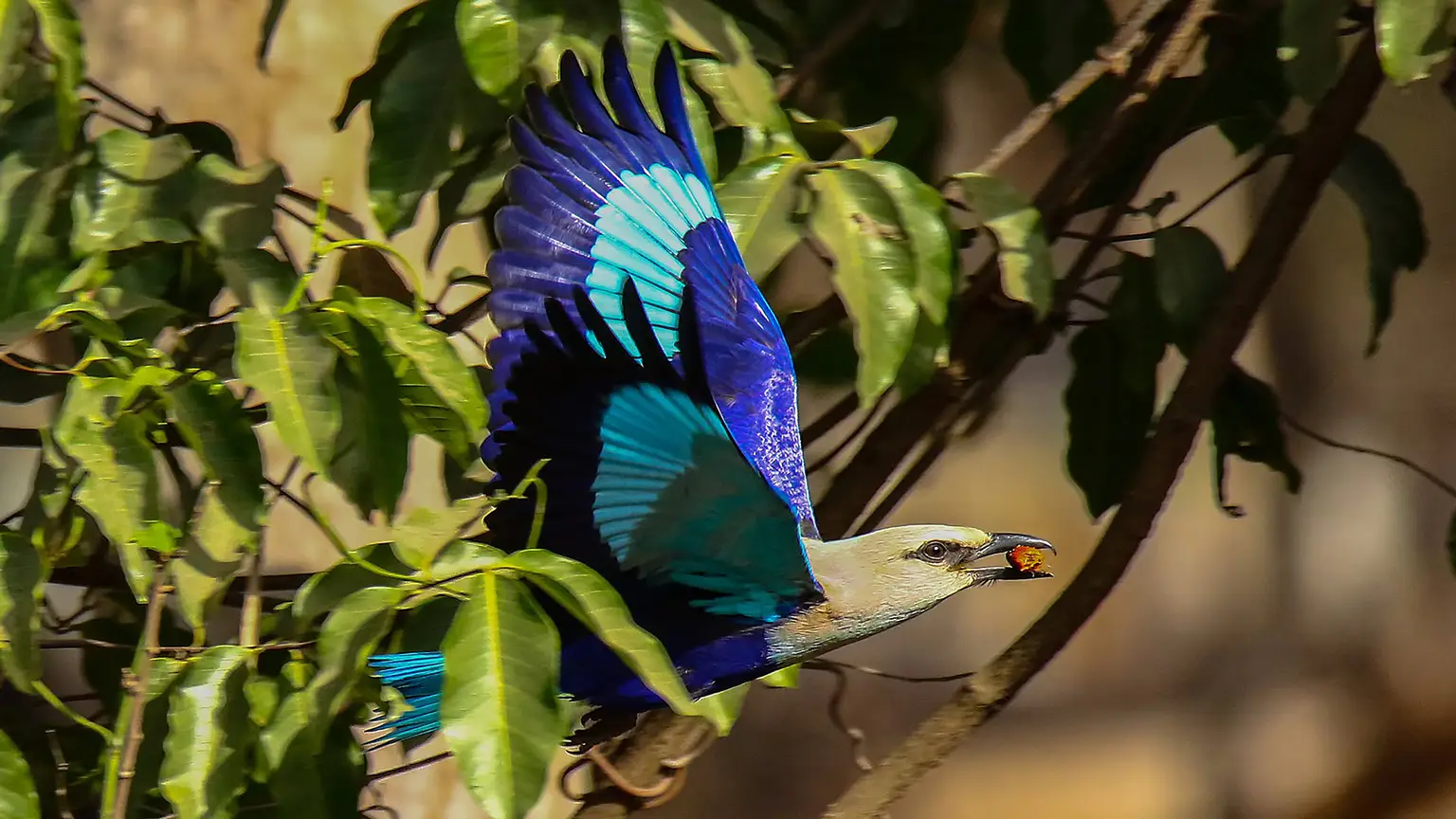
A morning by boat, engine off: the approach is made on the drift, as close to the subjects as possible. This is where Pied Kingfisher, Giant Kingfisher and Blue-breasted Kingfisher concentrate. You also meet the Blue-cheeked Bee-eater colonies of the Karone Islands and the imposing Saddle-billed Stork. Above all, the angle at water level changes everything: the background becomes a smooth sheet, and the bird stands out with nothing behind it.
The forest and its edges
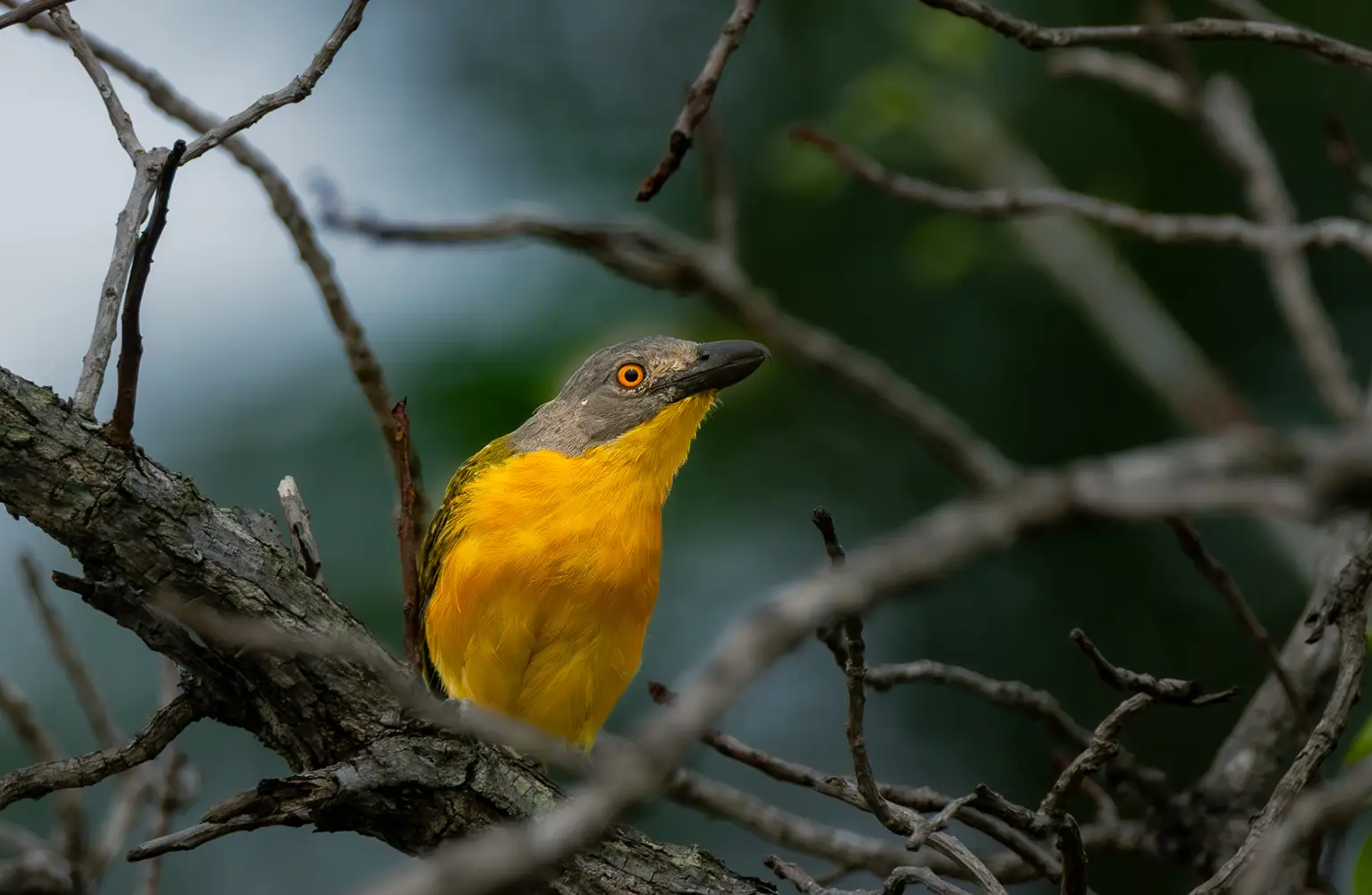
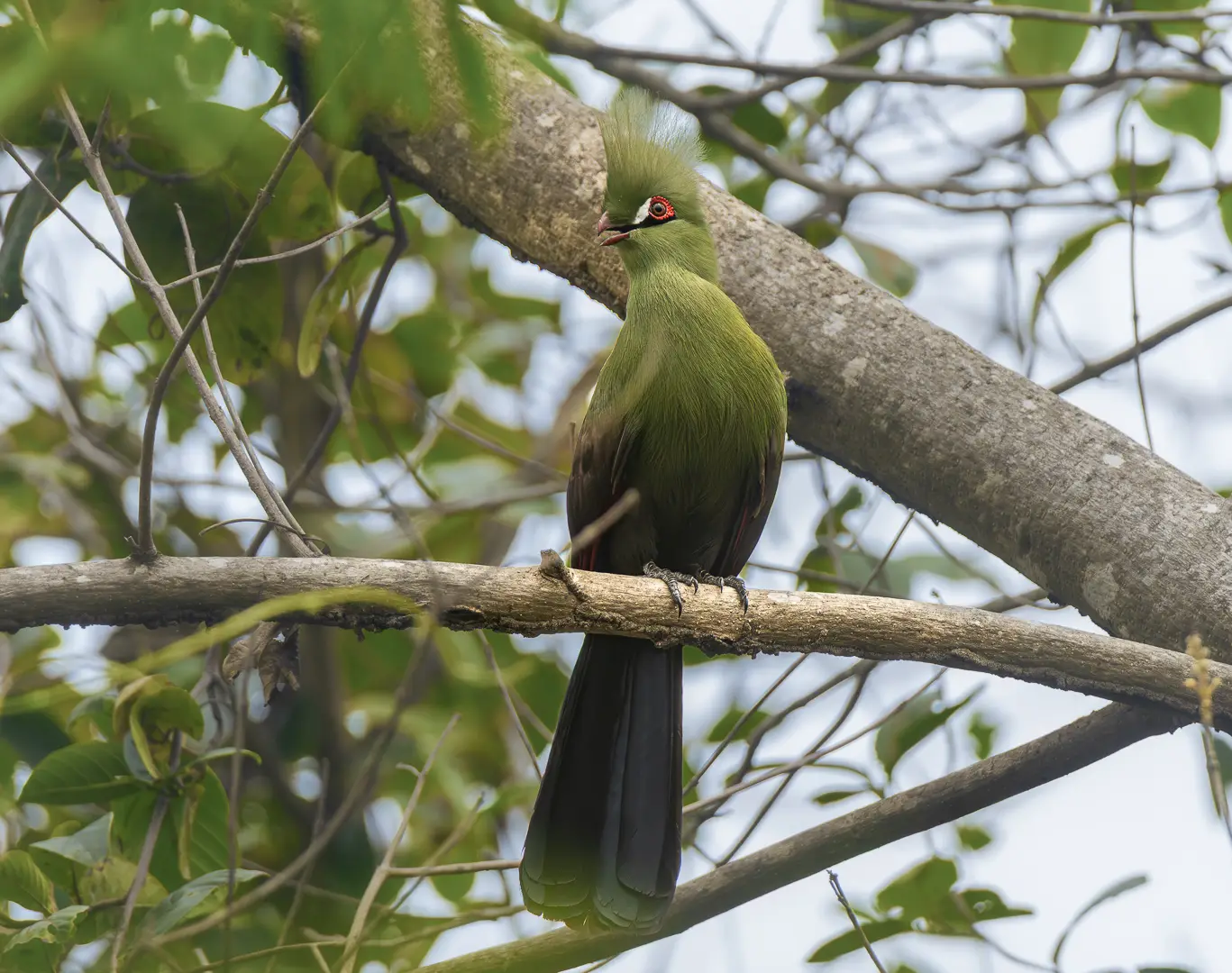
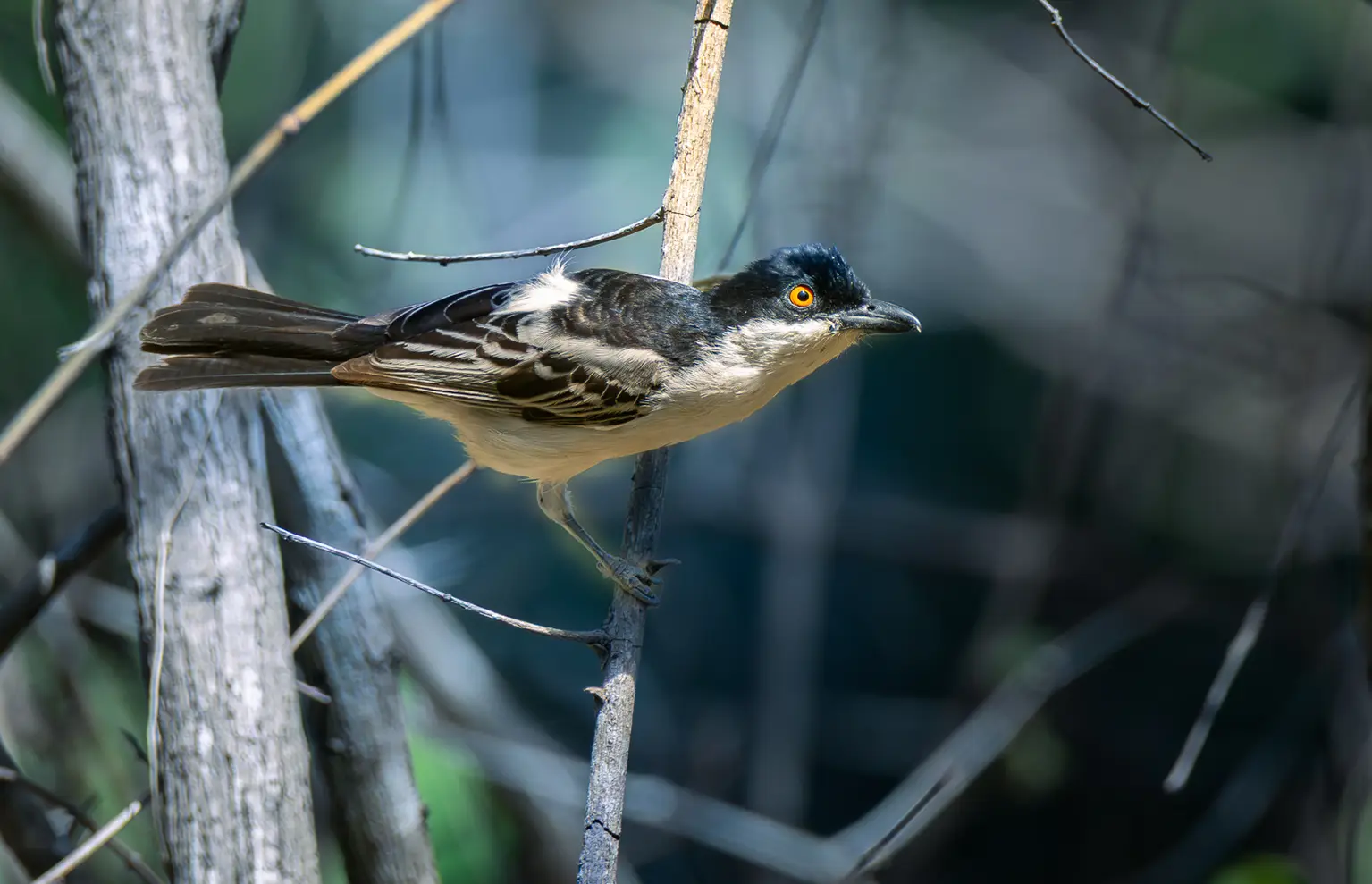
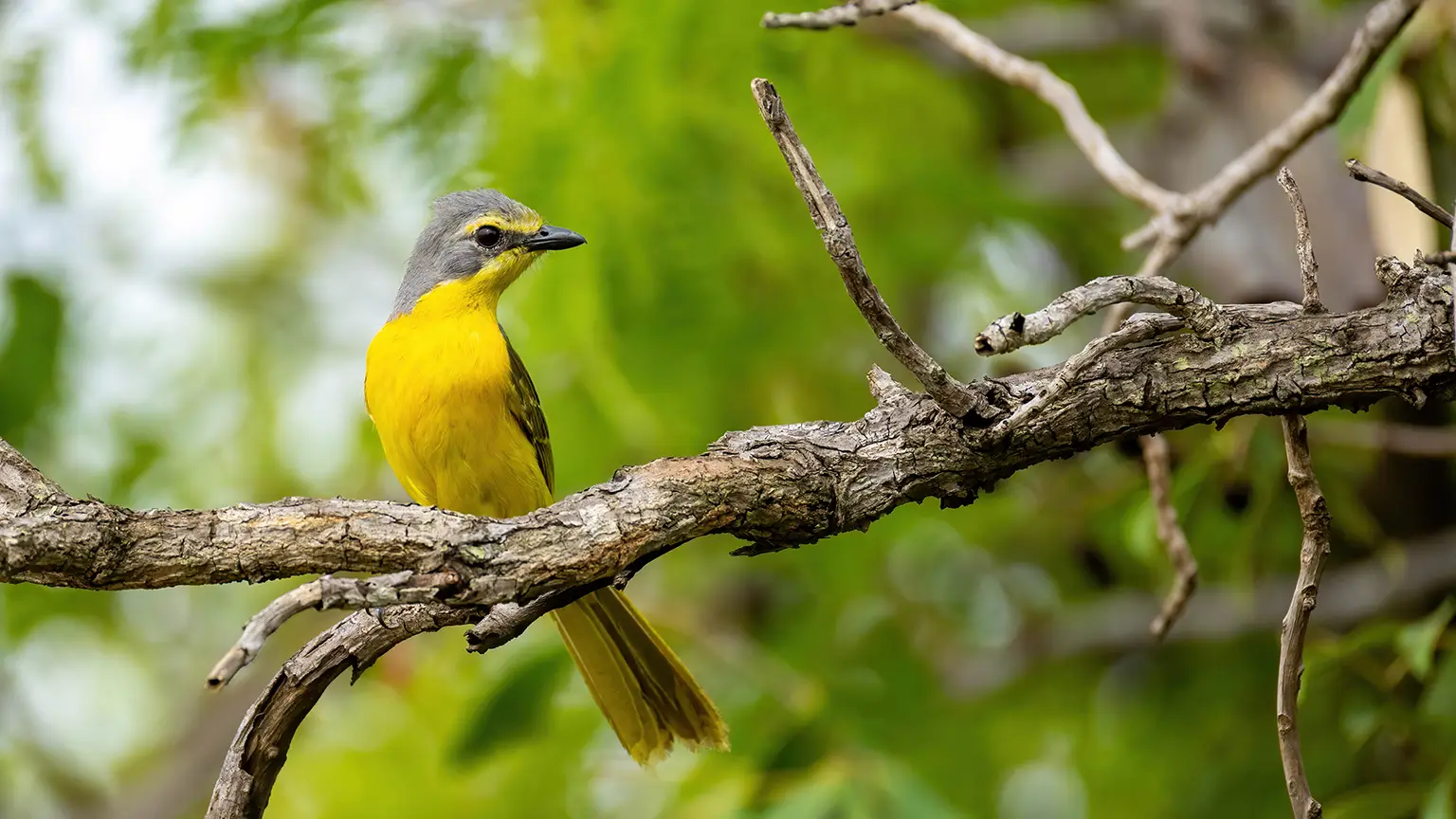
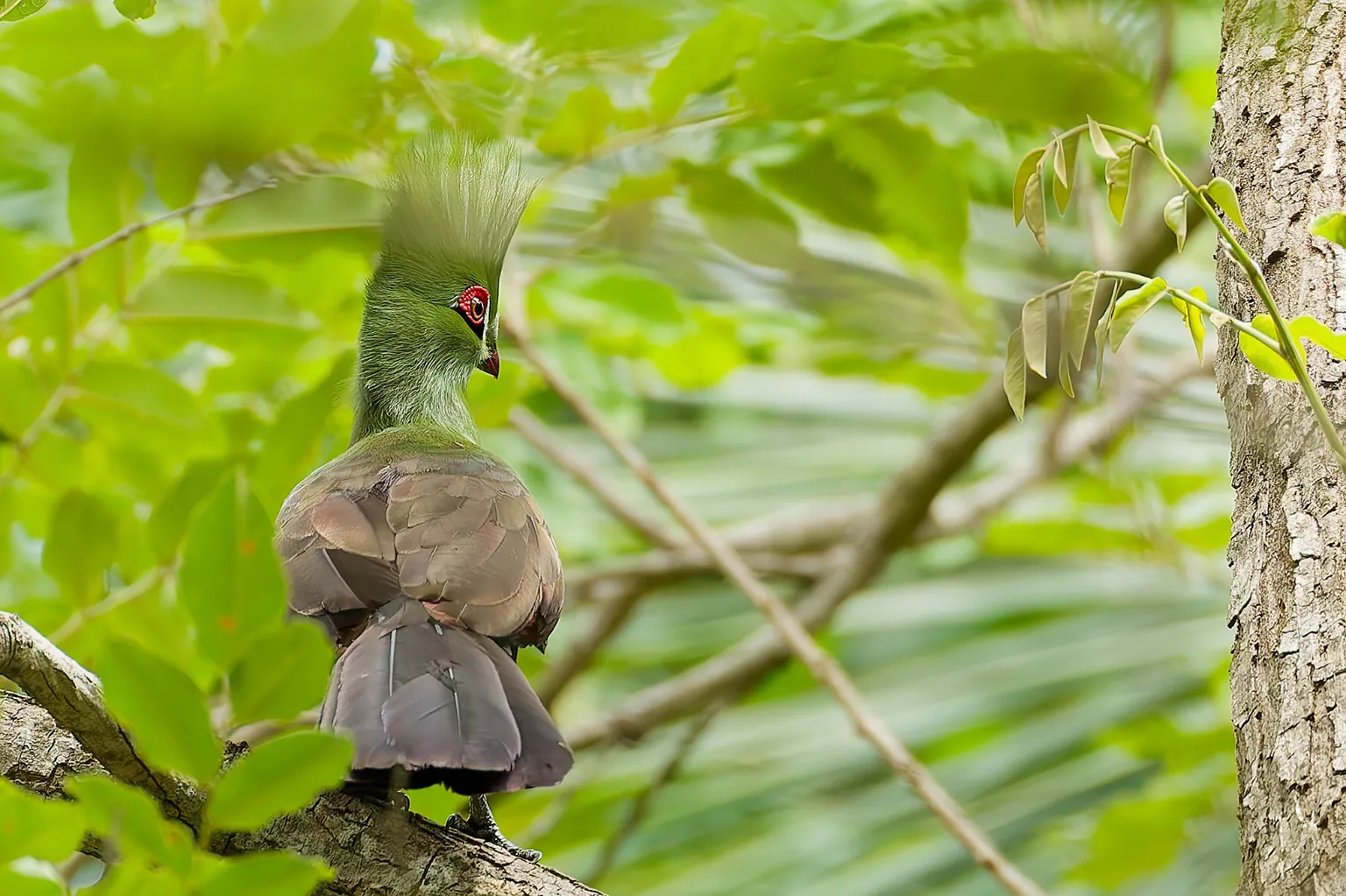
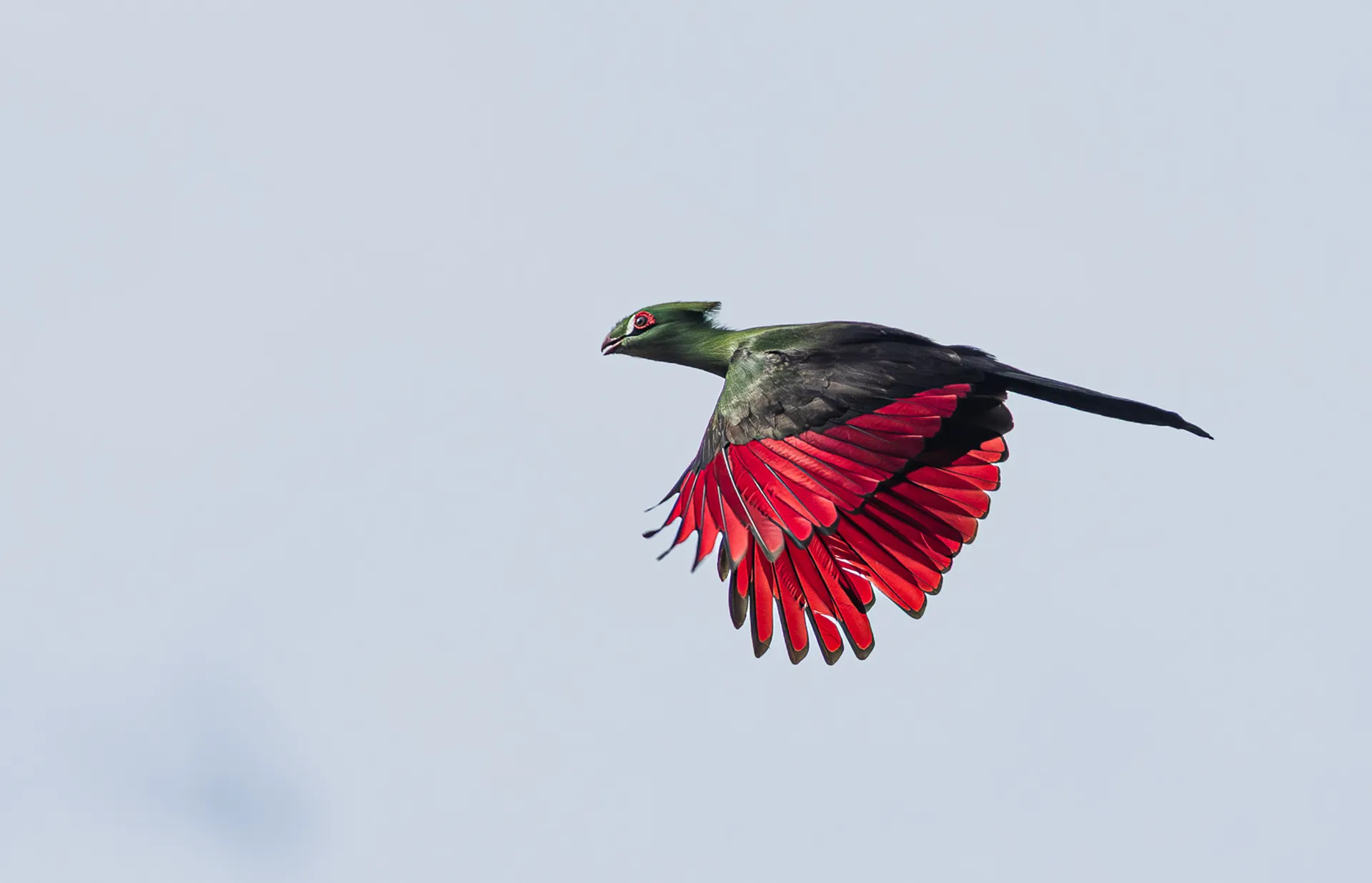
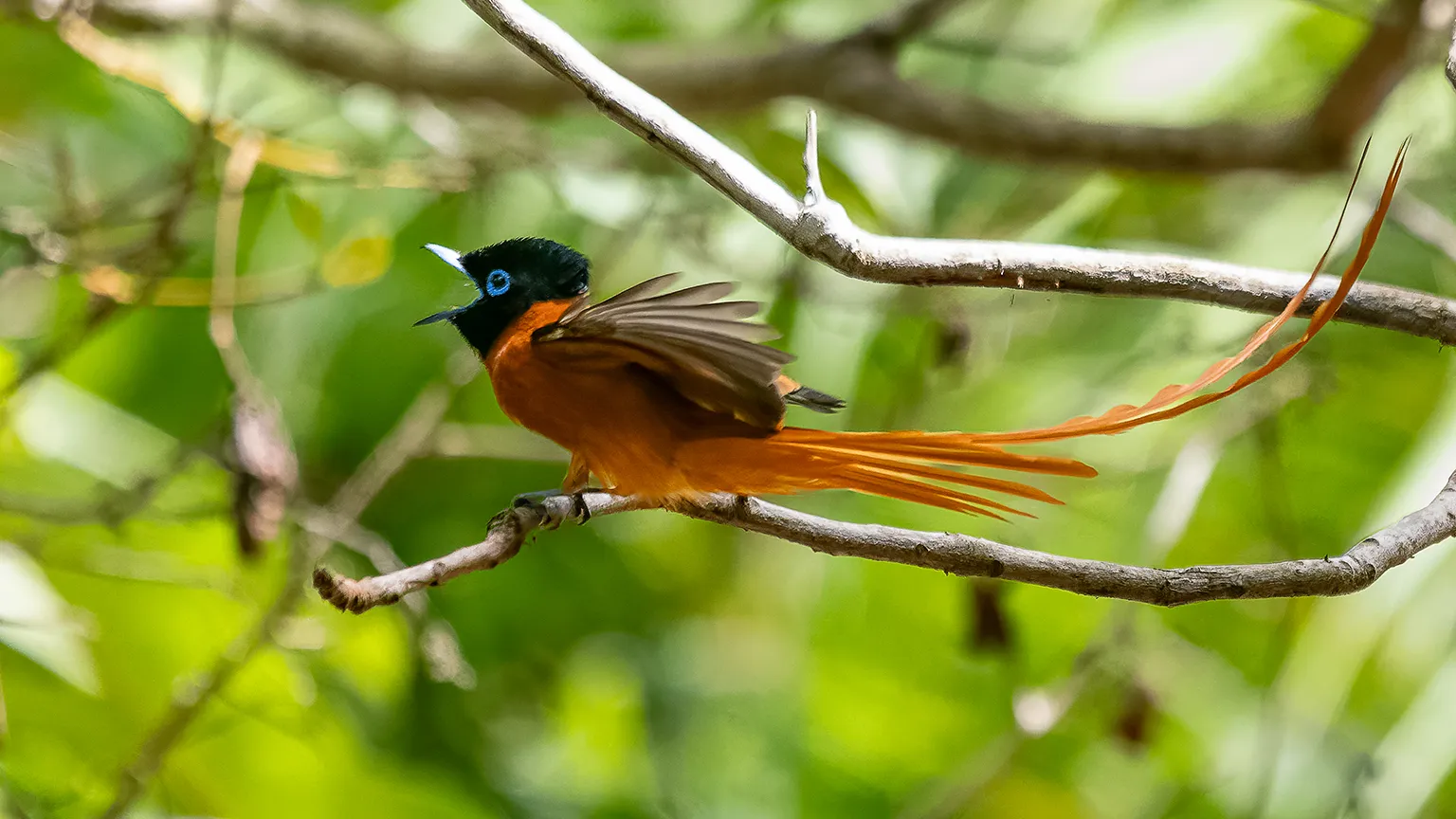
Kafountine, Niafarang, Kabiline. This is where you have to be at your most technical: ready for the bird that takes off, able to anticipate where your subject is going — not always easy with species as mobile as the Guinea Turaco. Paradise flycatchers and bushshrikes demand the same vigilance. It is the ground that asks for the most patience, and rewards it best.
Savanna, rice fields and the airstrip
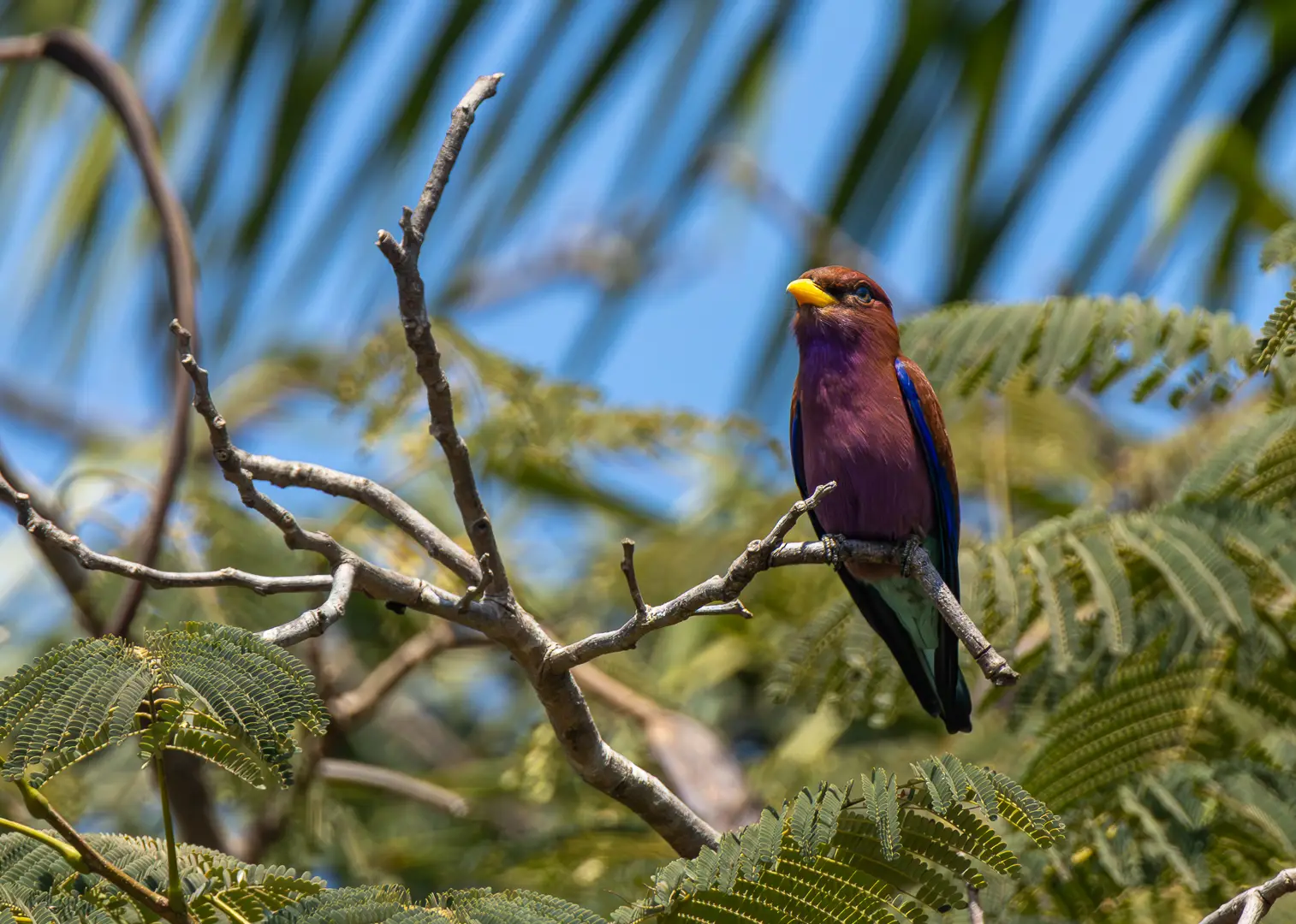
Open country, hard light, longer flight distances — this is where the portable hide makes all the difference. Kabiline for the large birds, the Kassel road for rollers, the airstrip for raptors and waterbirds coming down to drink.
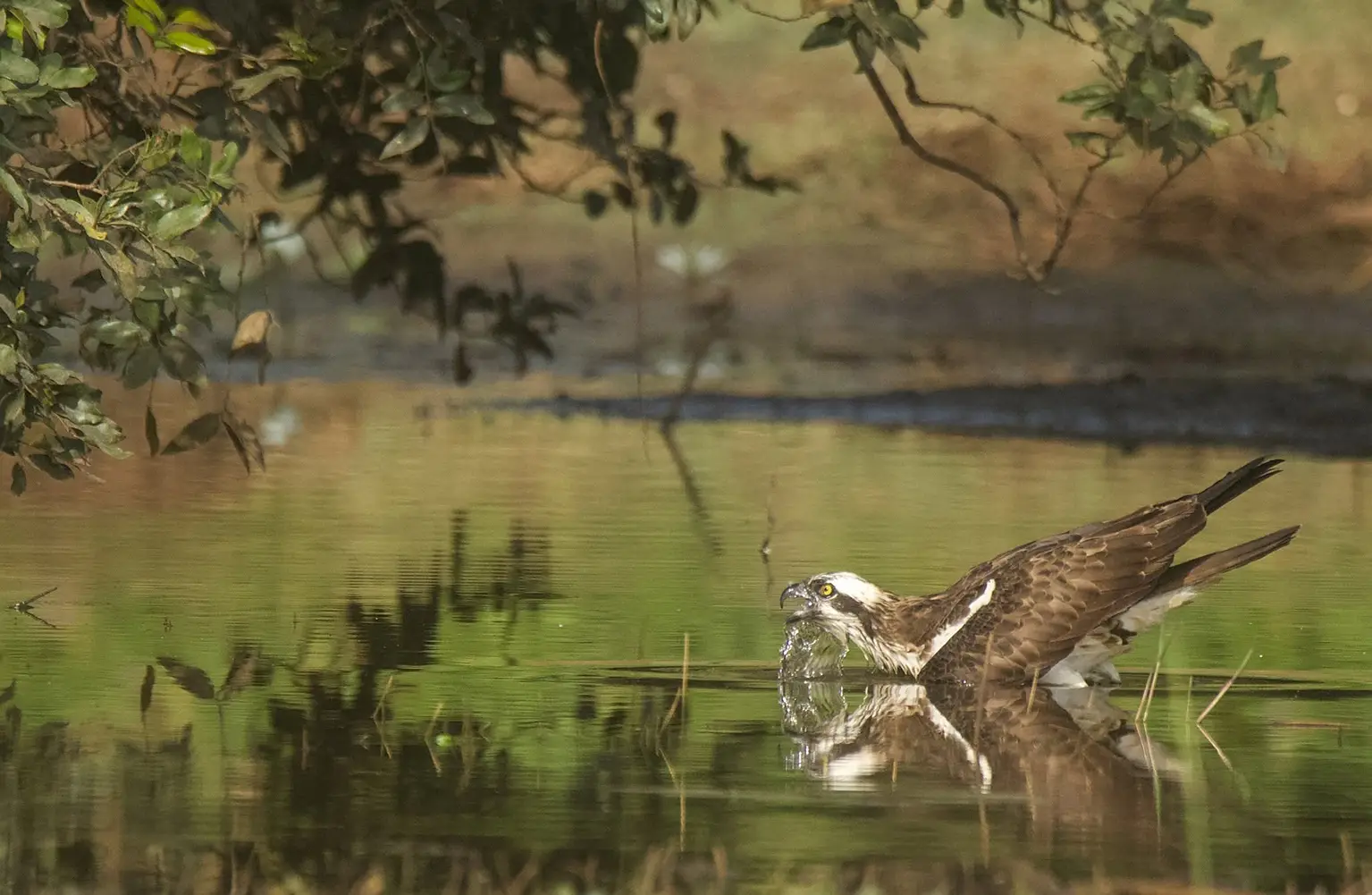
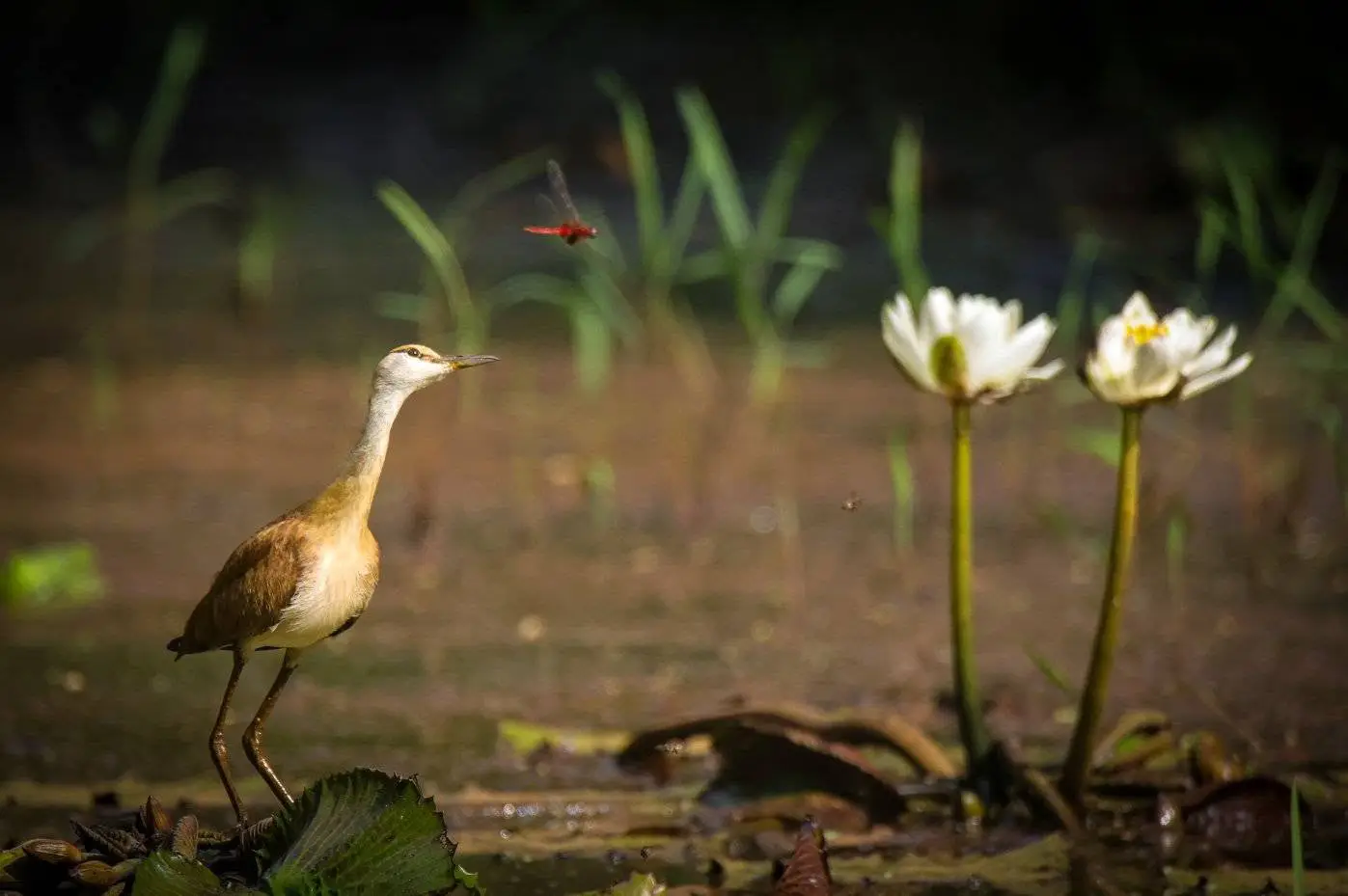
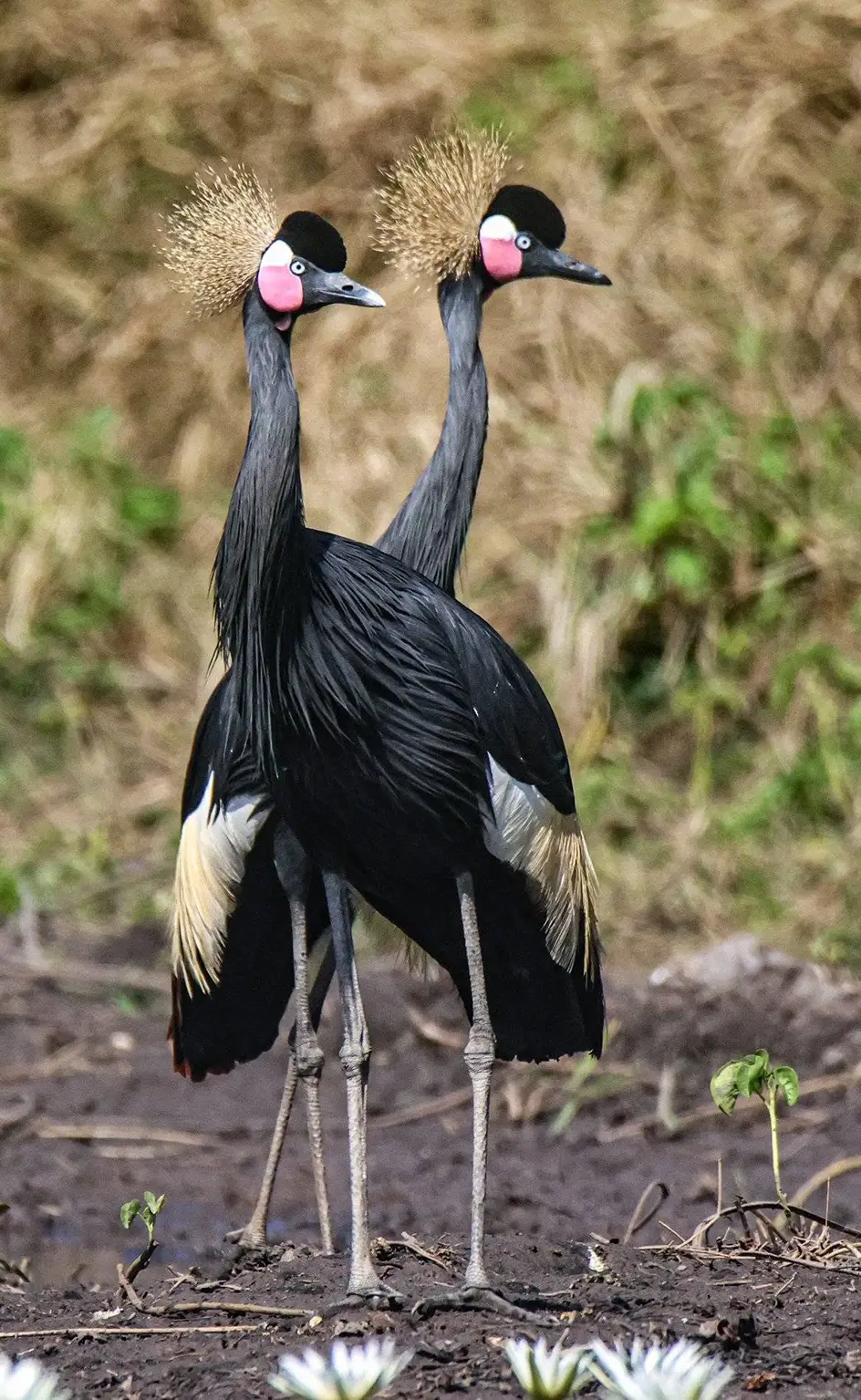
The airstrip pool is a good illustration of what waiting under canvas produces. Osprey come down to bathe, African Jacana walk the water lilies, and Black Crowned Crane — listed as Vulnerable and in marked decline across West Africa — sometimes appears as a pair.
Pointe Saint-Georges
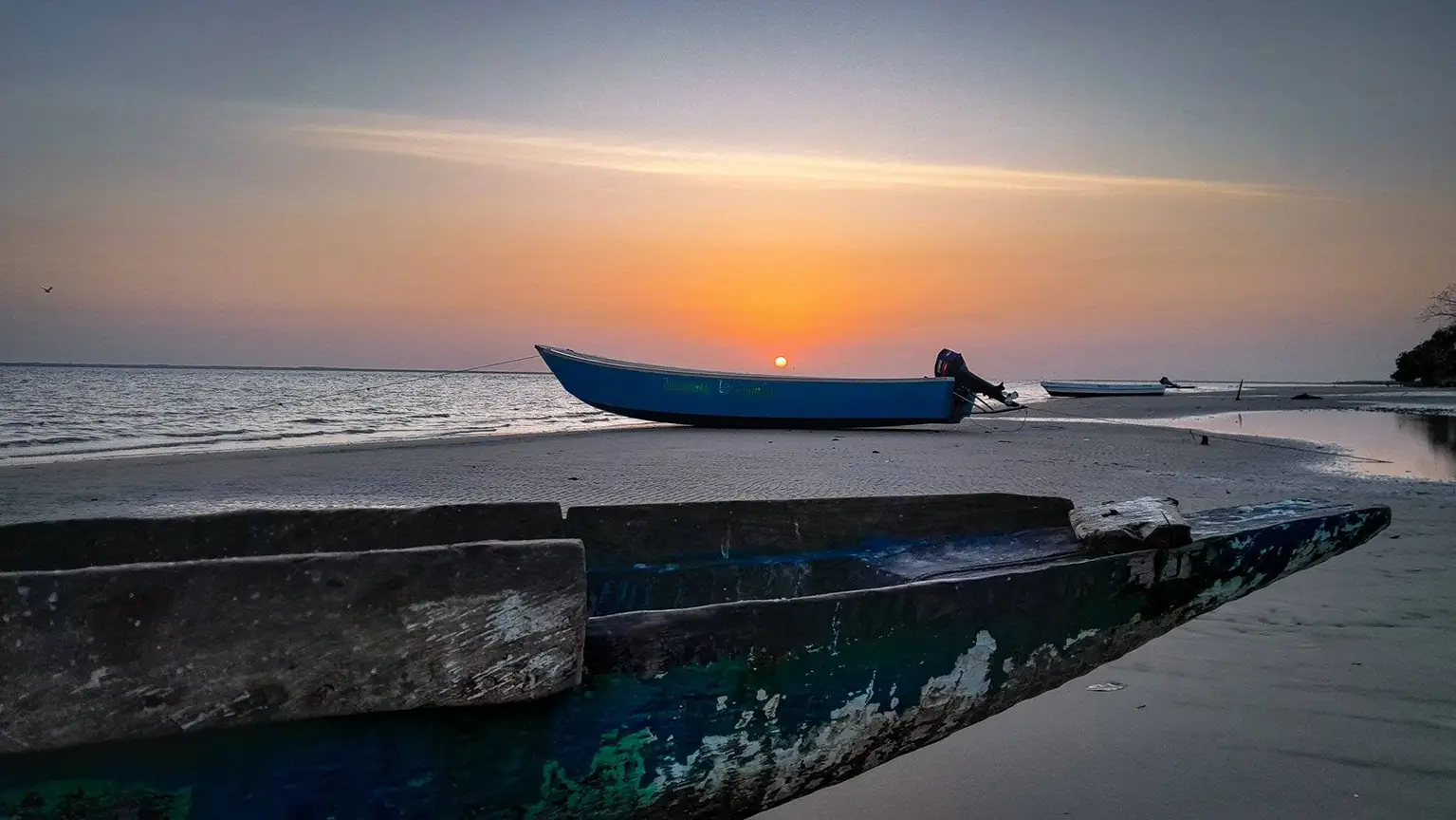
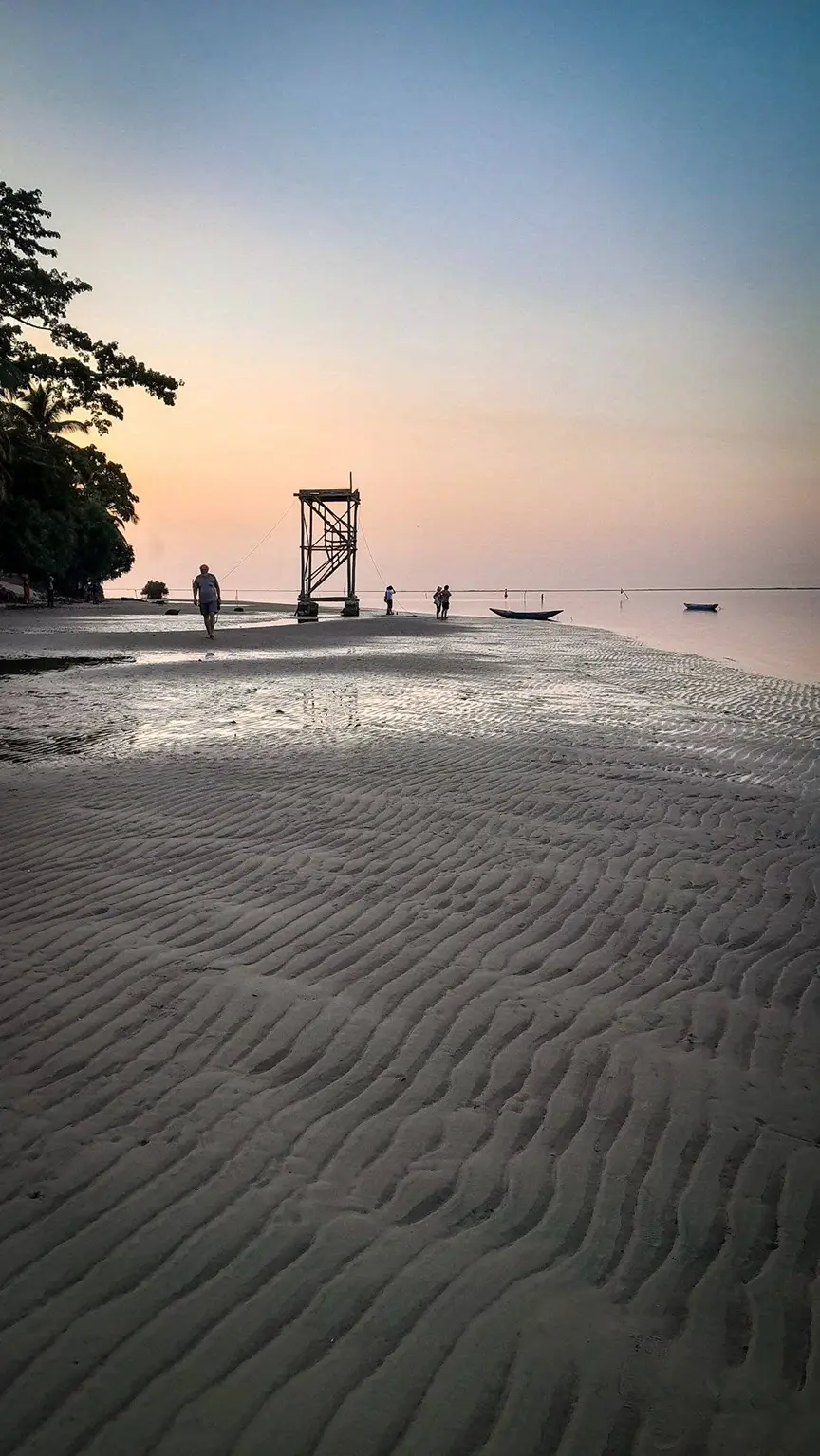
Two nights on site, on the bank of the Casamance river. It is the only point in the tour where we leave Abéné to sleep elsewhere, and the reason is simple: what we come here for cannot be had in a single morning or in passing.
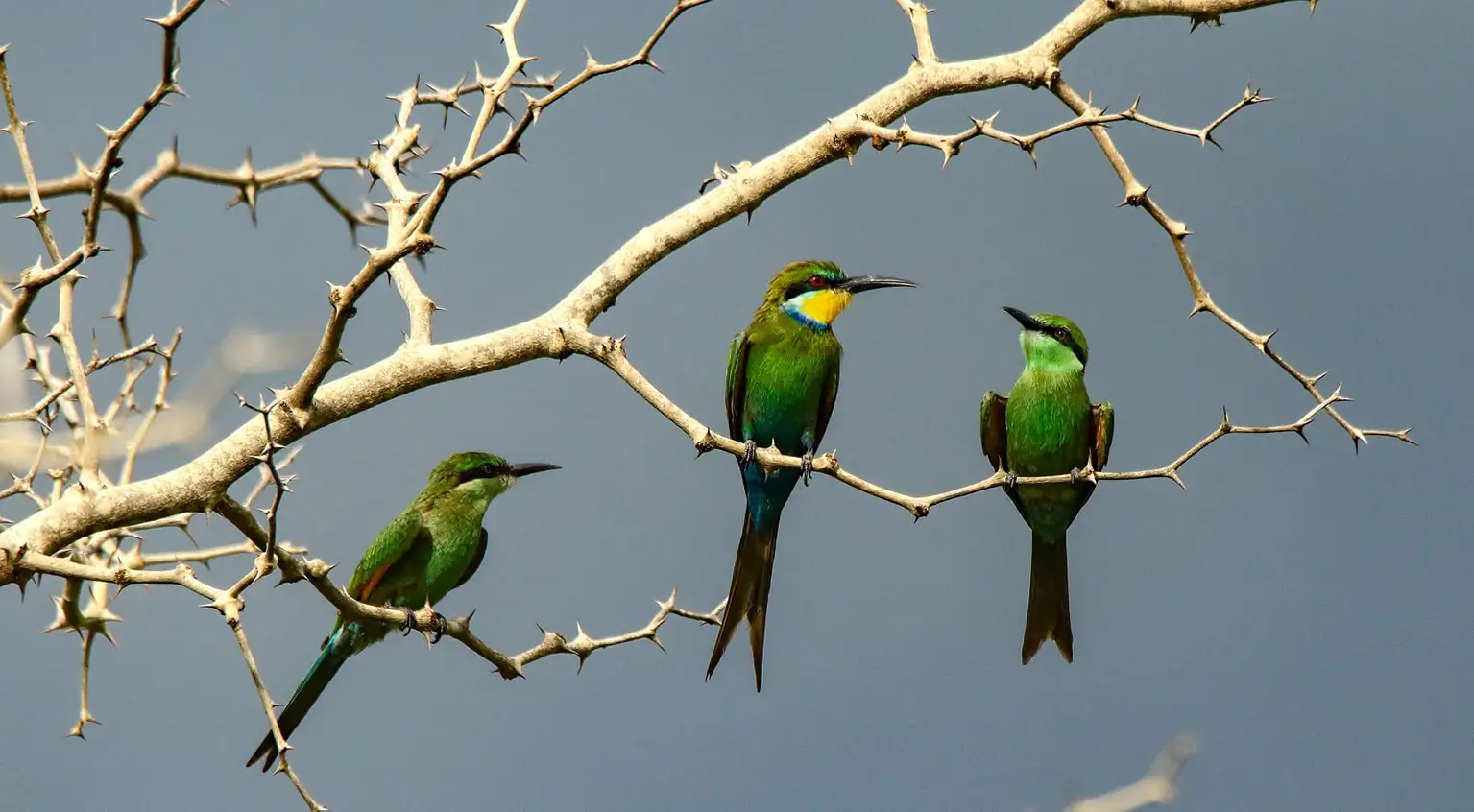
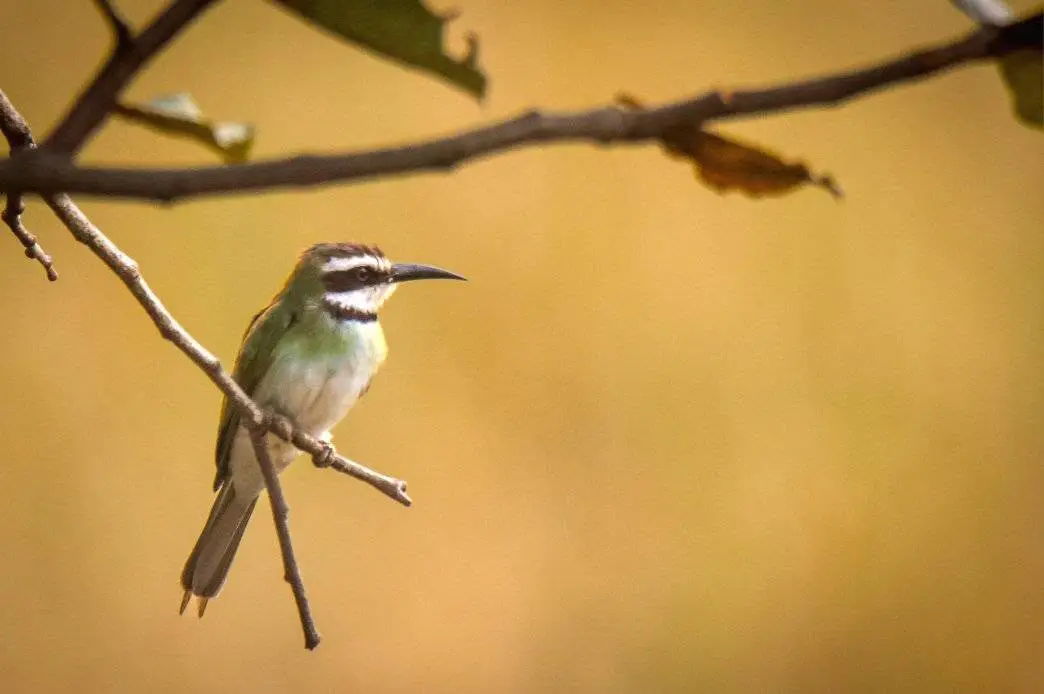
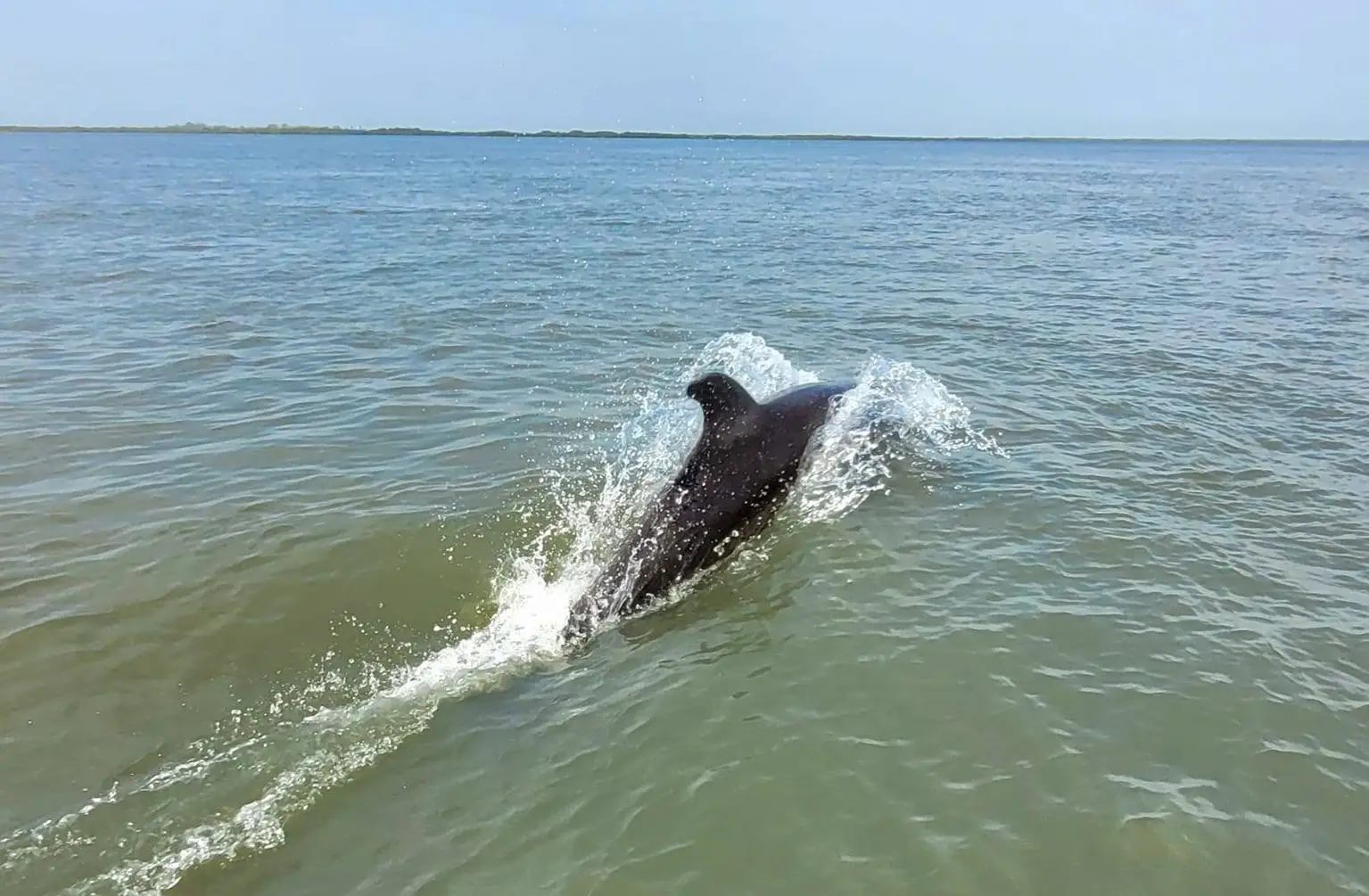
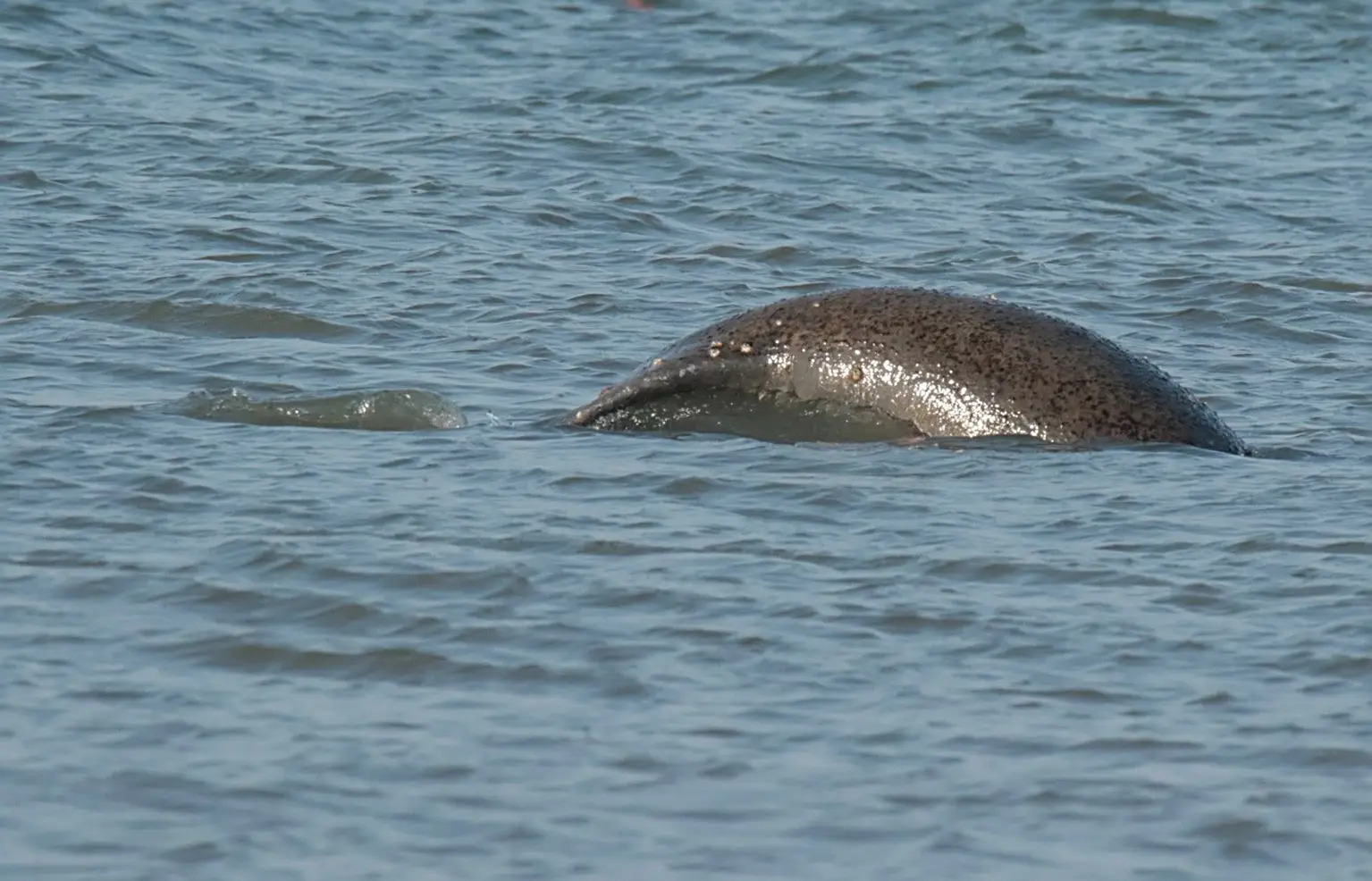
African Manatee and Atlantic Humpback Dolphin both use these waters, and the Pointe is the best sector in West Africa to see them. From the tower as from the boat, though, it takes time and patience — hence the full day. Around it, the White-throated Bee-eater colonies dug into the banks, and all the birdlife of the tall mangrove.
But what people talk about afterwards is often the sunrise. It opens out over the river, in a stillness found nowhere else on the circuit, and the birds crossing it cut into it like shadow puppets. For a photographer, that is a blue hour then a golden hour without moving a single metre.
Not only birds
Birds are what brings most visitors, and they remain the heart of the tour. But the same outings — the boat in the bolongs, the garden hide, the track at first light — also produce primates, reptiles and marine mammals. In practice, those are often the encounters people talk about afterwards.
Primates
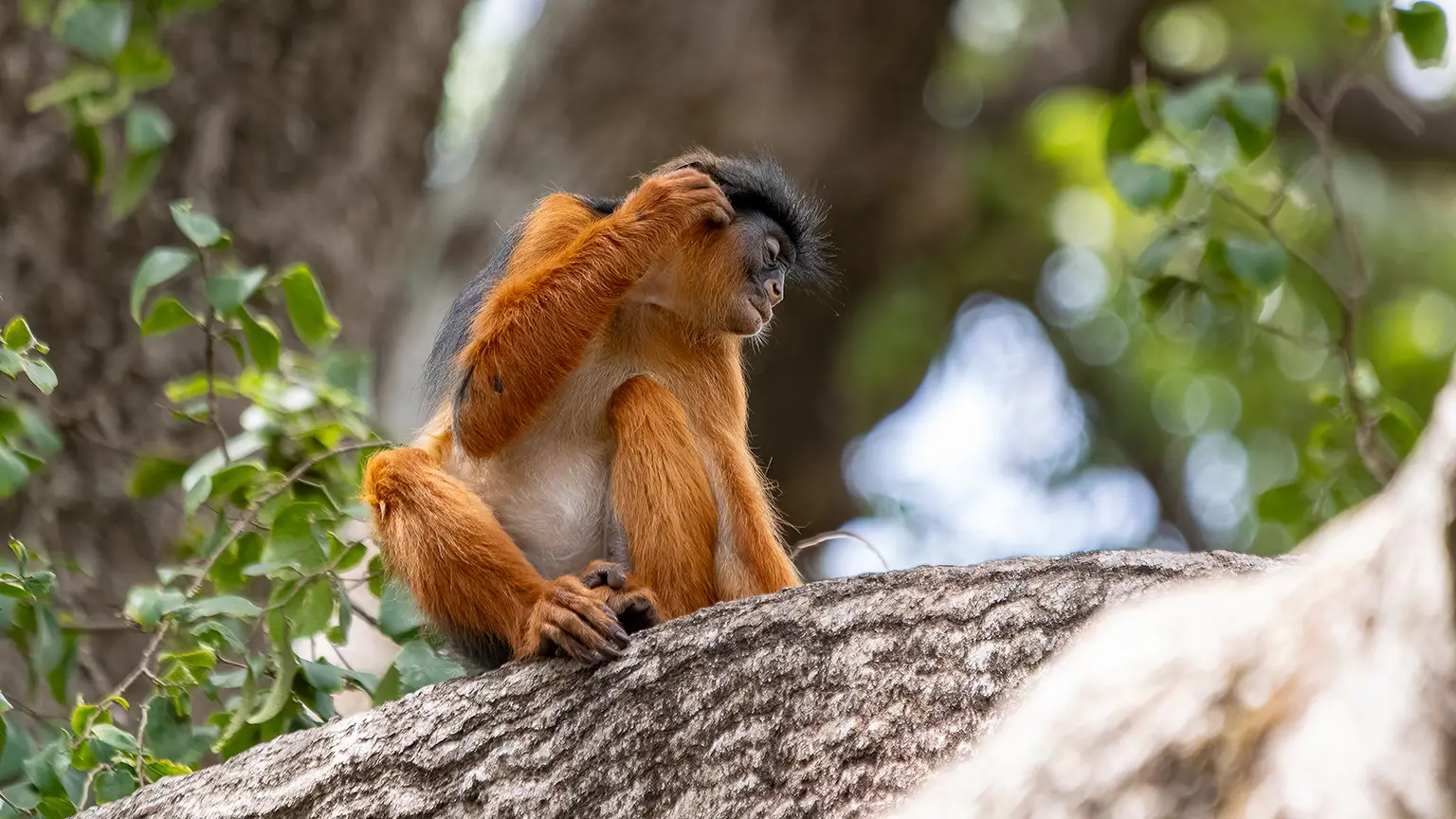
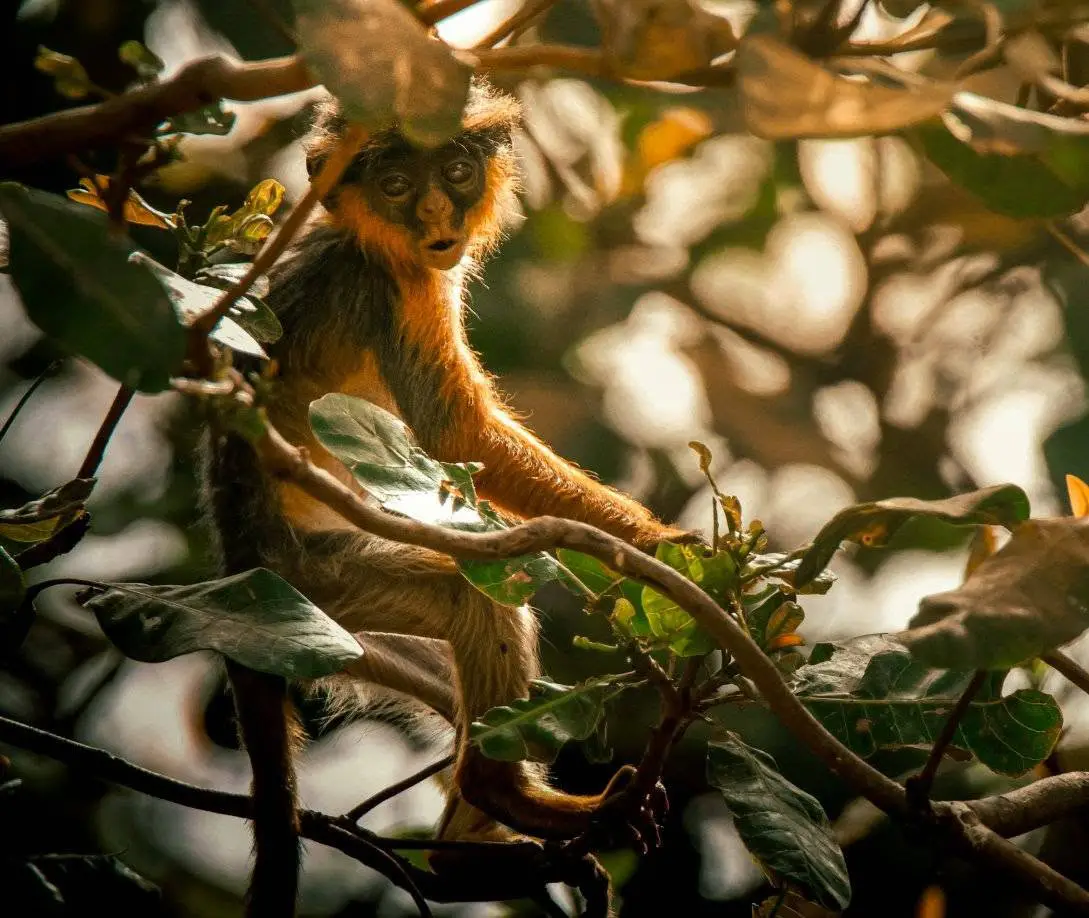
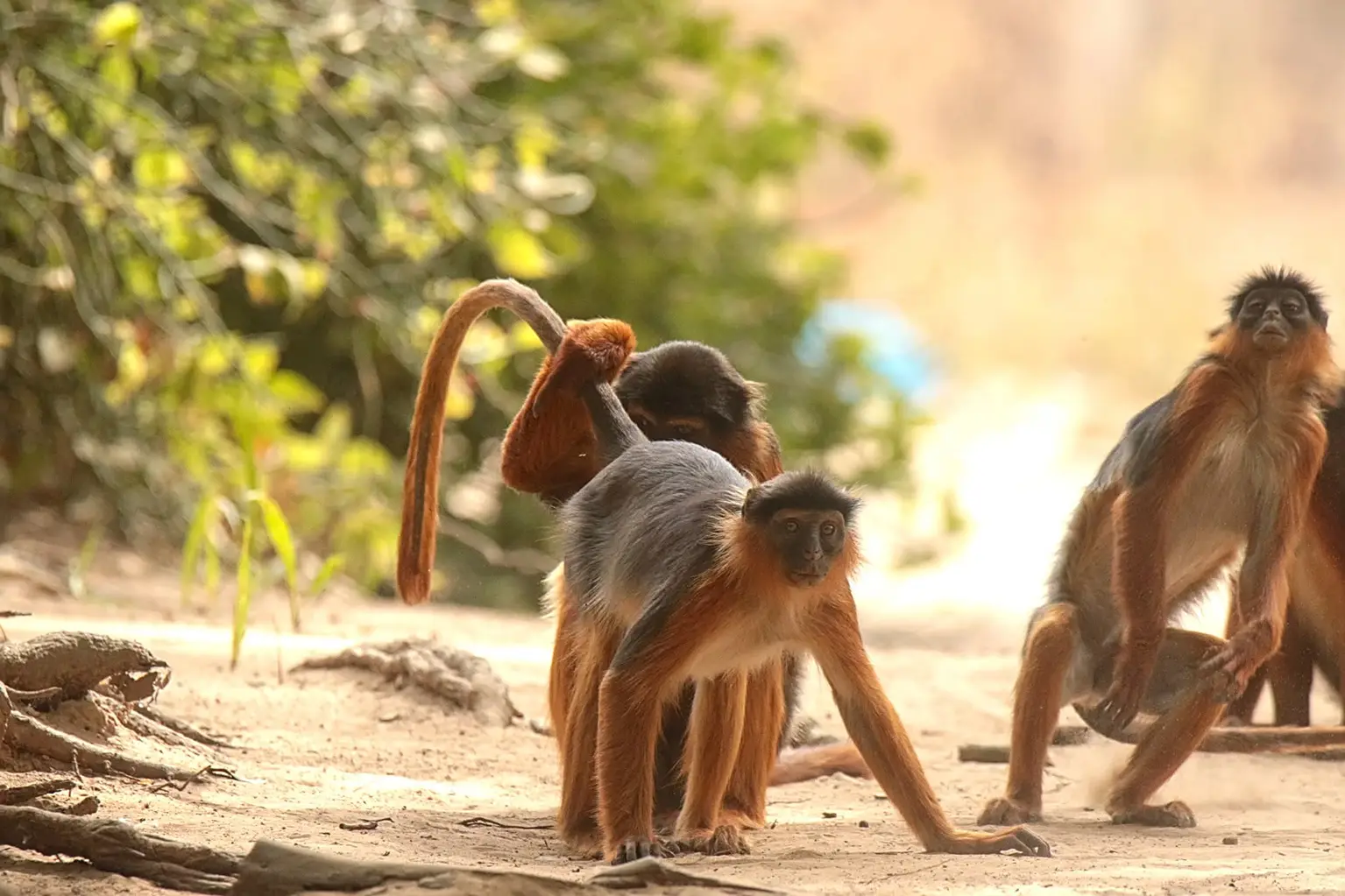
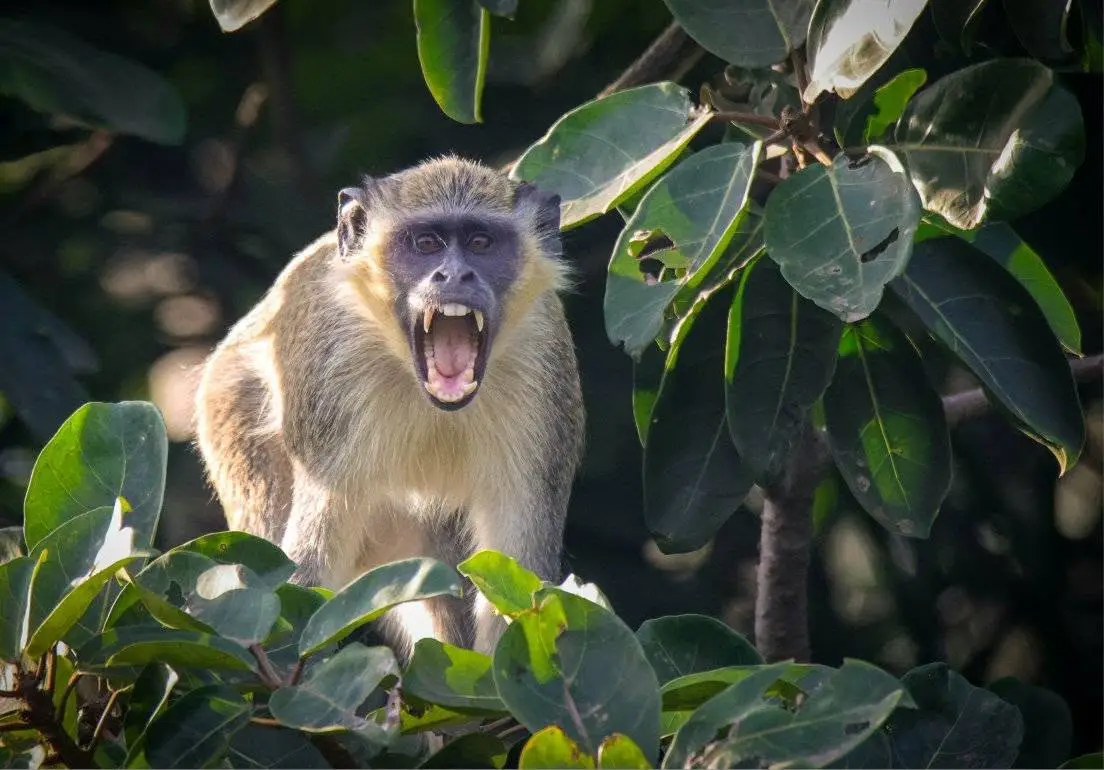
Around Abéné and Kafountine two species are met regularly: the Green Monkey, common along edges and tracks, and Temminck's Red Colobus, more discreet and almost always in the canopy. That subspecies is listed as Endangered on the IUCN Red List, and photographing it in good conditions is entirely feasible if you go to it where it lives.
The sacred kapok tree of Abéné
That place is the Abéné kapok tree — an immense Ceiba pentandra, the sacred tree of the village. The colobus are there in the morning; they sometimes move a few dozen metres away, into the large mango trees nearby. We have also seen many births over the past several years, which is a good sign for this group. They live alongside the villagers without friction, and for a precise reason: the colobus is folivorous, feeding on the leaves and flowers of large trees. Unlike the other monkeys of the region it raids neither gardens nor orchards, so nobody holds anything against it.
The tree itself is a place of ceremony. Particular requests and prayers are made there, notably for a pregnancy that is slow to come. An entrance fee of 500 CFA francs per person has been set up for the benefit of the village; it is included in the price of the tour. It is also a chance to stop at the small bar run by the young people of Abéné, which serves excellent fresh fruit juices.
The Patas Monkey, from a hide
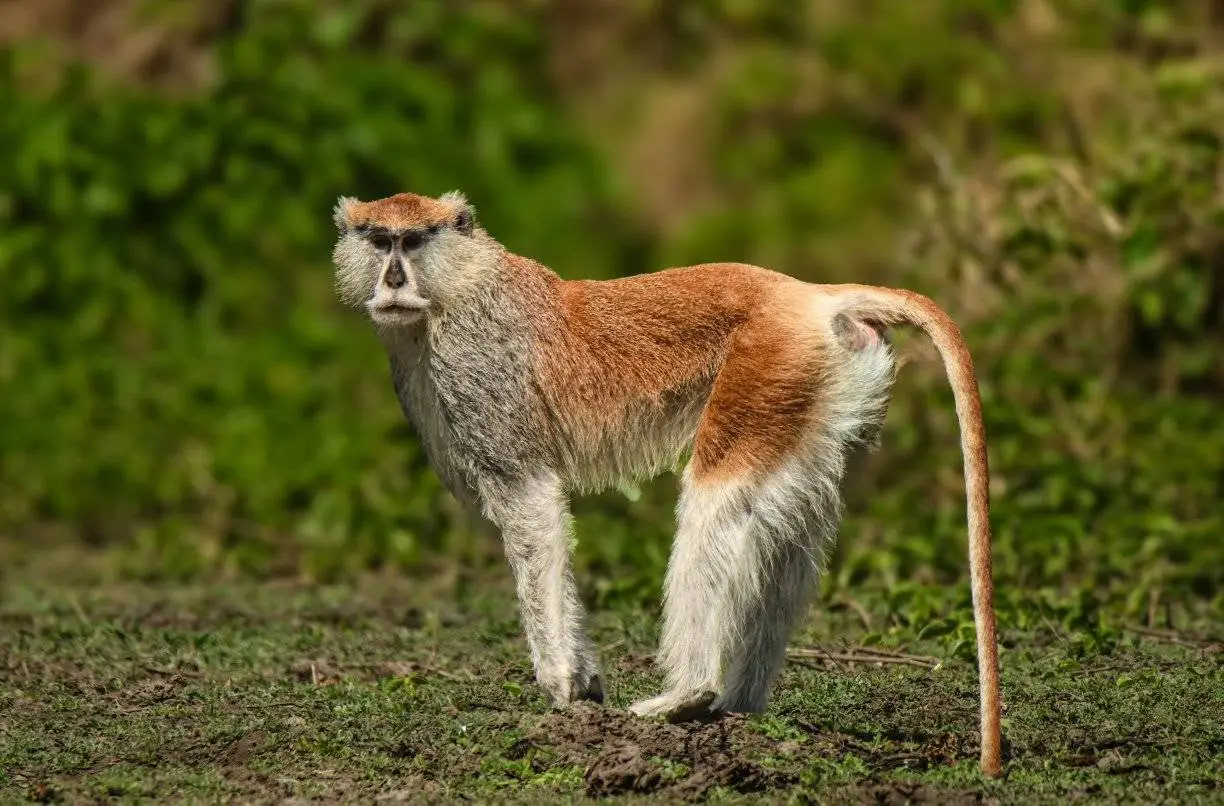
The Patas Monkey is worked differently. You do come across it in the bush, but the species is very shy: for genuine proximity, a hide is the only way. At the Abéné airstrip we set one up for the morning, at the spot where the patas come down to drink at the pool and cross paths with the White-faced Whistling Ducks.
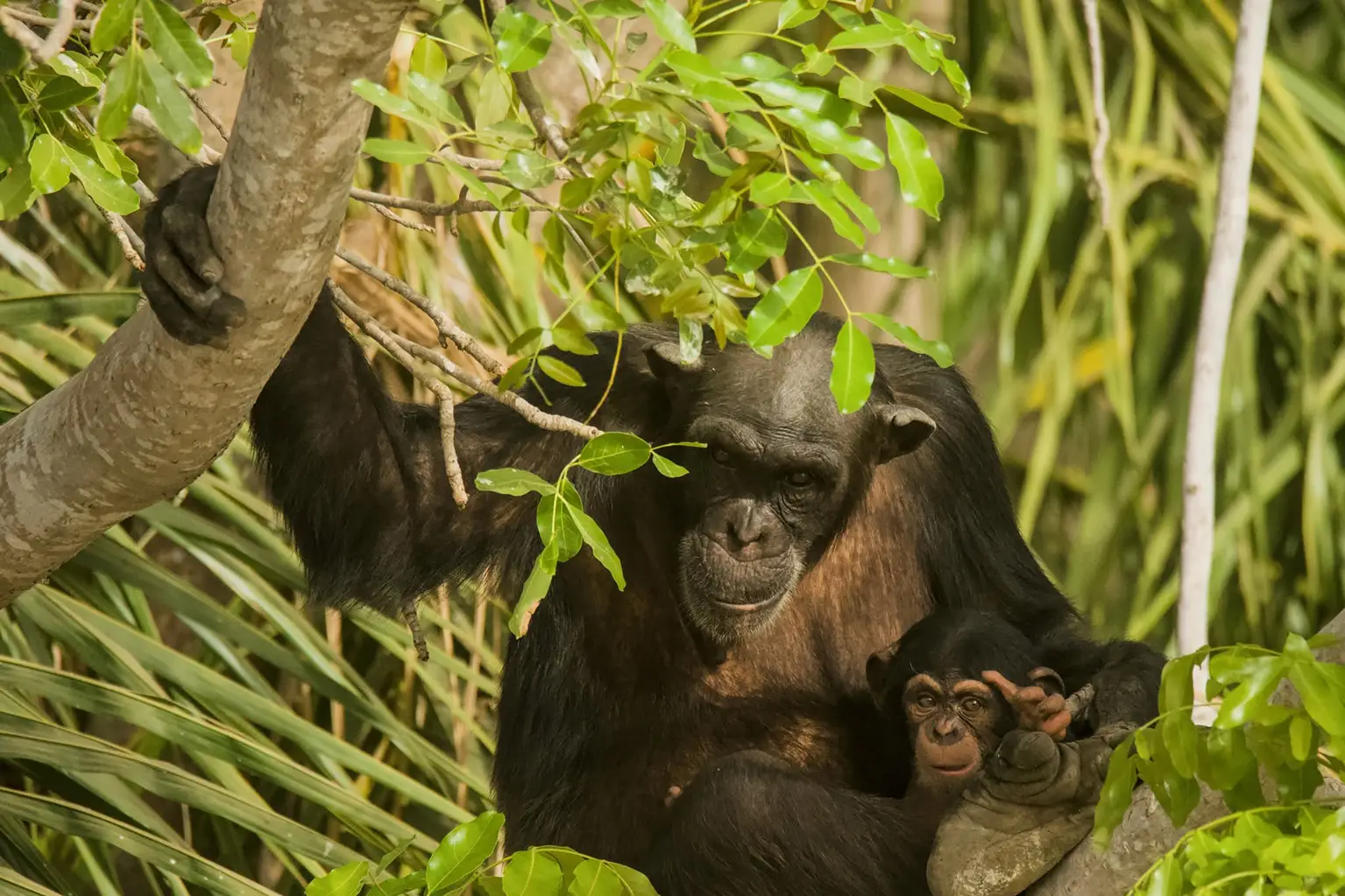
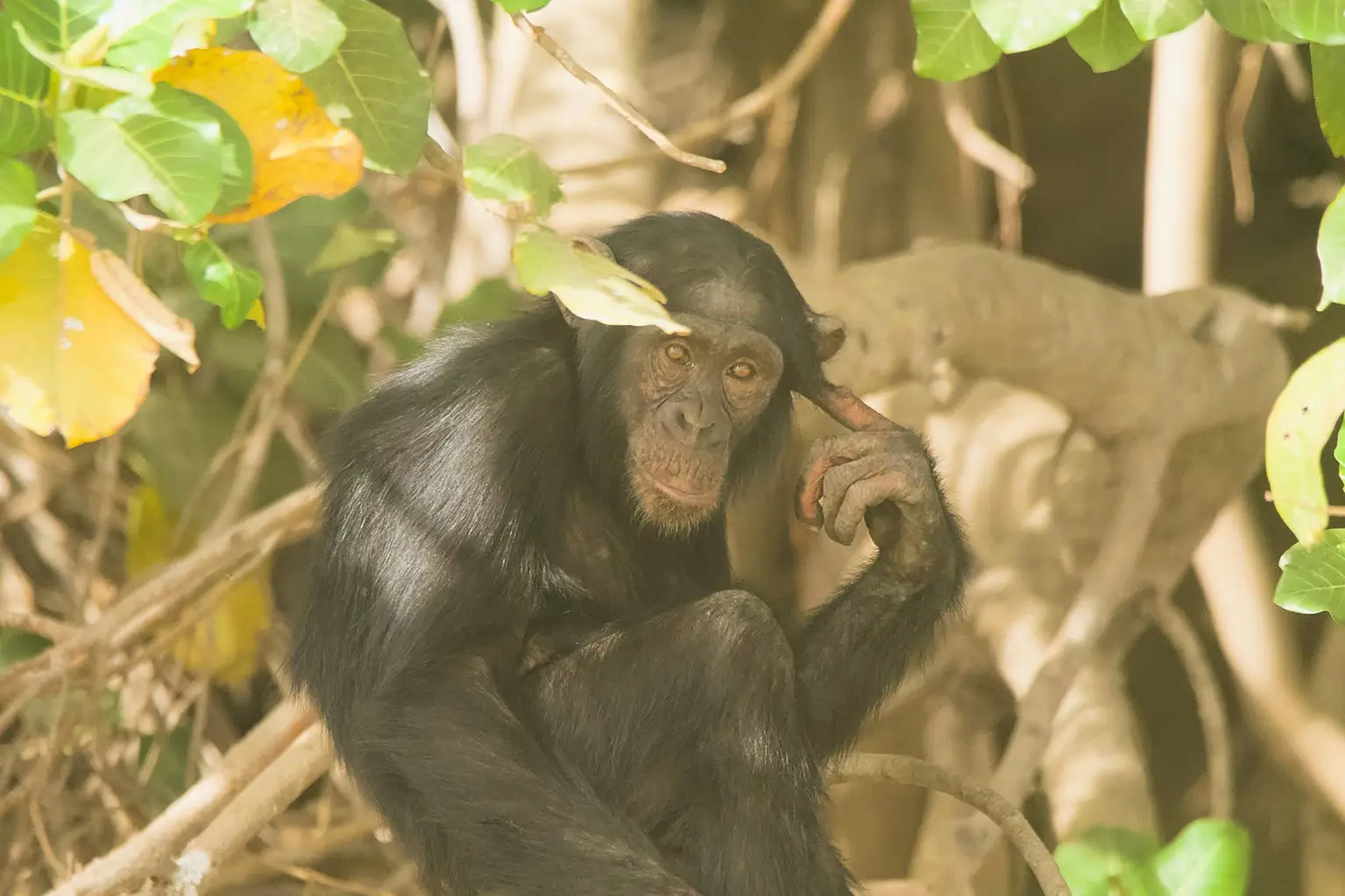
The West African Chimpanzee is not found in Casamance. It is watched at the Baboon Islands on the River Gambia, from the boat and at a regulated distance. That is the five-day Gambia option, in addition to the main tour.
For photographers. The colobus means backlight and a tangle of branches: open up, and it is better to push the ISO than to lose shutter speed. Chimpanzees are shot from the boat, handheld, on a subject that moves little but in light that is often harsh.
Reptiles
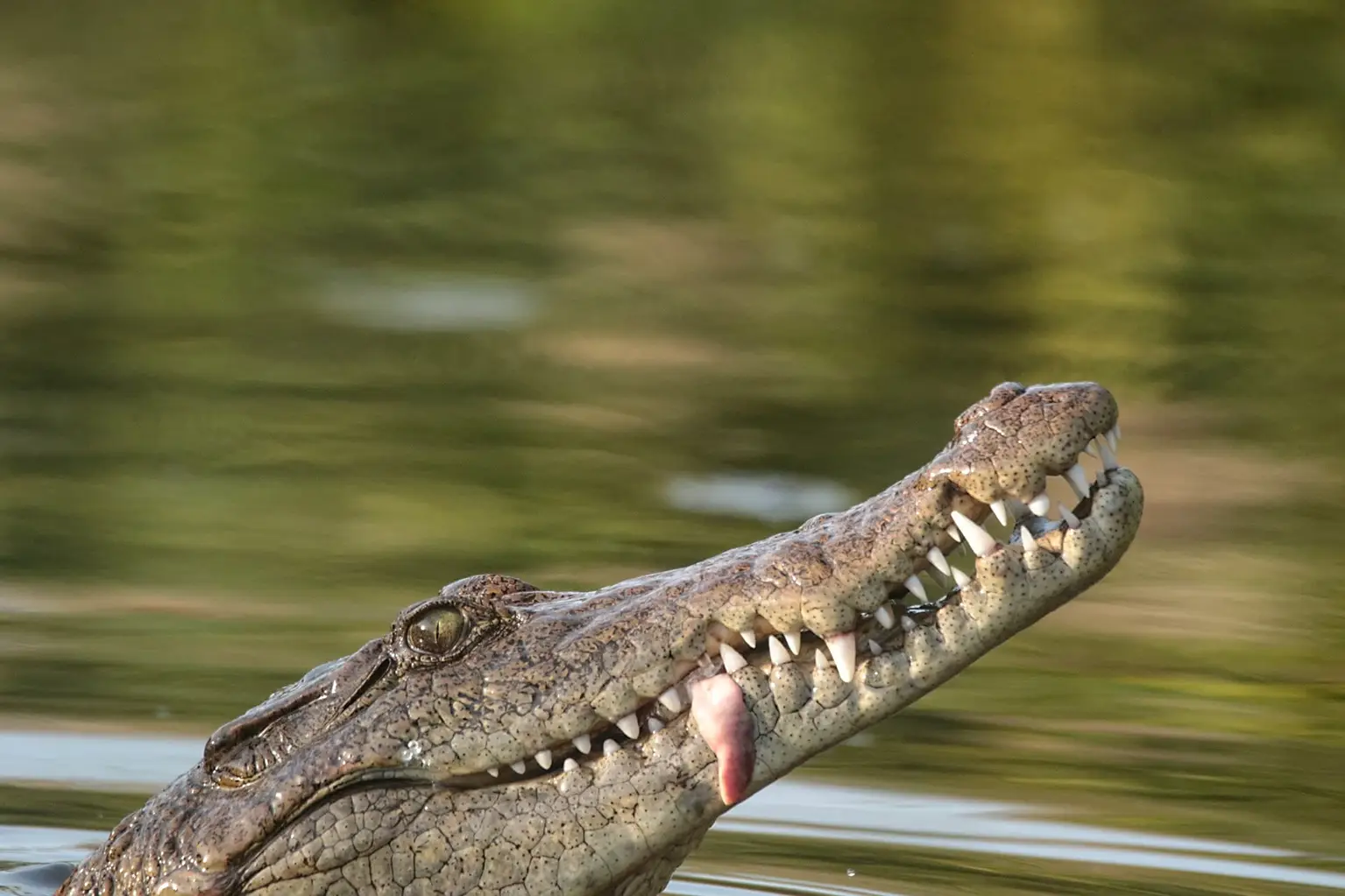
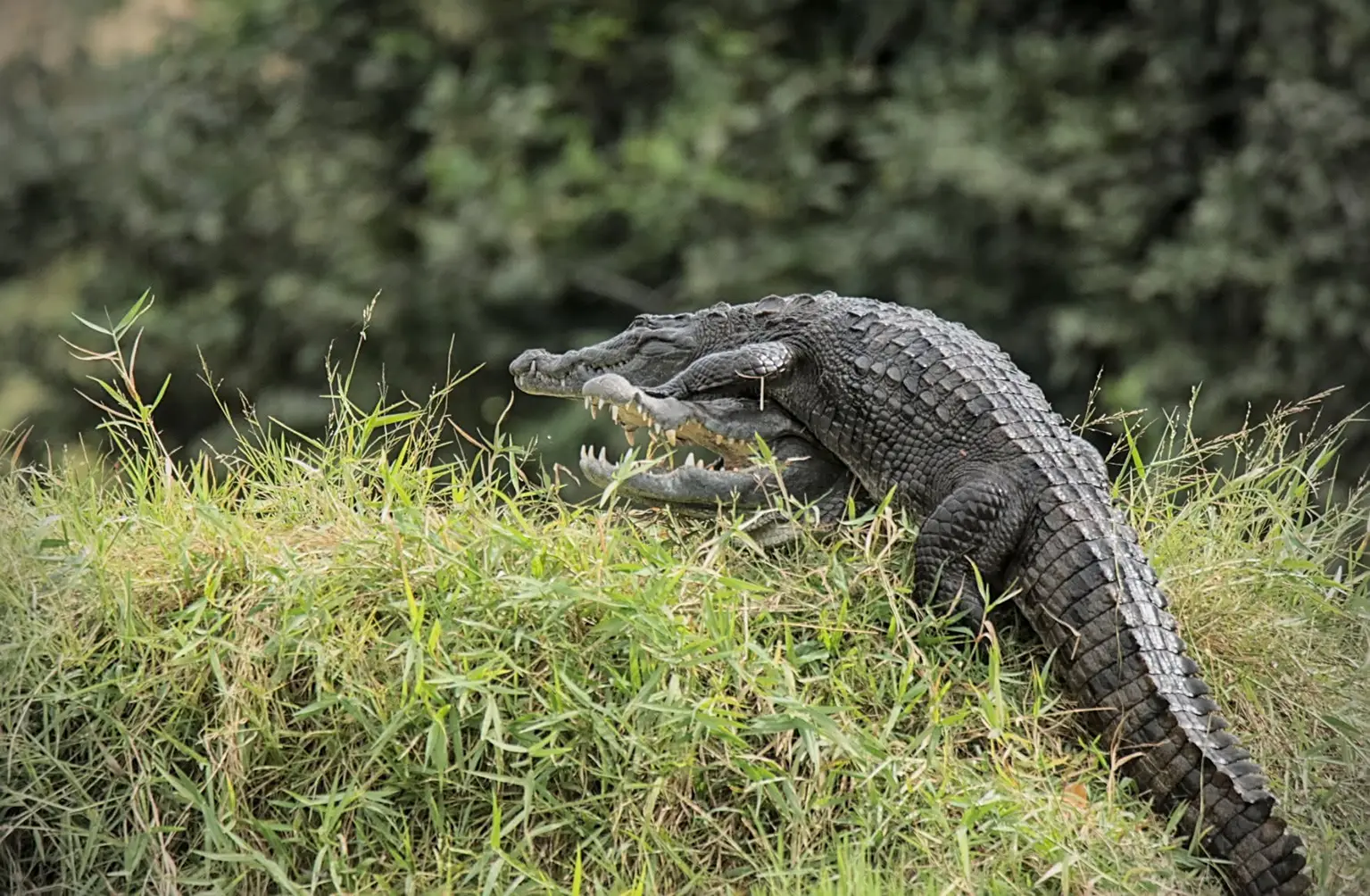
The crocodile of the Abéné bolongs is not a Nile Crocodile, contrary to what most guidebooks state: it is the West African Crocodile, Crocodylus suchus, recognised as a distinct species since 2011. You find it basking on the banks late in the morning, and drifting at the surface for the rest of the day.
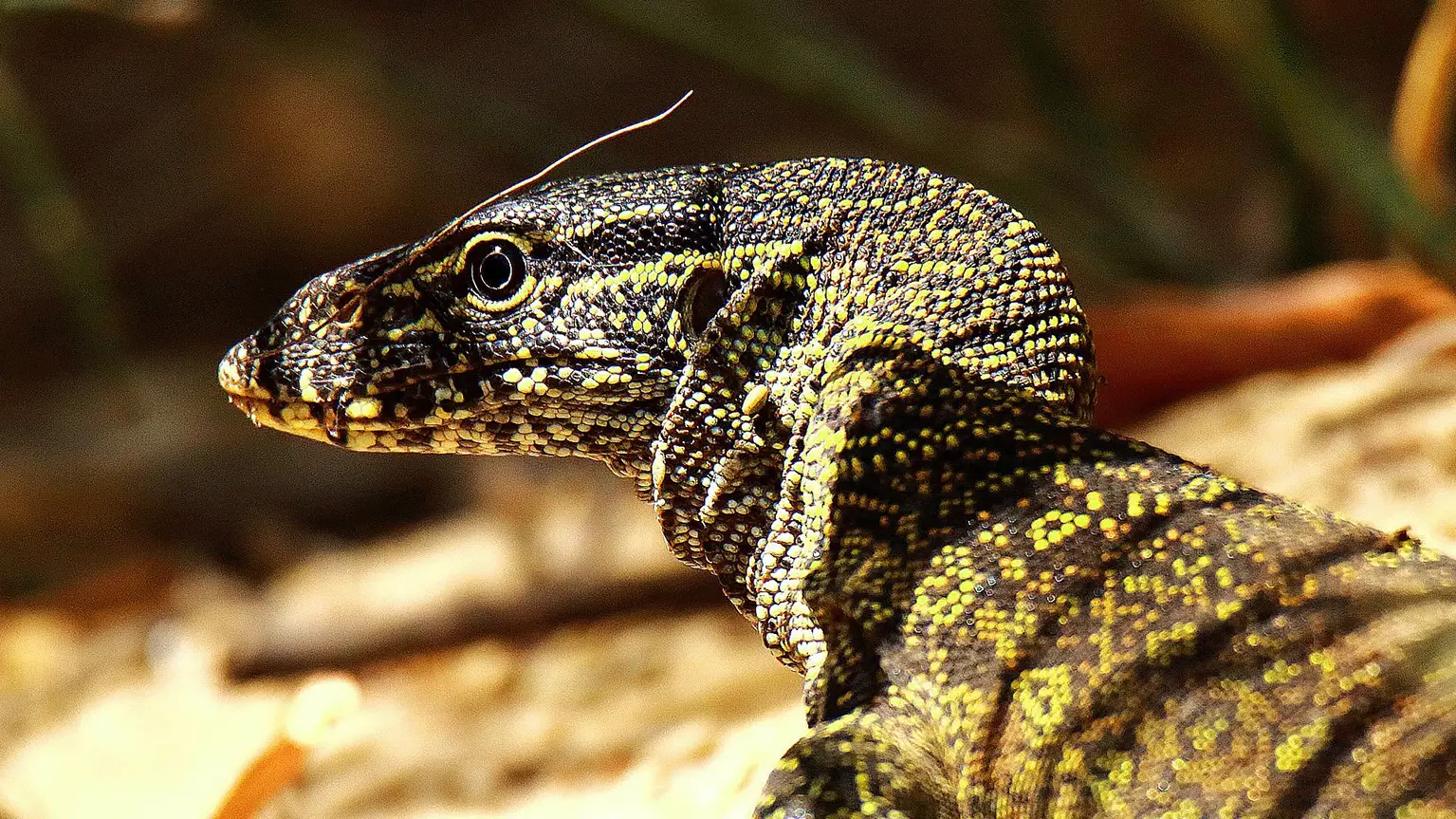
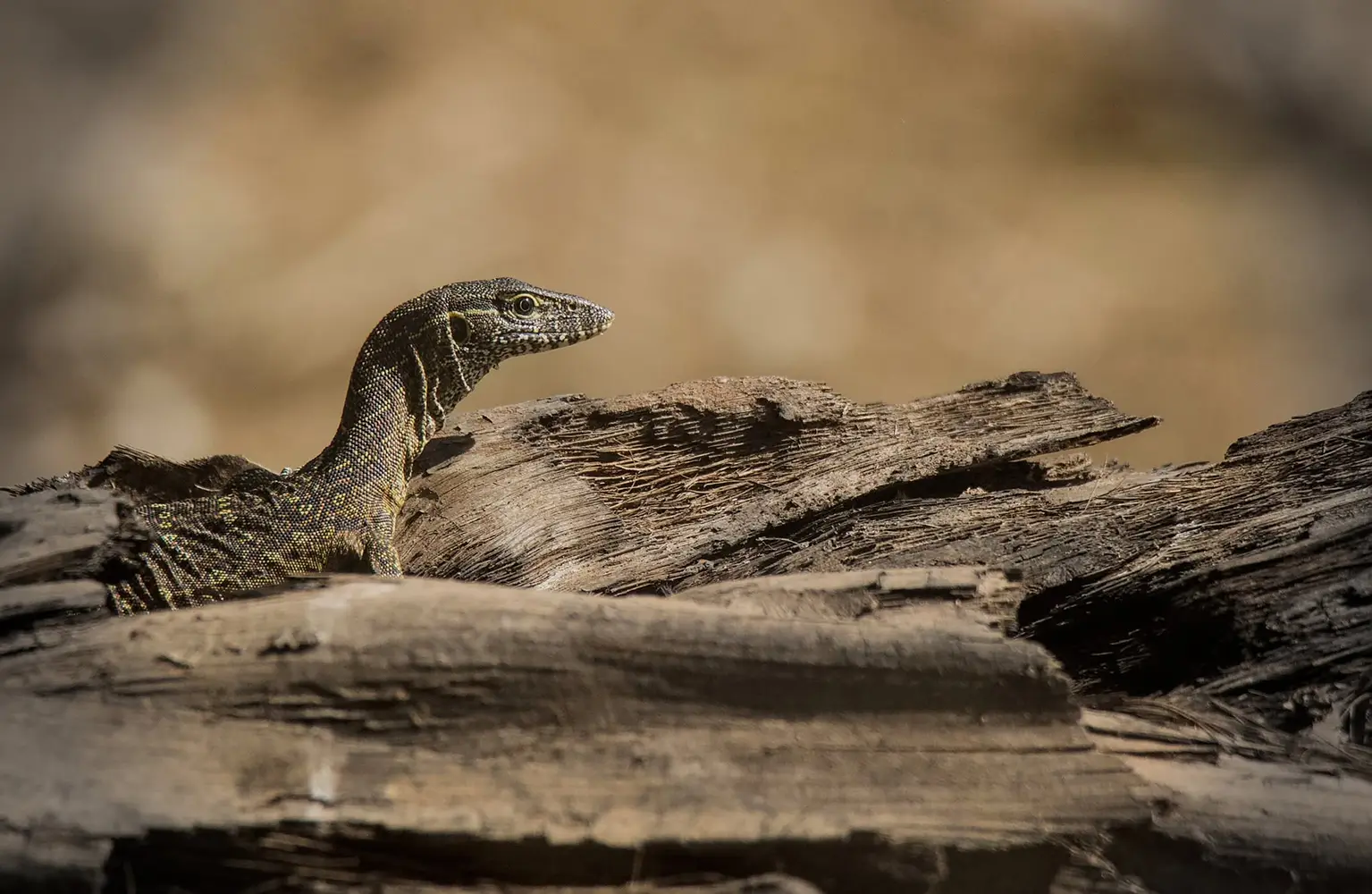
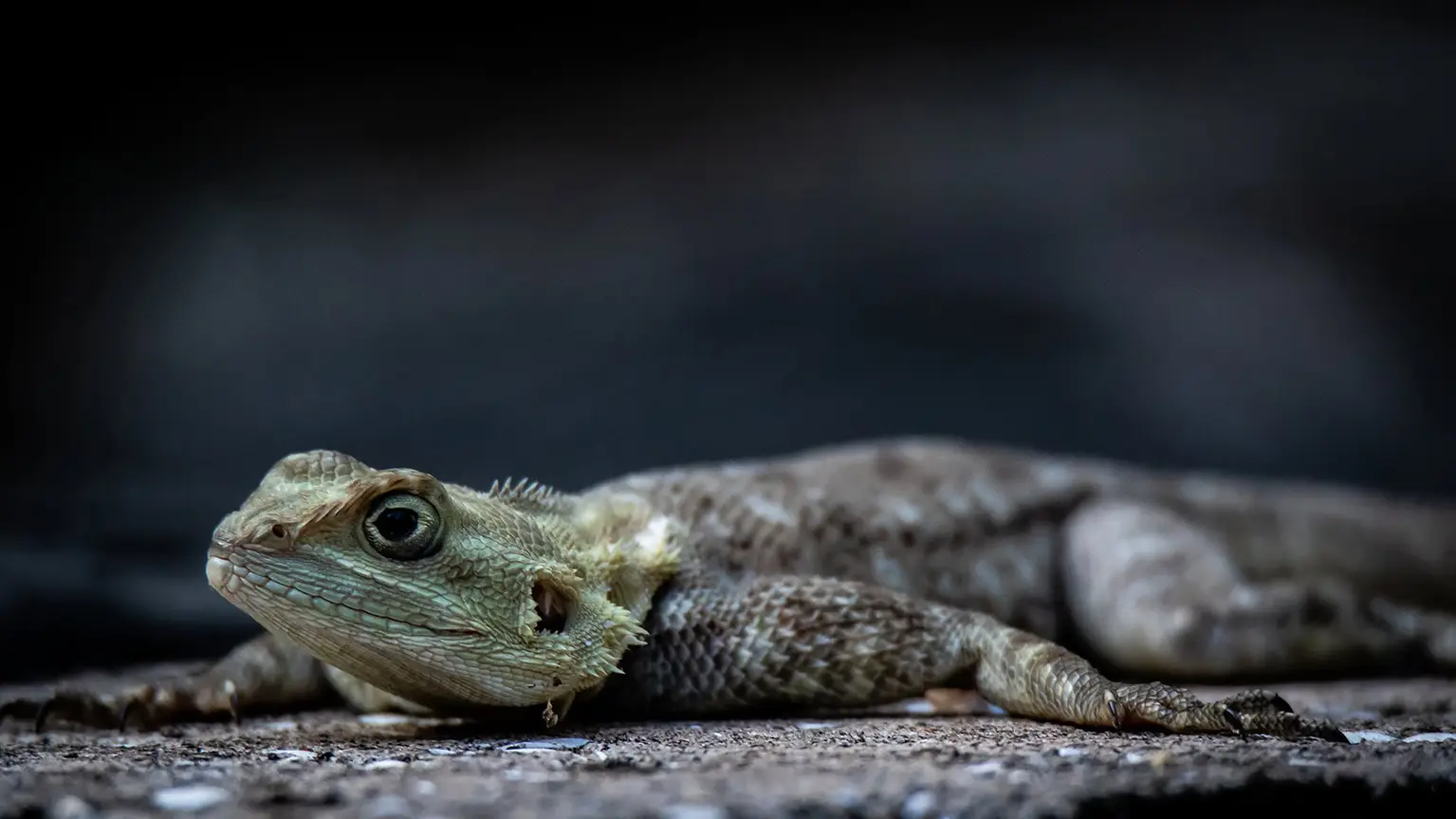
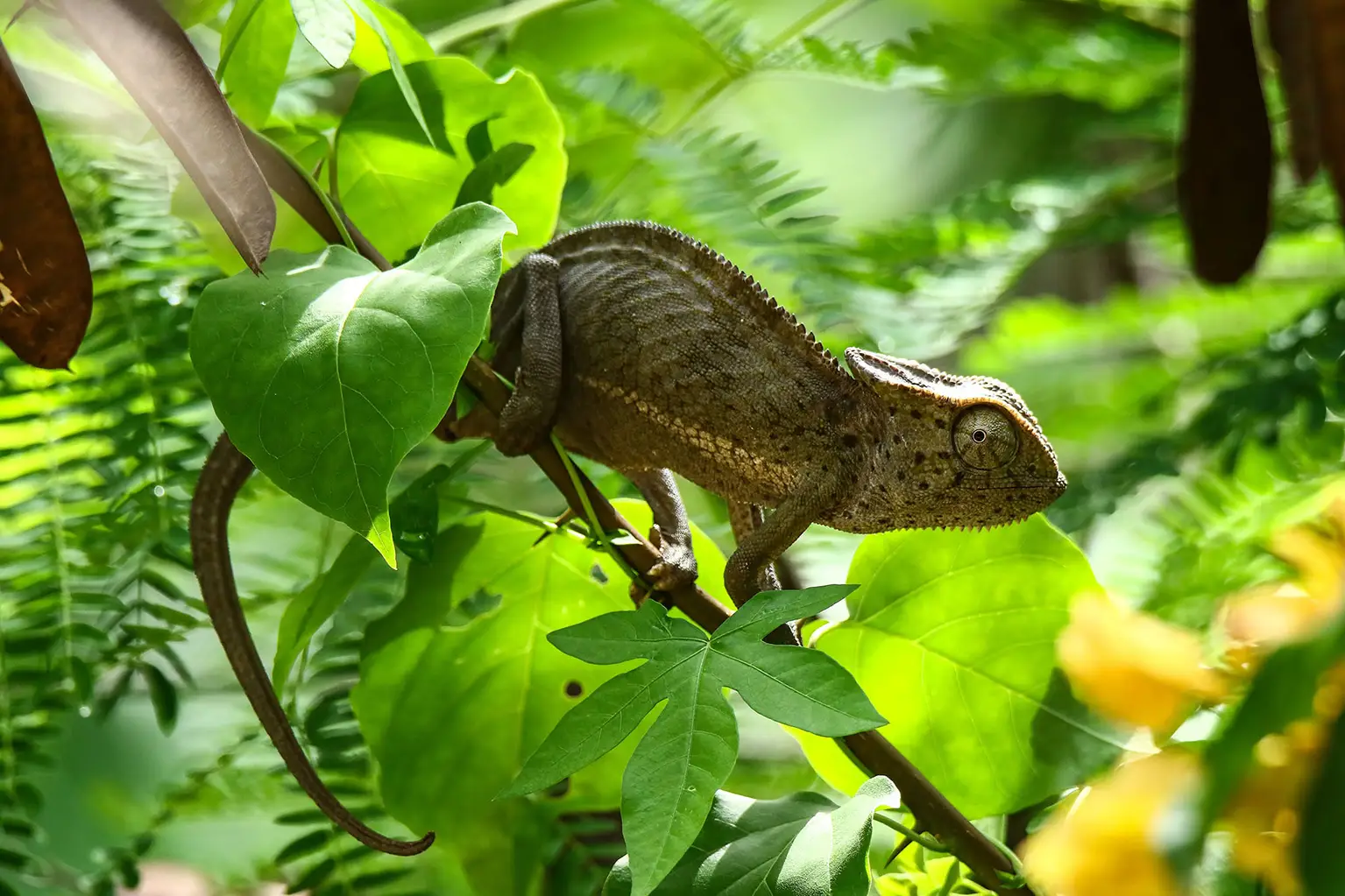
The Nile Monitor turns up everywhere, from driftwood to the margins of the rice fields. Agamas and the Senegal Chameleon, on the other hand, require no travel at all: they live in the lodge garden and are photographed between outings, at the hour when the light is too harsh for birds.
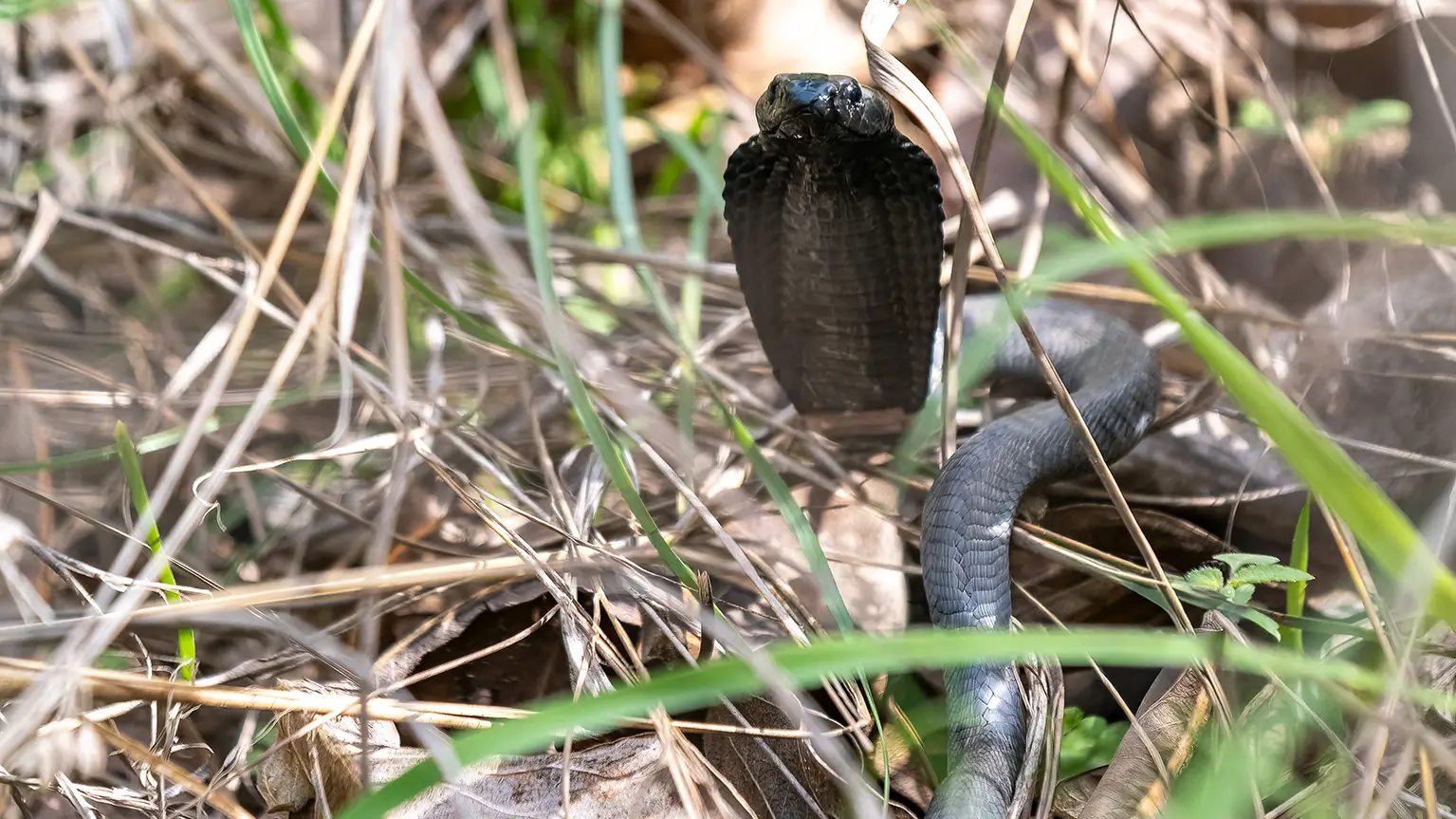
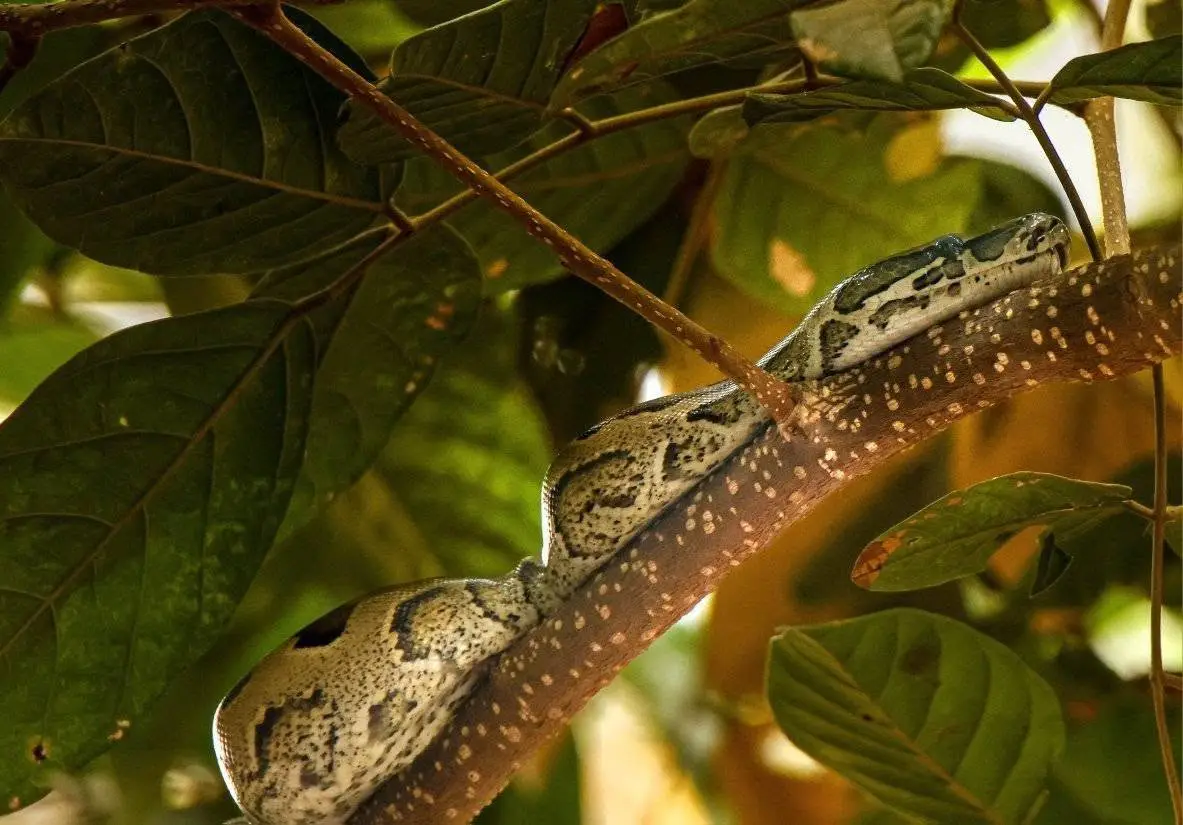
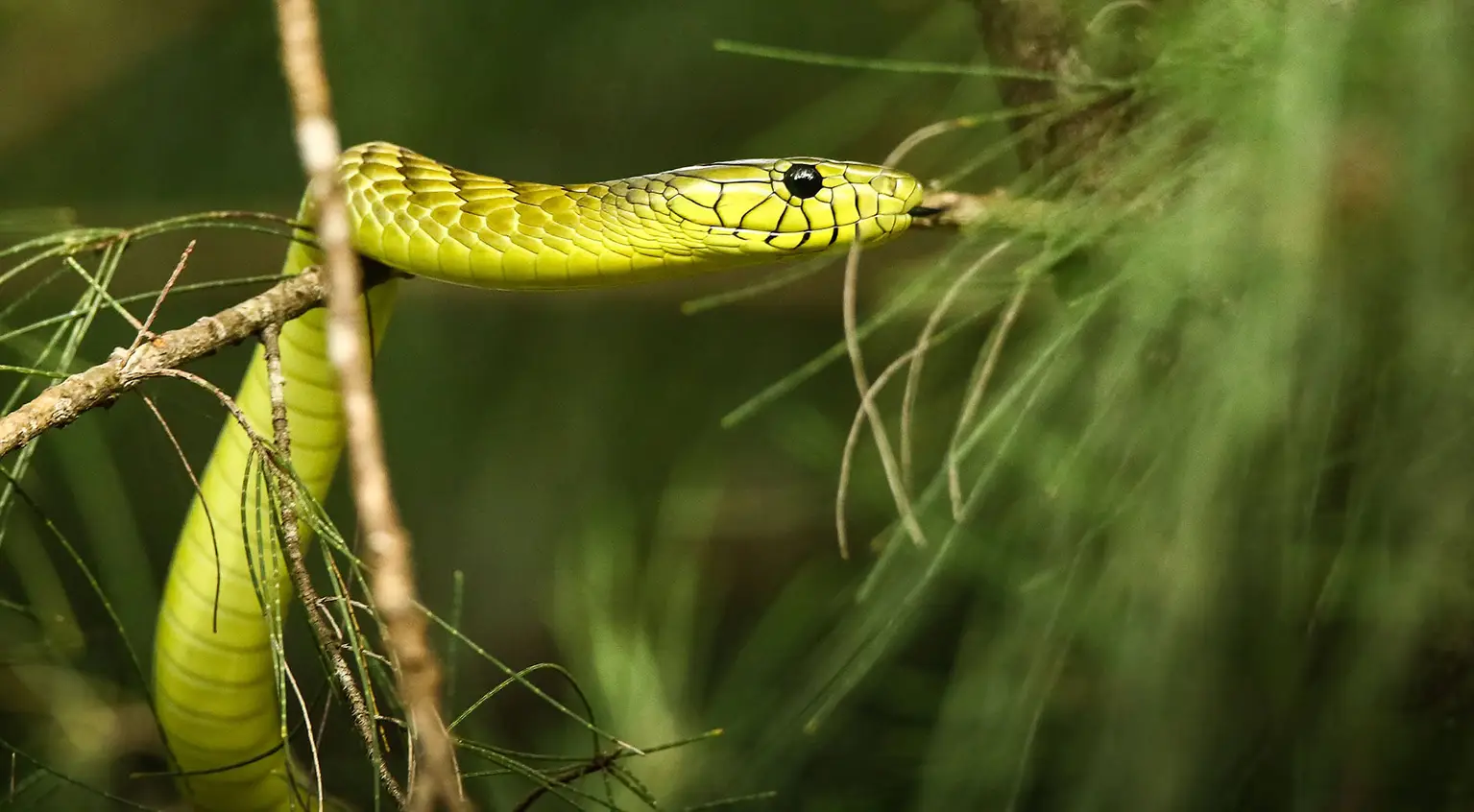
Snakes are a matter of luck. African Rock Python, Green Mamba, Black-necked Spitting Cobra: encounters are exceptional on an excursion, because snakes would far rather flee than risk a confrontation with a person. In the photograph below the cobra has spread its hood: that is a warning, not an attack. The animal is asking us to move away, and that is exactly what we do.
For photographers. The crocodile is found at several sites: the flooded sand quarry close to the lodge, the Abéné airstrip, and Kafountine for the largest individuals. The monitor is wary of anyone on foot but always returns to the same woodpile. Agamas and the chameleon tolerate a slow approach to under a metre.
The river
The Atlantic Humpback Dolphin and the African Manatee both use the Casamance river. The first is listed as Critically Endangered, the second as Vulnerable. They are by far the two rarest species you can see from our boat or from the tower at Pointe Saint-Georges.
Pointe Saint-Georges remains the best sector for both, and that is the reason for our two nights there. They are also present in the Kassel mangrove, but it takes considerably more luck: the channels that make up that mangrove are immense, the water is turbid, and an animal that surfaces at thirty metres has gone before you have raised the camera.
For photographers. Neither subject can be framed after the fact: you have to be set up beforehand — fast shutter, continuous autofocus, and an acceptance of ten frames for one. The manatee almost never shows more than its back and nostrils. Keep a camera ready during boat transfers; that is often when it happens.
Smaller wildlife
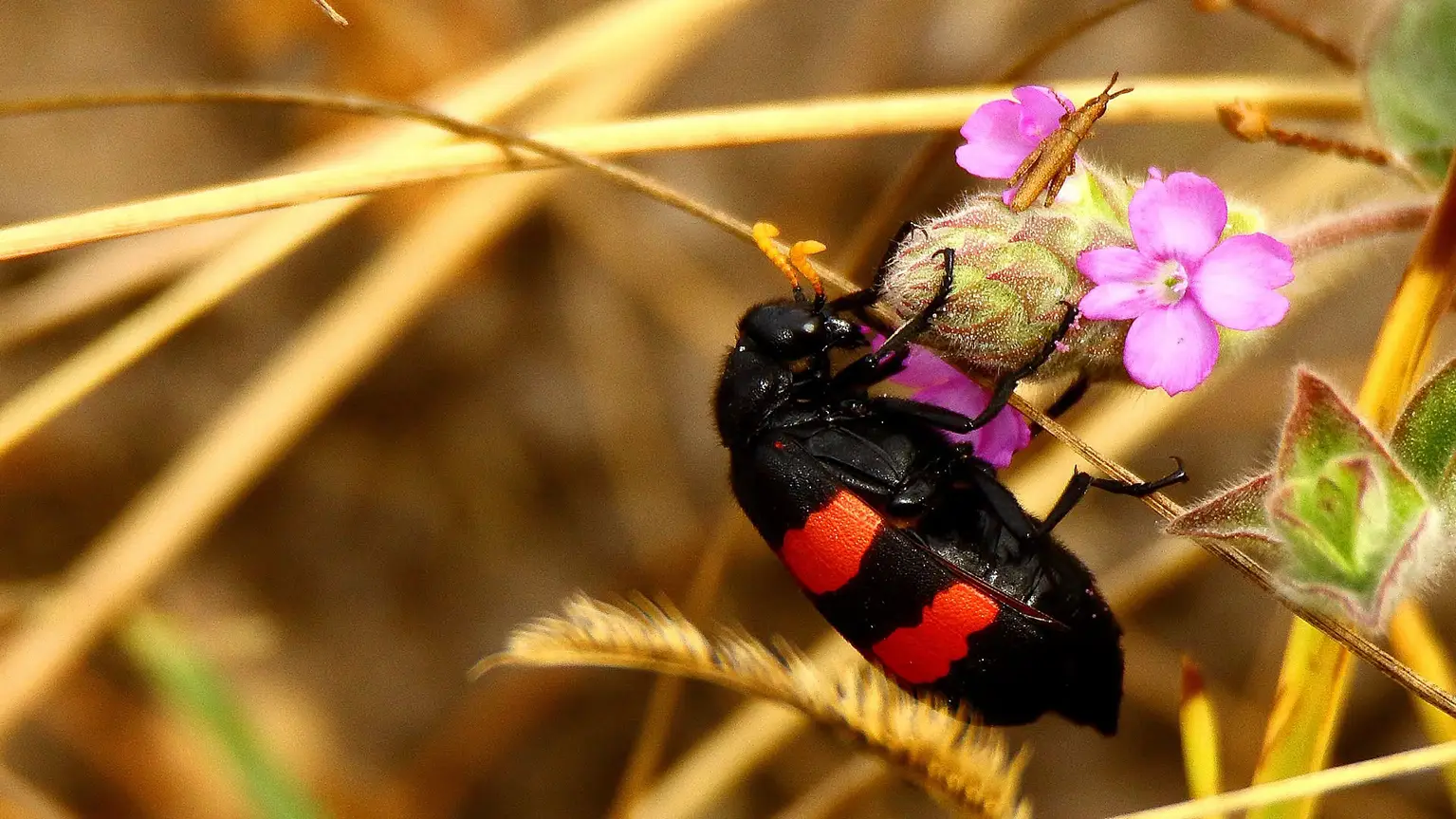
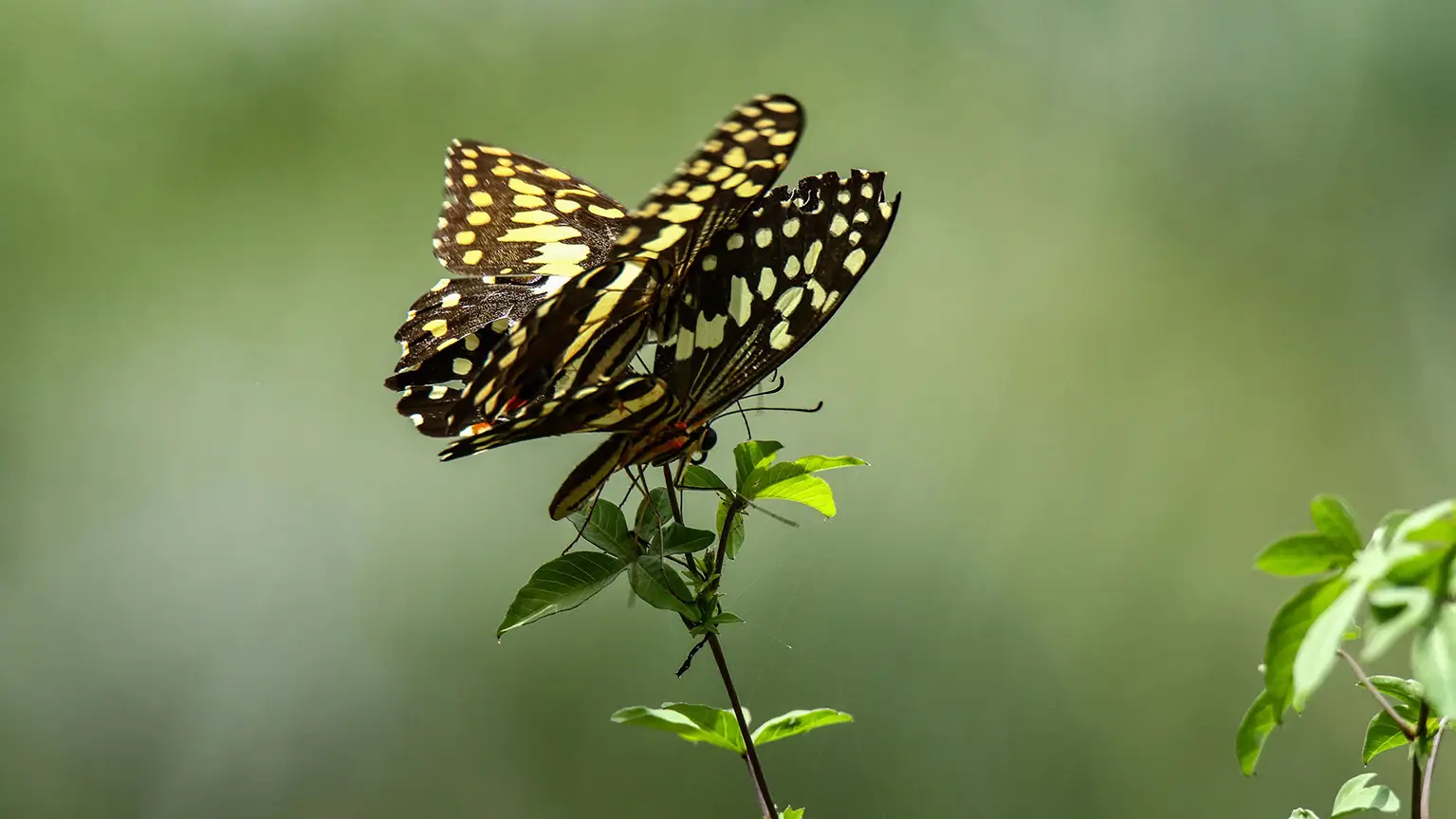
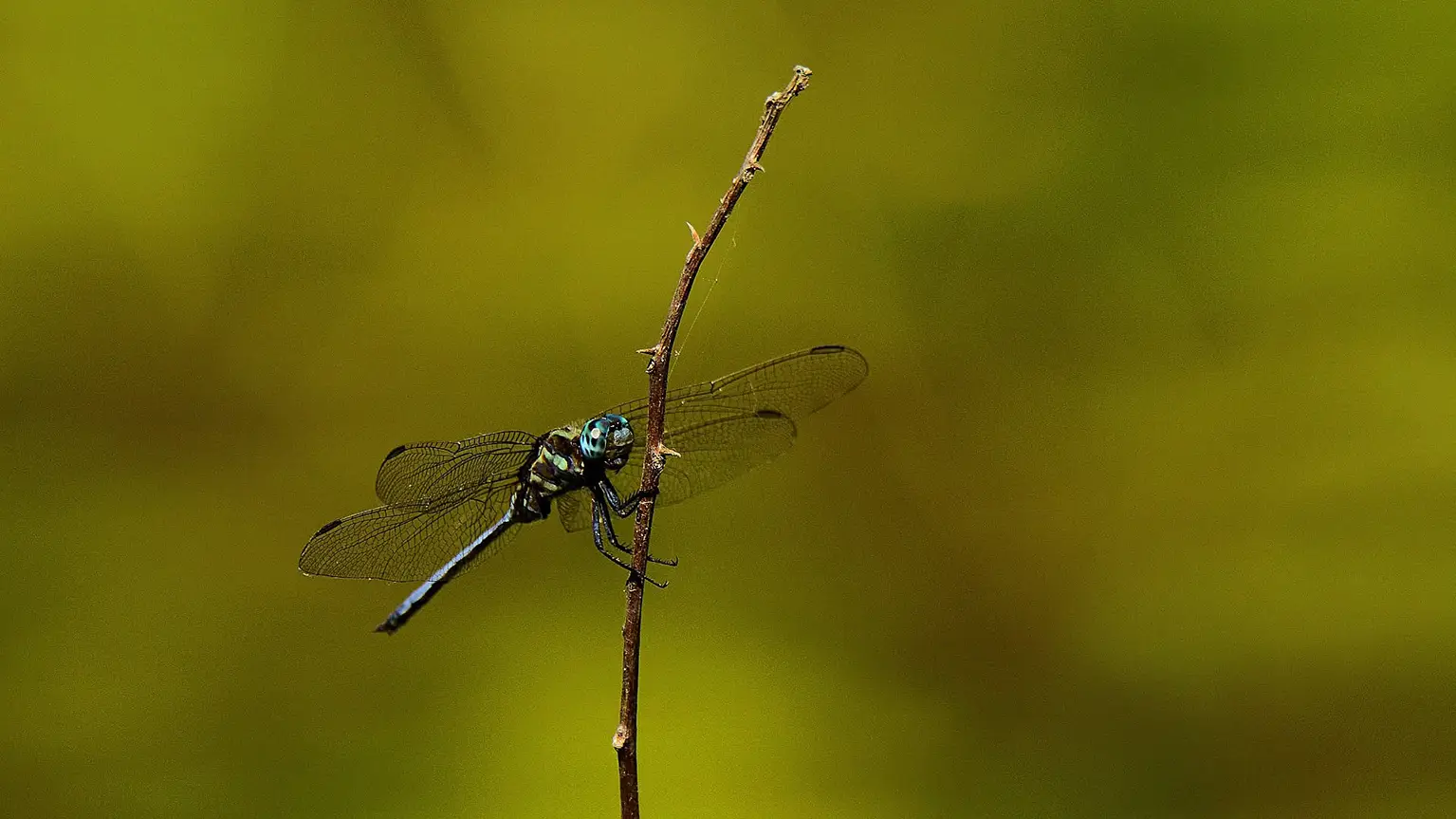
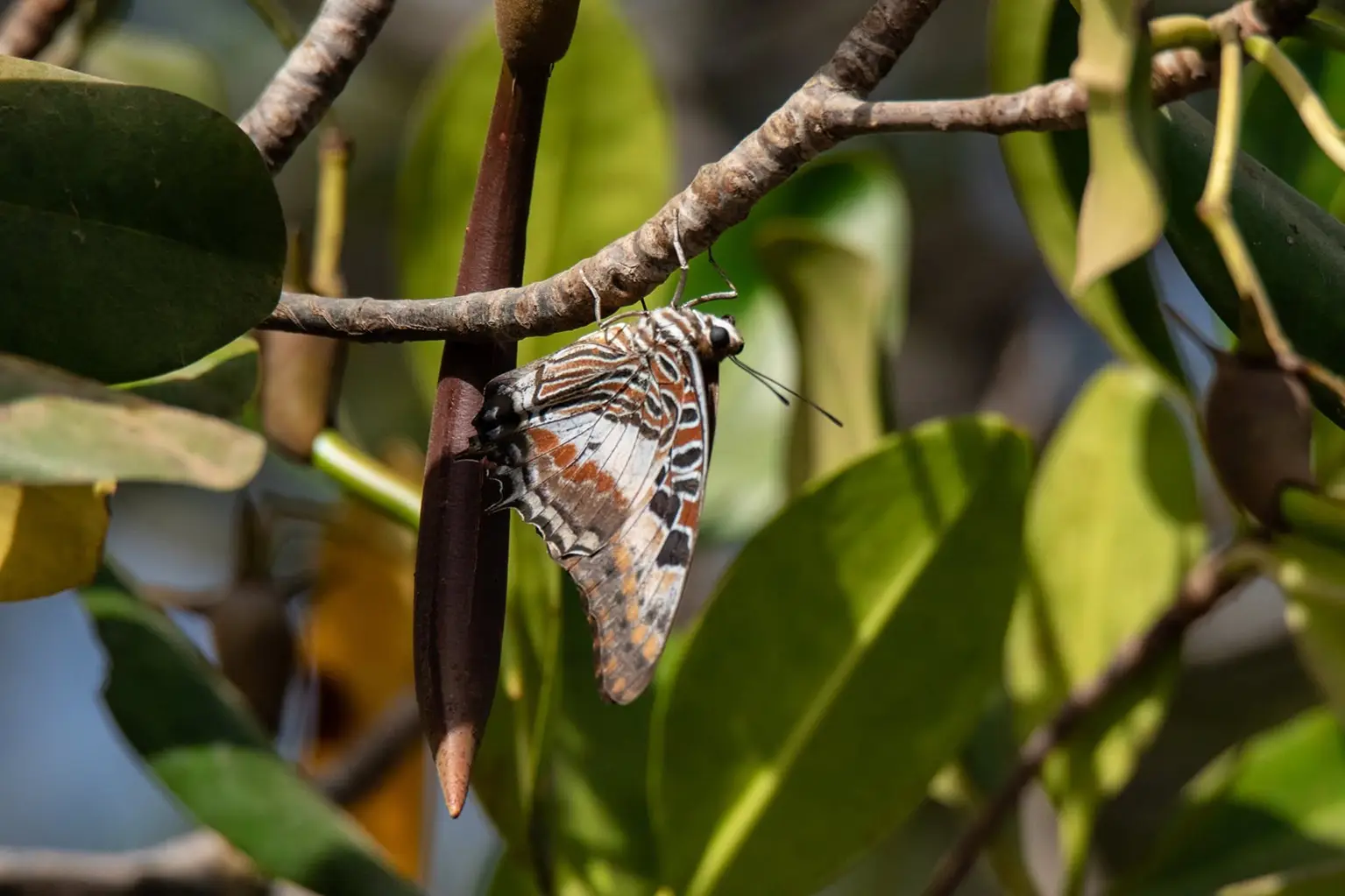
The rice fields are the ground for anyone who likes macro work: blister beetles on the flowers along the margins, Citrus Swallowtails, dragonflies.
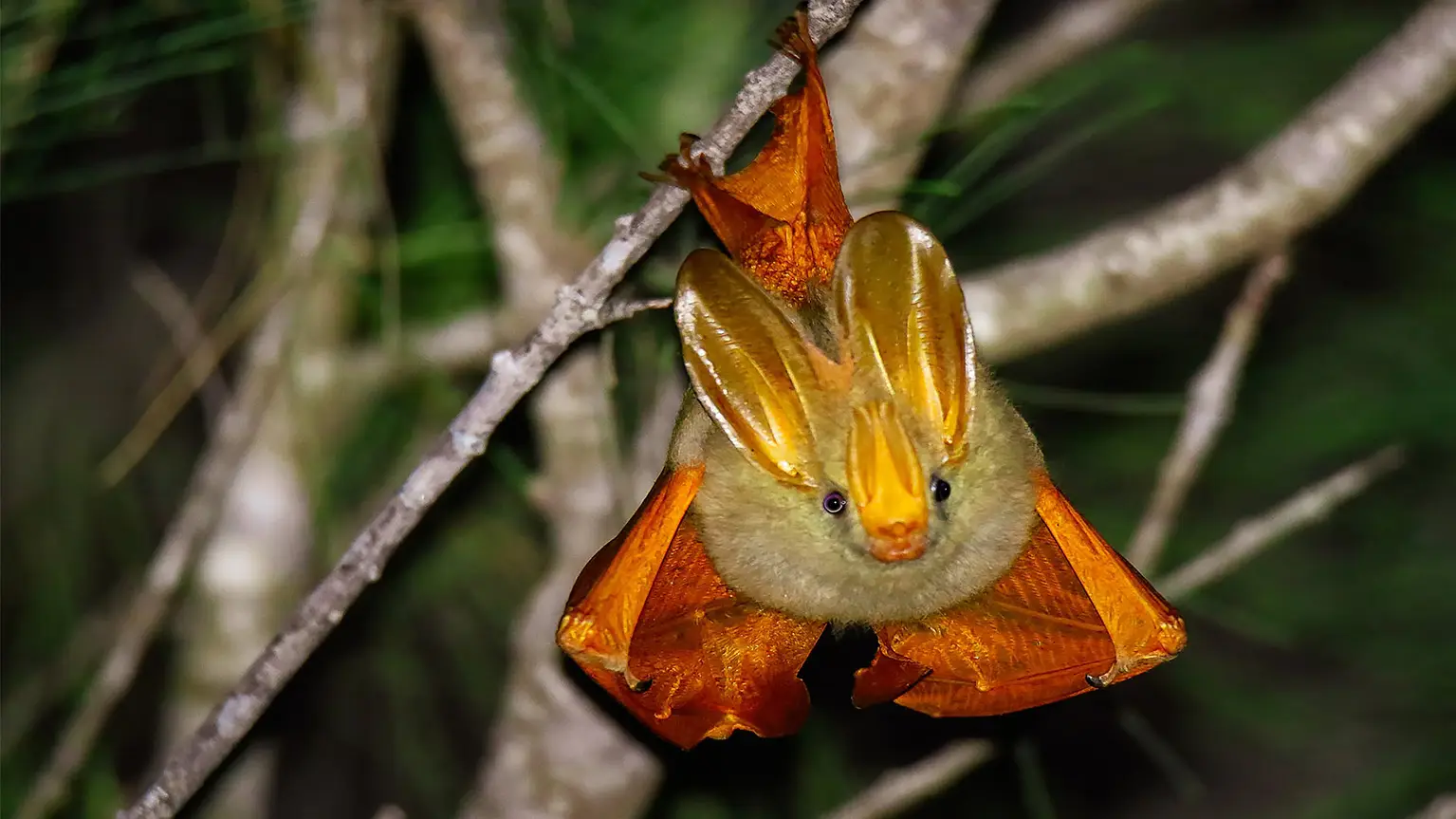
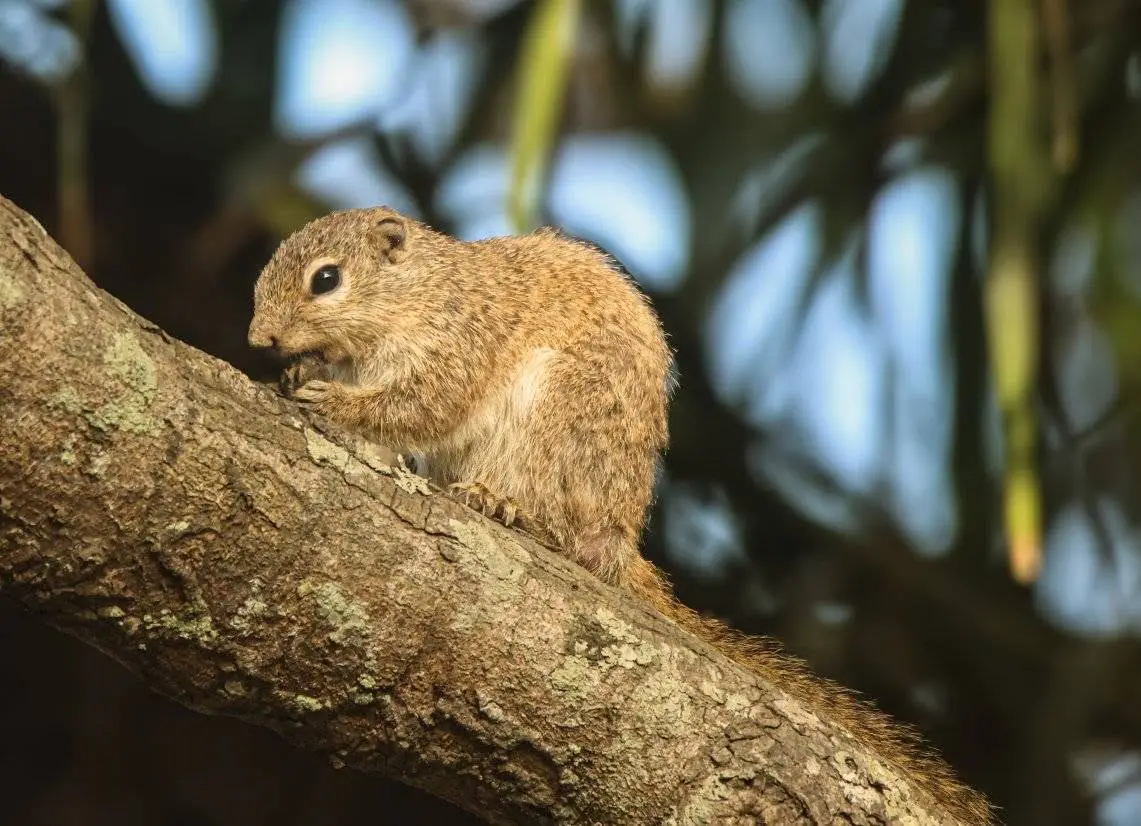
The Yellow-winged Bat is in the garden. It roosts in the open, at rest, and allows a genuine margin of approach — a subject almost no visitor thinks to photograph, and one that produces some of the most striking images of the tour. The Gambian Sun Squirrel completes the picture: arboreal, active early in the morning, easy to approach as long as you do not raise the camera abruptly.
For photographers. In the rice fields the wind is the real problem, not the insect: work early or late, when the air drops. For the bat, approach slowly and use no flash — the animal is resting, and a missed frame is better than a disturbed subject.
The programme, day by day
Ten days, including two nights at Pointe Saint-Georges. Eight guided days in the field, and a rhythm built on light: breakfast before dawn, out until the hot hours, afternoon free. What follows is a typical programme — it adapts to the tides, the season and what you most want to photograph.
Day 1 · Arrival and transfer to Abéné
Met at Banjul airport and driven to Abéné. Settling in at the lodge, a briefing on how the tour will run, and already the first images: the two-hectare grounds and their water point give bushshrikes, robin-chats, weavers and sunbirds without leaving the property.
Day 2 · Abéné and its flooded sand quarry
First morning in the field, minutes from the lodge. The flooded sand quarry is an artificial habitat that has become favourable: Giant Kingfisher, herons and egrets, and West African Crocodiles approached by staying low. Then back to the lodge for the hot hours.
Day 3 · Kalissaï reserve and the Kassel heronry
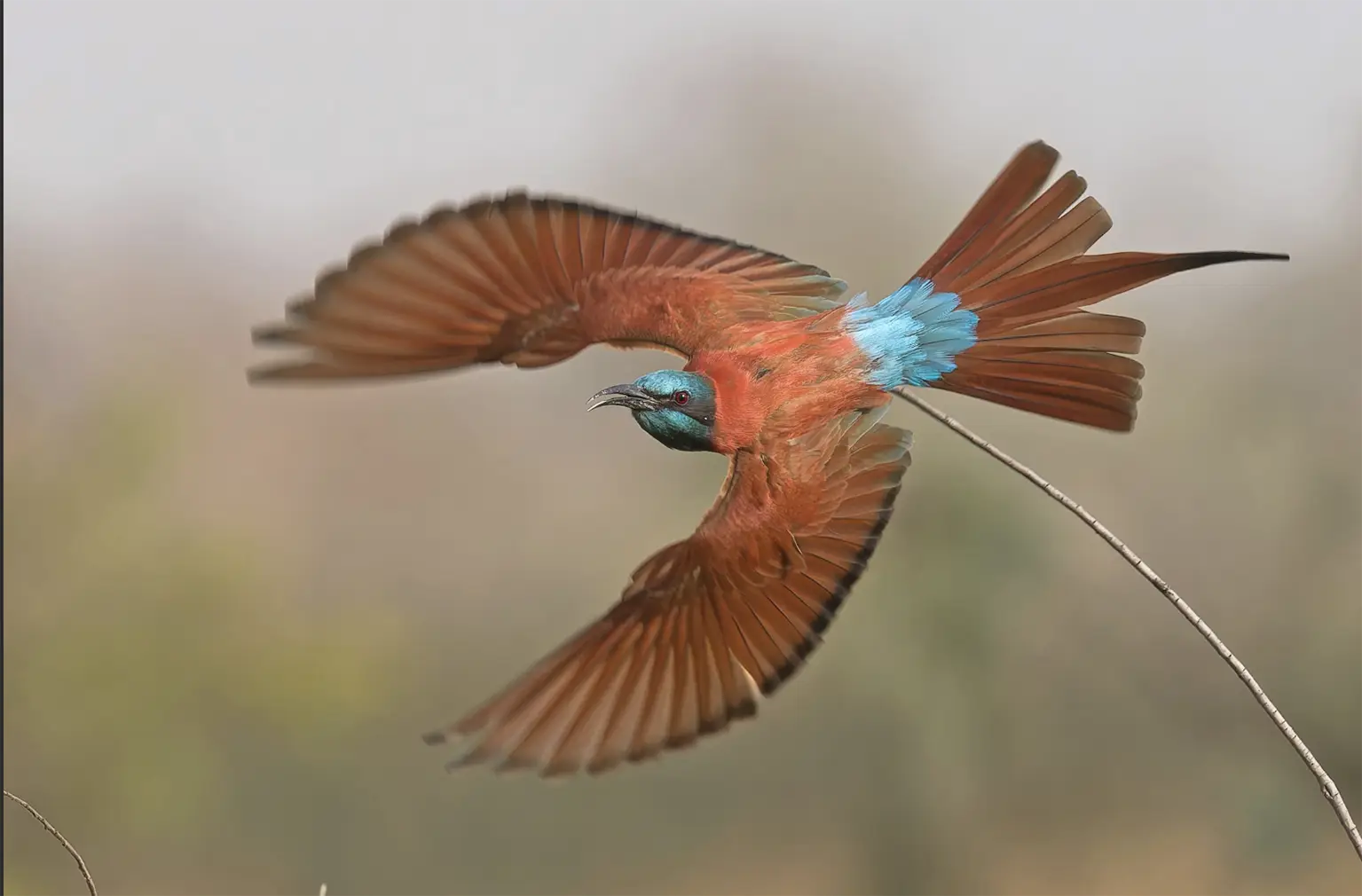
A day by boat. The village of Kassel lies within the mangrove, so we reach the reserve island by water, threading a maze of channels where every turn can produce a Goliath Heron, a Northern Carmine Bee-eater or an African Spoonbill. The heronry itself gathers hundreds of birds. Engine off, the approach is made on the drift.
Day 4 · Kabiline and its habitats
Rice fields, woodland, savanna and mangrove follow one another in a single morning — hence the diversity of species. This is also the track where Abyssinian Ground Hornbills stand at the verge, and where the 4x4 becomes an improvised hide. A giant kapok tree here holds hundreds of Village Weaver nests: the structure is astonishing.
Day 5 · Hide at the airstrip, then Lake Sitokoto
A portable hide set up before daylight at the Abéné airstrip: Osprey, African Harrier-Hawk, bee-eaters, and the Patas Monkeys that come down to drink at the pool among the whistling ducks. In the afternoon, the Lake Sitokoto reserve at Kafountine, between sand dune and palm forest — storks, raptors, ibis, spoonbills, Hamerkop. We go in the afternoon rather than the morning for one reason: the lake is backlit in the early hours and only really works late in the day.
Day 6 · Forest edge at Niafarang
One of the richest habitats in the region: dense forest set against the open expanses of savanna and rice field. Raptors, parrots and parakeets, wood hoopoes and glossy starlings, rollers and kingfishers, turacos and hornbills. It is the most technical ground of the tour, and the most rewarding.
Day 7 · Road to Pointe Saint-Georges
Down into lower Casamance, with a stop at Ziguinchor for Yellow-billed Storks. Arrival at Pointe Saint-Georges and settling in on the riverbank. A first watch from the tower in the late afternoon, at the golden hour: this is the best sector in West Africa for manatee.
Day 8 · A full day at Pointe Saint-Georges
Two nights on site means a full day — the blue hour from the tower, the boat trip, the evening light. African Manatee and Atlantic Humpback Dolphin are the two targets. Around them, White-throated Bee-eater, Black-crowned Tchagra and the species of the tall mangrove.
Day 9 · Back to Abéné
The road back, with stops according to the light and whatever we come across. Late afternoon free at the lodge: editing images, a last session in the garden hide, or sunset on the beach.
Day 10 · Home, or on to The Gambia
There is usually the morning left to enjoy the birds in the grounds and take a few last frames before the transfer. For those who have chosen the five-day option, this is the departure for The Gambia.
Why ten days and not eight. The two-night stop at Pointe Saint-Georges only makes sense with a full day on site: manatee and dolphin cannot be ordered up, and you need to be able to give them a blue hour and a golden hour. Over eight days you would have to choose between the Pointe and one of the Abéné habitats.
The Gambia option, five more days
For anyone who wants to go as far as the great apes, the tour extends by five days and four nights in The Gambia, bringing the total to fifteen days. We work up the River Gambia towards the interior, where the landscape has nothing in common with the Casamance mangrove. Guiding for those five days is included in the package: with the eight days in Casamance, the full tour comes to thirteen guided outings.
G1 · Road to Janjanbureh
Leaving Abéné and following the river up to Janjanbureh, the former Georgetown, on its island in the middle of the River Gambia. Settling in at the end of the day. The site is historic, but above all it is an ideal base for the three days that follow.
G2 · Janjanbureh and its surroundings
An early breakfast, then a short drive to a Red-throated Bee-eater colony — a species not found in Casamance, which nests here in a sand bank. Lunch at the camp, then exploring the surroundings in the afternoon.
G3 · The river and the Baboon Islands
A boat excursion on the river, with the Egyptian Plover as the main target — a small wader of rare beauty that frequents the sandbanks along this stretch. Kingfishers and waterbirds punctuate the whole route.
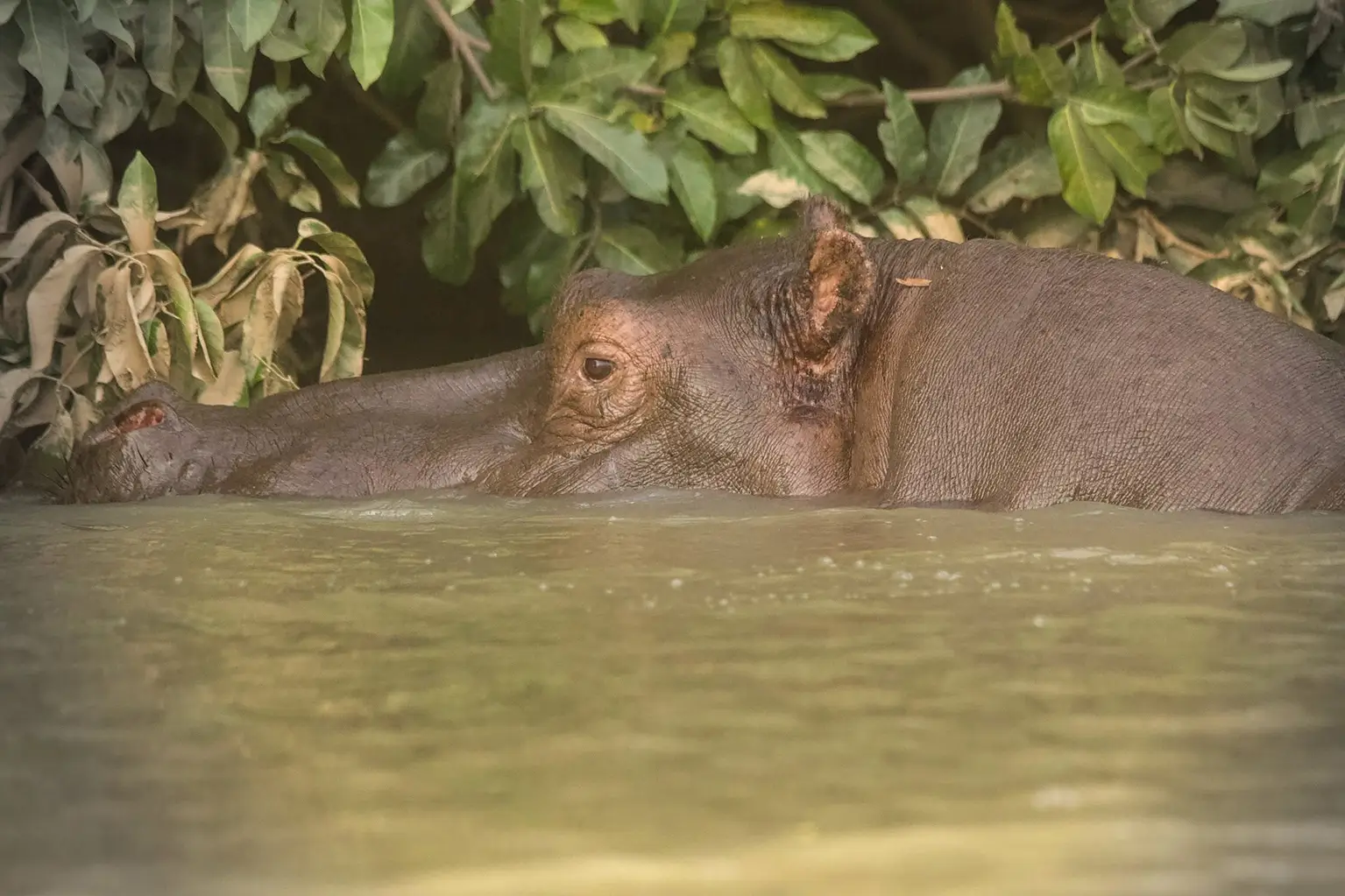
In the afternoon, the road to Kuntaur and the Baboon Islands: West African Chimpanzees and Red Colobus are watched from the water, at a regulated distance. Hippopotamus and sizeable crocodiles complete the picture. This is the high point of the option.
G4 · Down to Tendaba
A stop at the megalithic stone circle on the way. Tendaba is a well-known site for observation and for boat trips into the surrounding bolongs: White-backed Night Heron, Goliath Heron, and a wetland avifauna different from that of Casamance.
G5 · Return
South again, with stops at Bateling and Kampanti, two villages on the south bank of the river. Less visited than the classic sites, they offer varied habitats and good surprises. Then the transfer to the airport for the return flight.
Prices
Full board all inclusive, guiding, return airport transfers and entrance fees included. International flights not included. Prices per person, in a double room from two participants upwards.
Wildlife photography tour — 10 days in Casamance
- 1 participant — €1,358 in a single room
- 2 participants — €886 per person
- 4 participants — €706 per person
- 8 participants — €636 per person
With the Gambia option — 15 days
- 1 participant — €2,650 in a single room
- 2 participants — €1,758 per person
- 4 participants — €1,296 per person
- 8 participants — €1,098 per person
Above four participants a second vehicle becomes necessary for transfers, which is why the price per person barely falls between four and five. For groups of 3, 5, 6 or 7, or for an already formed group, ask us for a quote.
A naturalist tour, not only a photographic one
Not everyone who comes here carries a camera. In a couple it often happens that only one photographs — and the other spends the trip alongside, waiting. That is not how I run a tour.
The outings are the same for everyone: the boat in the bolongs, the garden hide, the forest edges at first light. Whoever has only a pair of binoculars sees exactly what the photographer sees, and often better — their eye is not in the viewfinder when the colobus crosses. I give the names, the behaviour and the calls, just as on a straightforward birdwatching tour.
The programme is still built on light, so on dawn departures and free afternoons. That rhythm suits both: the photographer edits images while the other reads in the shade or walks on the beach. Nobody has to endure anyone else's holiday.
If nobody in the group photographs, our one-week birdwatching tour covers the same ground at a different pace — more species seen, less time spent waiting for the right light. (Page in French.)
What our guests say
★★★★★ 5 / 5
“Every morning we set out to explore this corner of Casamance, camera in hand.”
Alain C. spent June 2026 here with two friends, and rated every category five out of five. Writing in French.
Read the full review on Tripadvisor · 4.5/5 from 56 reviews
Enquiries
Tell us what you want to photograph
Tours are built to order rather than run on fixed departures. Tell us when you can travel, what you hope to work on and what kit you are bringing — we will come back to you with dates and a price.
To see what a full circuit produces, the June 2026 eBird trip report lists all 203 species site by site in English, and our Gambia & Casamance Birding Tour covers the longer fifteen-day itinerary.